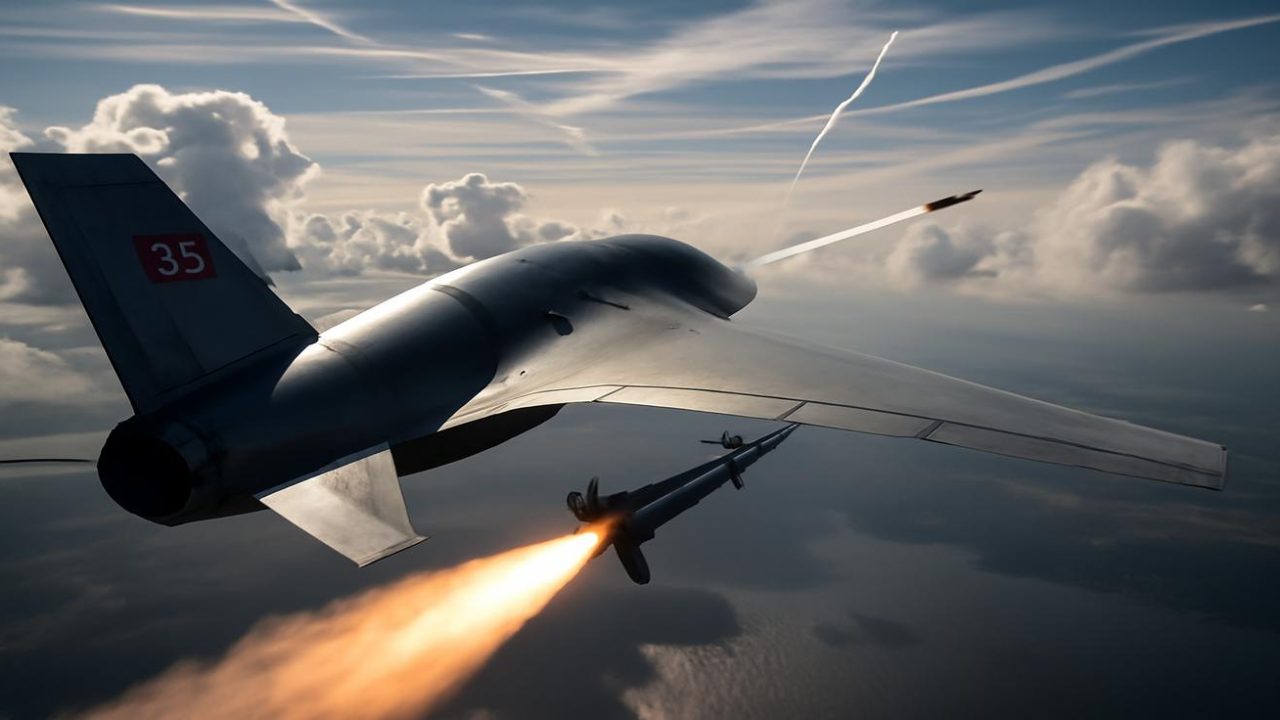
A Turkish drone has successfully intercepted and destroyed a moving supersonic target for the first time in aviation history, marking a significant milestone in unmanned aerial warfare capabilities. The test, conducted over the Black Sea, demonstrated that drone technology has reached a level of sophistication previously reserved for advanced manned fighter aircraft.
The achievement represents more than just a technological breakthrough—it signals a fundamental shift in how air defense systems may operate in the future. While the moment itself appeared deceptively simple from the ground, with only a distant missile launch and brief flash on the horizon, the complexity of tracking and engaging a target moving at more than twice the speed of sound represents years of engineering advancement.
This successful test places Turkey among a select group of nations capable of autonomous supersonic target engagement, potentially reshaping regional defense dynamics and the global drone warfare landscape.

What Makes This Achievement Historically Significant
Intercepting a supersonic target requires split-second precision and advanced computational power that pushes the boundaries of current technology. The target was traveling at more than twice the speed of sound, creating an engagement scenario that demands exceptional radar tracking capabilities and predictive algorithms.
The operation was conducted remotely from a ground-based control room, where operators monitored the engagement through camera feeds and radar displays rather than traditional cockpit instruments. This remote operation capability demonstrates how modern warfare is evolving toward unmanned systems that can perform missions previously requiring human pilots in harm’s way.
The drone itself represents years of iterative development, functioning more as a comprehensive weapons system than a simple aircraft. The successful engagement required seamless integration of multiple technologies including advanced radar systems, targeting computers, and precision-guided munitions.

Unlike traditional air-to-air combat scenarios involving manned aircraft, this engagement occurred with minimal visible or audible signature from ground level. Observers would have seen little more than a vapor trail and distant flash, highlighting how modern aerial warfare is becoming increasingly invisible to casual observation.
Technical Capabilities Behind the Success
The successful interception required several critical technological components working in perfect coordination:
- Advanced radar systems capable of tracking supersonic targets at extended ranges
- Sophisticated targeting algorithms that can predict the flight path of high-speed moving targets
- Precision-guided munitions designed for air-to-air engagement
- Real-time data processing systems that can calculate intercept solutions within seconds
- Stable communication links between ground control and the unmanned aircraft
The engagement took place in conditions that tested the system’s full capabilities. Operating over the Black Sea provided an expansive testing environment free from civilian air traffic, while the dawn timing offered specific lighting and atmospheric conditions for the trial.

| System Component | Function | Critical Requirement |
|---|---|---|
| Radar System | Target Detection | Track supersonic speeds |
| Targeting Computer | Solution Calculation | Process data in real-time |
| Guidance System | Missile Direction | Maintain lock on moving target |
| Communication Link | Ground Control | Maintain signal integrity |
The integration of these systems into an unmanned platform represents a significant engineering achievement, particularly given the weight and power constraints typical of drone aircraft compared to larger manned fighters.
Strategic Implications for Modern Air Defense
This successful test demonstrates that unmanned systems can now perform air defense missions that were previously the exclusive domain of expensive manned fighter aircraft. The implications extend beyond military applications to influence how nations approach aerial security and defense planning.
Drone-based air defense systems offer several advantages over traditional approaches. They can remain airborne for extended periods without pilot fatigue concerns, operate in conditions that might be dangerous for human pilots, and potentially reduce the overall cost of maintaining air defense capabilities.

The remote operation aspect also means that highly skilled operators can control multiple systems from secure ground locations, potentially multiplying the effectiveness of limited human resources. This could prove particularly valuable for nations with extensive territorial waters or airspace to protect.
For regional security dynamics, the capability adds a new dimension to Turkey’s defense posture. The ability to engage supersonic threats with unmanned systems provides flexible response options that don’t require risking pilot lives or expensive manned aircraft.
The Technology’s Broader Applications
While demonstrated in a military context, the underlying technologies have potential applications across various fields requiring precision tracking and engagement of high-speed targets. These could include space debris mitigation, where similar tracking and interception capabilities might prove valuable for protecting satellites and space stations.

The advancement also represents progress in autonomous decision-making systems, where aircraft must process complex sensor data and execute precise maneuvers without direct human intervention for each action. This type of autonomous capability has applications in civilian aviation, search and rescue operations, and scientific research missions.
The successful integration of multiple complex systems into a functional unmanned platform demonstrates manufacturing and systems integration capabilities that could influence Turkey’s position in the global defense technology market.
What This Means for the Future of Aerial Warfare
This achievement suggests that the line between manned and unmanned aircraft capabilities continues to blur. As drones become capable of performing increasingly sophisticated missions, military strategists will need to reconsider traditional approaches to air power and defense.

The test indicates that smaller nations with advanced technological capabilities can develop systems that rival those of larger military powers. This democratization of advanced military technology could reshape regional power balances and influence international security relationships.
Future developments in this field will likely focus on improving autonomous decision-making capabilities, extending operational ranges, and reducing system costs. The successful test provides a foundation for continued advancement in unmanned aerial warfare technology.
The quiet, almost invisible nature of the successful engagement also highlights how modern warfare increasingly occurs beyond the perception of civilian populations, conducted by remote operators using sophisticated technological systems.

Frequently Asked Questions
What made this drone test historically significant?
This was the first time a drone successfully tracked, locked onto, and shot down a moving supersonic target, demonstrating capabilities previously limited to advanced manned fighter aircraft.
How fast was the target the drone intercepted?
The target was traveling at more than twice the speed of sound, making it an extremely challenging engagement scenario requiring split-second precision.
Where did this test take place?
The test was conducted over the Black Sea, launching from the Turkish coast in an area free from civilian air traffic.

How was the drone controlled during the engagement?
Operators controlled the drone remotely from a ground-based control room, monitoring the engagement through camera feeds and radar displays rather than being physically present in the aircraft.
What does this mean for future military technology?
The successful test demonstrates that unmanned systems can now perform complex air defense missions, potentially changing how nations approach aerial security and reducing reliance on expensive manned fighter aircraft.
Could this technology have civilian applications?
The underlying tracking and precision engagement technologies could potentially be adapted for space debris mitigation, scientific research missions, and other applications requiring high-speed target tracking.










Leave a Comment