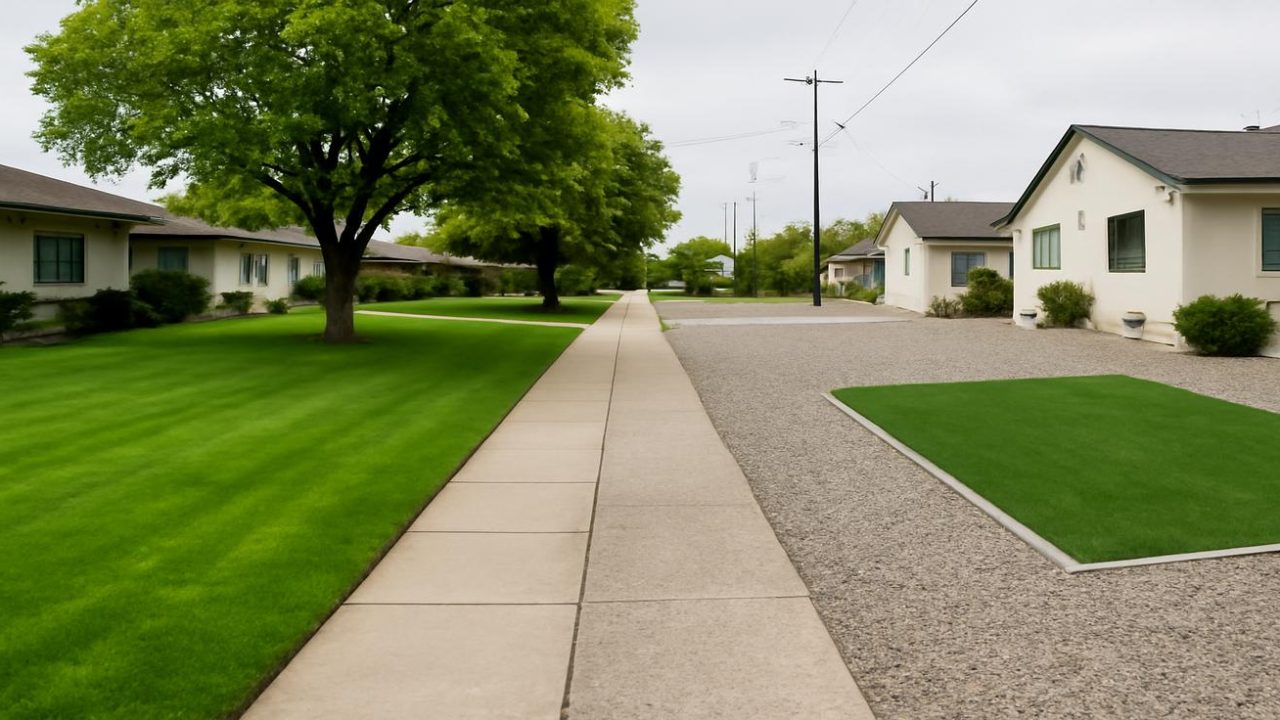
Artificial turf can reach temperatures dramatically higher than natural grass on summer afternoons, sometimes even hotter than asphalt. This scorching reality is just one of the hidden consequences as a new landscaping trend sweeps through suburban neighborhoods across the country.
The gravel-and-artificial-turf revolution is transforming front yards from coast to coast. Homeowners are ripping out traditional lawns and replacing them with synthetic grass bordered by bone-white gravel, creating what critics describe as “biological dead zones” where birds simply stop coming.
What started as individual decisions to slash water bills has evolved into a neighborhood-wide transformation that’s dividing communities and raising questions about the true cost of “water-wise” landscaping.

The Promise of Set-It-and-Forget-It Yards
Walk any suburban street on a hot Saturday and you can see this new dream unfurling: front yards stripped to the dirt, rolled with weed cloth, covered in rock and plastic grass. The appeal is undeniable for time-pressed homeowners facing rising water prices and tightening city restrictions.
The marketing pitch sounds irresistible: “water-wise,” “maintenance-free,” “future-proof” landscaping that eliminates muddy paw prints, weedy corners, and the nagging guilt of sprinklers clicking on during drought conditions. No more weekend mowing, no more brown patches, no more lawn care bills.
Homeowners tired of traditional yard maintenance are seduced by the promise of a clean, sterile carpet of artificial turf that stays green year-round. The water bill goes down, early adopters proudly tell anyone who will listen.

But as block after block trades soil for synthetic materials, a quiet fury is rising among neighbors who wake to the hollow silence of plastic instead of birdsong. The discontent isn’t just aesthetic—it’s ecological, emotional, and surprisingly political.
The Hidden Environmental Costs Behind the Water Savings
On paper, the artificial turf argument sounds sensible. Drought maps bleed with deeper shades of red, and traditional lawns require significant water to maintain. But the glossy brochures and Instagram-perfect yard makeovers leave out a complicated truth about what happens when you swap living landscapes for synthetic ones.
Traditional turf lawns were never ecological utopias, but they did host soil organisms, worms, ground beetles, and occasional foraging birds. Add a few flowering weeds or native plants and suddenly bees, butterflies, and birds show up. Swap all of that for plastic turf over compacted base rock and you’ve built a biological dead zone with no nectar, no seeds, and no cool handful of living soil.

The heat impact creates another serious problem. Run your hand over living grass on a summer afternoon and it feels cool, almost damp with transpiration. Try the same with artificial turf and you get a scorching pulse of heat that can exceed asphalt temperatures. Gravel, especially light-colored stone, throws light and heat back into the air, amplifying the urban heat island effect.
The result? Streets that feel like ovens and front yards that become hostile to both humans and wildlife during the hottest parts of the day.
Material Realities and Long-Term Costs
Artificial turf doesn’t spring fully formed from some benevolent, water-conserving source. It’s petroleum-based plastic, often filled with crumb rubber or other infill, shipped and installed over layers of fabric and stone. The manufacturing and transportation process carries its own environmental footprint that marketing materials rarely mention.

The “low-maintenance” dream also hides a long tail of hidden costs. Artificial turf breaks down over time, shedding microplastics into soil and waterways. It needs replacing after years of sun and wear, sending old rolls to landfills where they don’t biodegrade.
Studies have documented how synthetic turf systems create runoff patterns different from natural grass, potentially affecting local water drainage and soil health in surrounding areas.
| Yard Type | Water Use | Biodiversity | Heat Impact | Long-Term Maintenance |
|---|---|---|---|---|
| Traditional Lawn | High | Low to Moderate | Cool | Regular mowing, watering |
| Artificial Turf + Gravel | Minimal | None | Very Hot | Eventual replacement needed |
| Native Plants | Low | High | Cool | Minimal after establishment |
How Communities Are Responding to the Transformation
The rapid adoption of artificial turf is creating visible divisions in neighborhoods. Residents who invested in synthetic landscapes point to dramatically reduced water bills and eliminated maintenance time. Those who kept traditional or native plantings increasingly view their yards as acts of rebellion against what they see as the “parking lot-ification” of residential areas.

Some homeowners report that their clover-and-violet-filled lawns suddenly feel like environmental statements in neighborhoods where crew after crew rolls out stretches of artificial turf. The contrast between living and synthetic landscapes becomes more stark with each conversion.
Community discussions about neighborhood character, property values, and environmental responsibility are intensifying as the trend spreads. Local gardening groups and environmental advocates are pushing for education about alternatives that can reduce water use without eliminating biodiversity entirely.
Native plant enthusiasts argue that drought-resistant indigenous plants can provide the water savings homeowners want while maintaining habitat for local wildlife. These alternatives require initial planning and establishment time but can ultimately provide both ecological benefits and reduced maintenance.

What This Means for Suburban Landscapes
The gravel-and-artificial-turf trend represents a fundamental shift in how Americans think about their relationship with the land around their homes. Where yards once felt like a handshake with the living world, many now feel like sealed surfaces—something you can stand on, but not belong to.
The transformation is happening rapidly enough that entire blocks are shifting from diverse, if imperfect, ecosystems to uniform synthetic landscapes within months. This speed of change is leaving little time for communities to consider alternatives or plan transitions that might balance water conservation with ecological preservation.
As drought conditions persist and water costs continue rising, the pressure for “responsible” landscaping will likely intensify. The question facing suburban communities is whether the current trend toward synthetic solutions represents the only path forward, or whether other approaches might achieve water savings without eliminating the birds, bees, and soil organisms that make neighborhoods feel alive.

The choices individual homeowners make about their front yards are adding up to a collective transformation of suburban ecosystems. What emerges from this shift will shape the environmental character of residential areas for years to come.
Frequently Asked Questions
How much hotter does artificial turf get compared to natural grass?
Studies have found that artificial turf can reach temperatures dramatically higher than natural grass, sometimes even hotter than asphalt on summer afternoons.
What happens to wildlife when neighborhoods switch to artificial turf?
Artificial turf creates biological dead zones with no nectar, seeds, or living soil, causing birds and other wildlife to stop visiting the area.
Does artificial turf really eliminate maintenance?
While it eliminates mowing and watering, artificial turf breaks down over time and eventually needs complete replacement, sending old materials to landfills.
What environmental problems does artificial turf create?
It sheds microplastics into soil and waterways, amplifies urban heat island effects, and eliminates habitat for beneficial insects and soil organisms.
Are there alternatives that save water but maintain biodiversity?
Native plants can provide significant water savings while maintaining habitat for local wildlife, though they require initial planning and establishment time.
Why are neighbors getting upset about artificial turf installations?
Many residents feel the rapid transformation eliminates the living character of neighborhoods, replacing birdsong and natural landscapes with sterile, plastic surfaces.








Leave a Comment