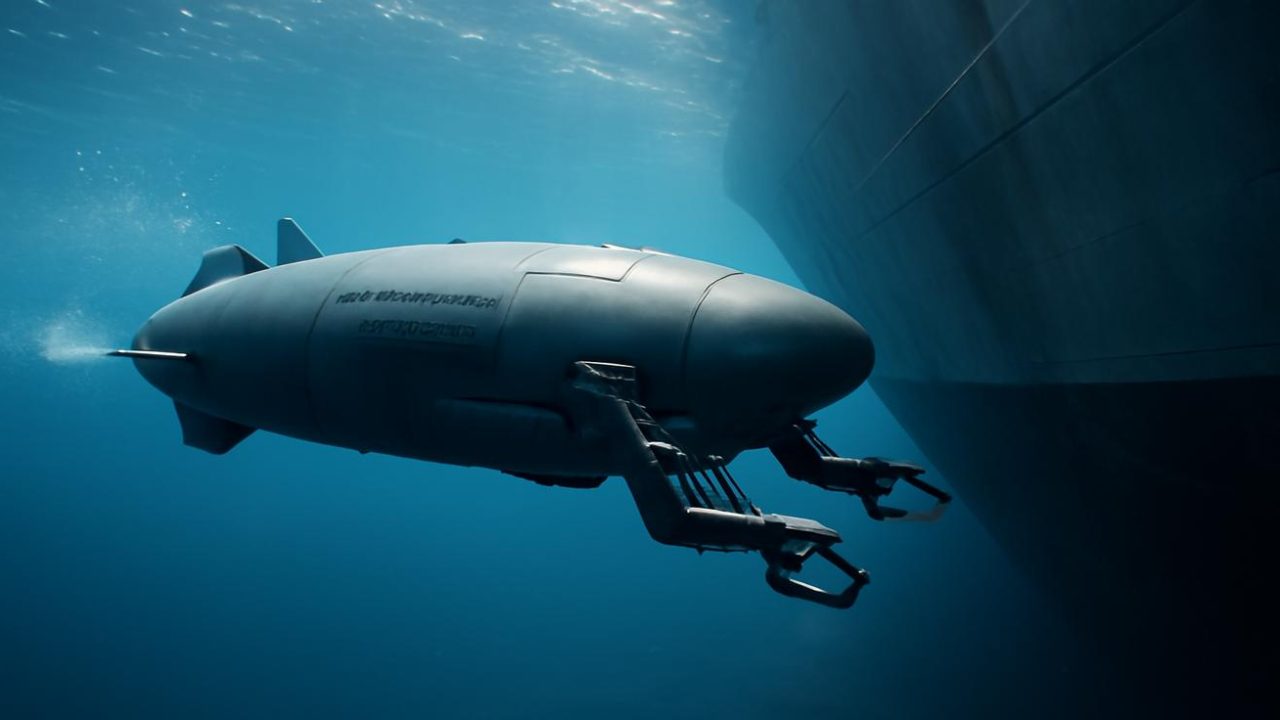
A new underwater drone designed to latch onto ships like a parasitic lamprey has been unveiled by defense contractor Lockheed Martin, marking a significant development in naval surveillance and reconnaissance technology.
The aptly named Lamprey drone takes its inspiration from one of nature’s most persistent parasites—the lamprey fish, which uses its circular, tooth-lined mouth to attach to larger fish and feed off them while hitchhiking through the ocean.
This torpedo-sized underwater vehicle is engineered to perform a similar function in the maritime domain, silently approaching vessels and attaching itself to their hulls to gather intelligence or conduct surveillance operations.

How the Lamprey Underwater Drone Works
The Lamprey represents a new category of autonomous underwater vehicle that borrows directly from biological systems. Unlike traditional submarines or underwater drones that must maintain their own propulsion and navigation, the Lamprey is designed to find a host vessel and attach itself for extended missions.
The drone’s smooth, pale body allows it to glide undetected through dark waters before positioning itself under a ship’s hull. Once attached, it can remain in place for extended periods, drawing power and potentially data from its host while staying completely hidden from the crew above.
This attachment capability transforms the drone from a limited-endurance autonomous vehicle into a long-term surveillance platform that can travel wherever its host ship goes, effectively turning any vessel into an unwitting carrier for intelligence gathering operations.

Technical Capabilities and Design Features
The Lamprey drone incorporates several key technological elements that enable its unique operational approach:
- Torpedo-sized form factor optimized for stealth and maneuverability
- Advanced sensor suite replacing biological eyes with electronic surveillance equipment
- Attachment mechanism inspired by lamprey feeding apparatus
- Autonomous navigation and target identification systems
- Extended operational capability when attached to host vessels
The drone’s sensor systems are specifically designed to function in the underwater environment without requiring light, relying instead on sonar, electromagnetic sensors, and other detection methods to navigate and gather intelligence.
Unlike its biological namesake, which feeds on its host, the Lamprey drone is designed to remain undetected while collecting data about vessel movements, communications, or other intelligence targets.

Strategic Implications for Naval Operations
The development of attachment-capable underwater drones represents a significant shift in naval surveillance capabilities. Traditional underwater reconnaissance requires dedicated submarine operations or limited-endurance autonomous vehicles that must return to base for maintenance and data retrieval.
The Lamprey’s ability to attach to civilian or military vessels creates new possibilities for persistent maritime surveillance. A single drone could potentially monitor shipping lanes, naval movements, or port activities for extended periods without detection.
This capability also raises questions about maritime security and the potential for such devices to be used for intelligence gathering against both military and commercial vessels. The invisible nature of underwater attachment makes detection extremely difficult for ship crews.
Naval strategists recognize that underwater drones capable of long-term attachment could fundamentally change how maritime surveillance and reconnaissance operations are conducted, particularly in contested waters where traditional methods might be too risky or visible.
Comparison to Traditional Underwater Systems
Current underwater surveillance typically relies on several established approaches, each with significant limitations compared to the Lamprey concept:
| System Type | Operational Duration | Detection Risk | Coverage Area |
|---|---|---|---|
| Traditional Submarines | Weeks to months | Moderate | Large but limited by crew |
| Standard AUVs | Hours to days | Low | Limited by battery life |
| Lamprey Drone | Potentially indefinite when attached | Very low | Follows host vessel routes |
The key advantage of the attachment approach is that it potentially eliminates the endurance limitations that constrain other underwater platforms, while maintaining the low detection profile that makes unmanned systems attractive for surveillance missions.

Potential Applications and Use Cases
The Lamprey drone’s unique capabilities open up several potential operational scenarios that would be difficult or impossible with conventional underwater vehicles.
Intelligence agencies could use such devices to monitor the movements of specific vessels of interest, gathering data about their routes, communications, and activities over extended periods. The drone could potentially attach during a port visit and remain in place for an entire voyage.
Naval forces might employ Lamprey-type drones for persistent surveillance of shipping lanes or to monitor the activities of foreign naval vessels. The ability to remain attached and undetected could provide continuous intelligence on vessel capabilities and operational patterns.

Port security applications could involve using these drones to monitor vessels entering sensitive waterways, though such uses would raise significant questions about territorial waters and maritime law.
Future Development and Maritime Security
The unveiling of the Lamprey drone signals Lockheed Martin’s investment in biomimetic underwater systems that copy successful evolutionary strategies. The lamprey’s millions of years of evolutionary refinement provide a proven template for persistent attachment and survival in marine environments.
As this technology develops, maritime security professionals will need to consider new detection methods and defensive measures against attachment-capable drones. Traditional sonar and radar systems may not be effective against devices that remain hidden beneath a vessel’s hull.

The success of the Lamprey concept could lead to a new generation of parasitic underwater drones, each designed to exploit different aspects of marine biology for military and intelligence applications.
Frequently Asked Questions
How does the Lamprey drone attach to ships?
The drone uses an attachment mechanism inspired by the circular, tooth-lined mouth of lamprey fish to latch onto vessel hulls.
Can ship crews detect when a Lamprey drone is attached?
The drone is designed to remain undetected by positioning itself under the hull where it would be invisible to crew members above.

How long can the Lamprey drone operate?
When attached to a host vessel, the drone can potentially operate for extended periods, though specific endurance capabilities have not been disclosed.
What kind of intelligence can the Lamprey drone gather?
Specific sensor capabilities have not been detailed, but the drone incorporates various electronic surveillance systems optimized for underwater operation.
Is the Lamprey drone currently in active use?
Lockheed Martin has unveiled the concept, but operational deployment status and timeline have not been confirmed.
Could civilian ships be targeted by these drones?
The drone is designed to attach to both civilian and military vessels, though specific targeting policies and legal frameworks have not been disclosed.










Leave a Comment