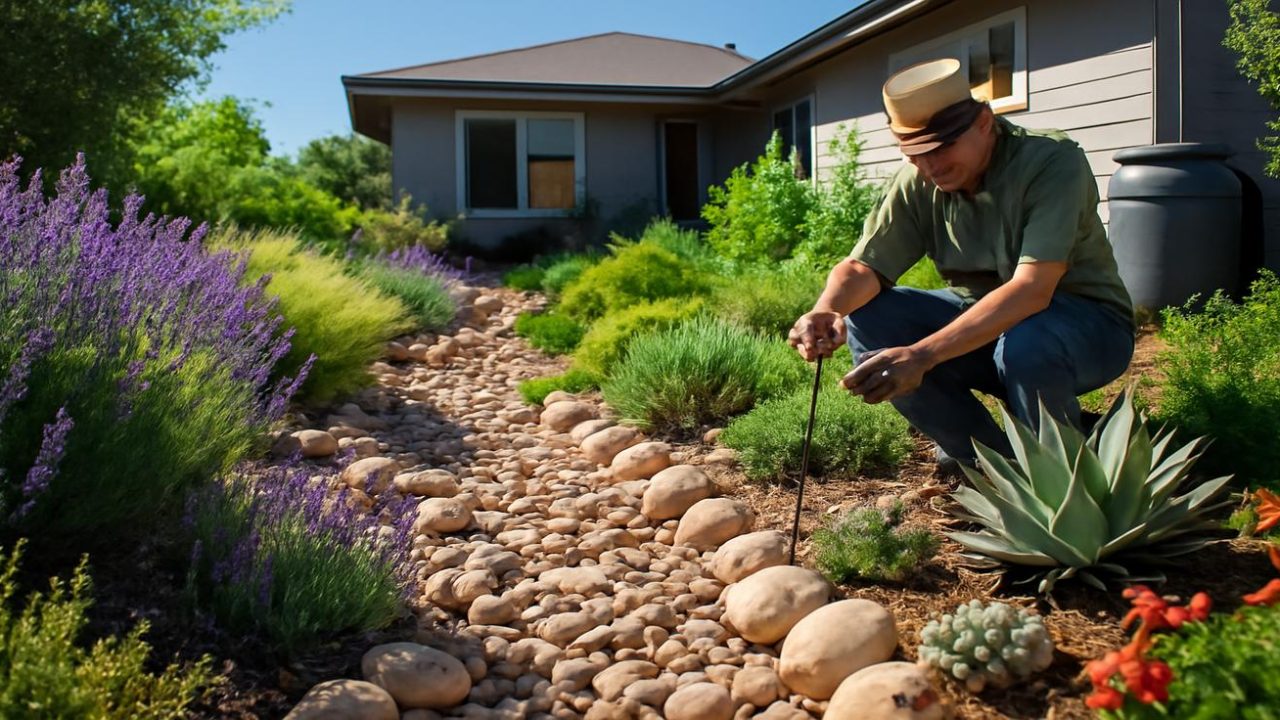
Marcus stood in his backyard at 6 AM, sprinkler system running full blast across his sprawling lawn. The water bill had just hit $340 for the month, and his wife was furious. “This is insane,” he muttered, watching precious water cascade onto the sidewalk and street.
What Marcus didn’t realize was that his beautiful landscape was essentially a water-guzzling machine, designed without any consideration for efficiency or sustainability. His story isn’t unique—millions of homeowners are trapped in the same cycle of excessive watering, high bills, and environmental guilt.
The truth is, most residential landscapes are designed like it’s still 1950, when water seemed unlimited and climate change wasn’t on anyone’s radar. But today’s reality demands smarter solutions.

Why Traditional Landscaping Drains Your Wallet and the Environment
The average American household uses about 30% of its water for outdoor landscaping. That’s roughly 9 billion gallons per day nationwide. Most of this water is completely wasted due to poor design choices made decades ago.
Traditional landscaping relies heavily on thirsty grass species, inefficient irrigation systems, and plant arrangements that ignore natural water patterns. When landscape architects or homeowners design gardens without considering water efficiency, they create systems that fight against nature instead of working with it.
The biggest mistake I see is treating the entire yard like it needs the same amount of water. That’s like giving every person in your family the same size shoes and expecting them to fit.
— Jennifer Martinez, Sustainable Landscape Designer

Poor soil preparation compounds the problem. Compacted clay soil can’t absorb water effectively, leading to runoff. Sandy soil drains too quickly, requiring constant irrigation. Neither scenario supports healthy plant growth or water conservation.
Smart Design Solutions That Actually Work
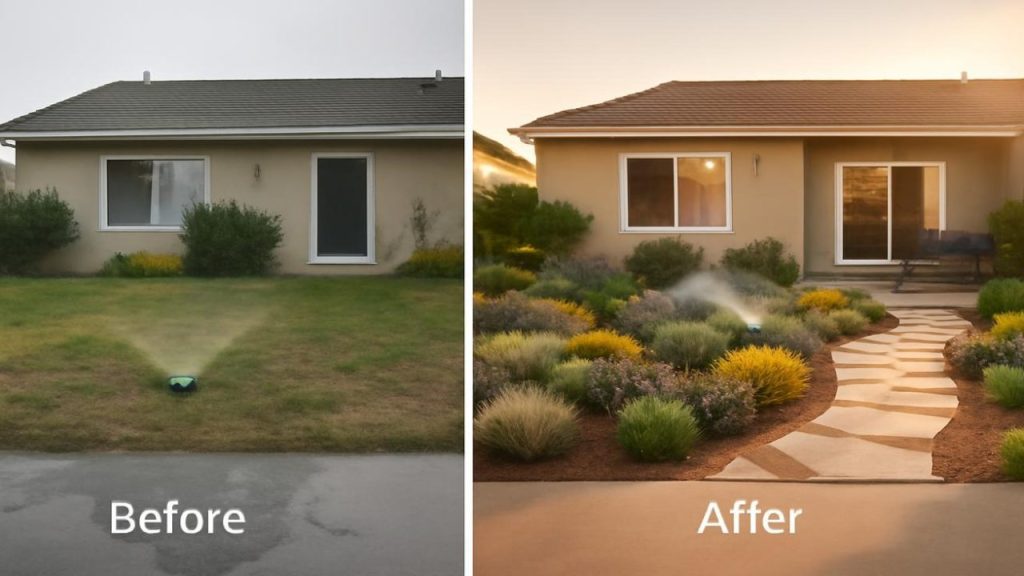
The good news? You don’t have to sacrifice beauty for sustainability. Modern water-wise landscaping can be more stunning than traditional designs while using 50-70% less water.
Zone-Based Watering Systems

Instead of treating your entire yard as one unit, divide it into hydro-zones based on water needs:
- High-water zones: Vegetable gardens, annual flower beds near entryways
- Medium-water zones: Perennial borders, fruit trees, herb gardens
- Low-water zones: Native plant areas, ornamental grasses, drought-tolerant shrubs
- No-irrigation zones: Rock gardens, native wildflower meadows, hardscaping
Smart Plant Selection
The foundation of water-efficient landscaping is choosing plants adapted to your local climate. This doesn’t mean settling for boring desert plants—unless you live in the desert.
| Climate Zone | Water-Wise Plant Examples | Water Savings |
|---|---|---|
| Mediterranean | Lavender, rosemary, olive trees, succulents | 60-80% |
| Temperate | Native grasses, coneflowers, black-eyed Susan | 40-60% |
| Humid Subtropical | Native azaleas, coral honeysuckle, beautyberry | 30-50% |
| Arid | Palo verde, desert marigold, agave varieties | 70-90% |
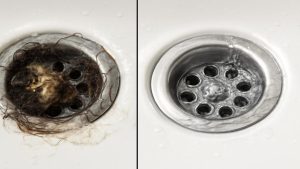
I’ve seen homeowners reduce their water bills by $200 per month just by replacing their front lawn with native plants and decorative gravel pathways. The maintenance time dropped to almost zero, too.
— David Chen, Water Conservation Specialist
Soil Improvement Strategies
Healthy soil holds water like a sponge and releases it slowly to plant roots. Here’s how to fix common soil problems:

- Add 2-4 inches of compost to improve both clay and sandy soils
- Install drainage systems in areas with standing water
- Use mulch to reduce evaporation and regulate soil temperature
- Consider permeable hardscaping to reduce runoff
Technology That Makes Water Conservation Effortless
Modern irrigation technology can transform even existing landscapes into water-efficient systems. Smart controllers adjust watering schedules based on weather data, soil moisture, and plant needs.
Drip irrigation delivers water directly to plant roots, eliminating the waste of spray systems. Micro-spray systems work well for groundcovers and small shrubs. Rain sensors prevent irrigation during storms—a simple device that can save thousands of gallons annually.
The return on investment for smart irrigation is usually 2-3 years through water savings alone. Add in the improved plant health and reduced maintenance, and it’s a no-brainer.
— Sarah Kim, Landscape Architect
Greywater Systems
Greywater from laundry, showers, and bathroom sinks can irrigate ornamental plants. Simple laundry-to-landscape systems cost $200-500 and can provide 15-40 gallons per day for irrigation.
The Financial Reality of Sustainable Landscaping
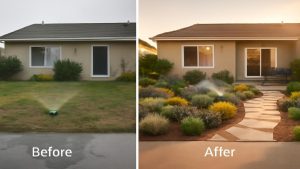
Initial costs for landscape redesign vary widely, but the long-term savings are substantial. A typical front yard conversion from lawn to water-wise plants costs $3,000-8,000 but can save $1,200-2,400 annually in water costs.

Many water utilities offer rebates for lawn removal, efficient irrigation upgrades, and rain barrel installation. Some programs cover 50-75% of conversion costs.
We’re seeing more homeowners realize that their landscape should be an asset, not a liability. Water-wise designs increase property values while cutting utility costs.
— Michael Torres, Real Estate Appraiser
Beyond water savings, sustainable landscapes require less fertilizer, pesticide, and maintenance. Many homeowners report cutting their landscape maintenance time by 60-80% after converting to water-wise designs.

Getting Started Without Breaking the Bank
You don’t need to redesign everything at once. Start with the most visible or problematic areas:
- Replace the strip of grass between sidewalk and street with native plants
- Install a drip system for existing flower beds
- Add mulch to reduce watering needs by 25-50%
- Plant shade trees to reduce overall landscape water needs
Focus on eliminating grass in areas where it doesn’t serve a functional purpose. Decorative lawns in front yards often use more water than the rest of the landscape combined.
The key is thinking of your landscape as a system rather than a collection of individual plants. When designed properly, each element supports the others, creating a beautiful, sustainable environment that works with nature instead of against it.
FAQs
How much can I really save by switching to water-wise landscaping?
Most homeowners see 40-70% reduction in outdoor water use, translating to $800-2,000 in annual savings depending on local water rates.
Will my property value decrease if I remove my lawn?
Well-designed water-wise landscapes typically increase property values, especially in drought-prone areas where buyers appreciate lower maintenance costs.
How long does it take for new drought-tolerant plants to establish?
Most native and adapted plants need regular watering for 6-12 months, then become largely self-sufficient except during extreme drought.
Can I still have some lawn area with water-wise landscaping?
Absolutely. Focus lawn areas where you’ll actually use them—play areas, entertaining spaces—and choose drought-tolerant grass varieties.
What’s the biggest mistake people make when converting to water-wise landscaping?
Trying to do everything at once without a plan. Start with problem areas and gradually expand your water-wise zones over 2-3 years.
Do water-wise gardens attract more pests or wildlife?
Native plant gardens typically attract beneficial insects and birds while requiring fewer pesticides than traditional landscapes.








Leave a Comment