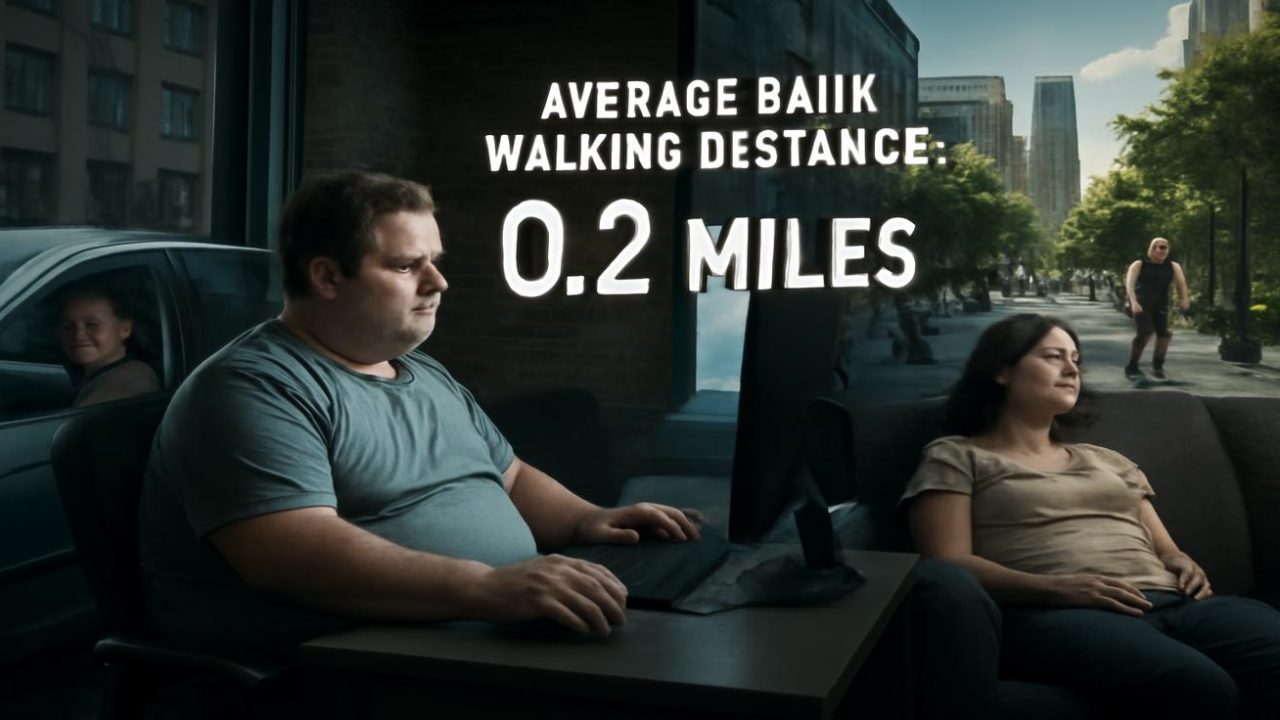
The average city dweller now walks fewer than 3,000 steps a day, according to recent surveys — with some studies showing numbers as low as 2,000 steps. To put that in perspective, that’s roughly the distance you’d cover shuffling from a small apartment to an elevator, into a car or subway, up another elevator, then back again.
For a species that evolved to roam savannas and migrate with the seasons, we’ve somehow engineered urban lives where our legs have become almost optional. The implications of this dramatic shift in human movement patterns are reshaping not just our physical health, but potentially our cognitive function and the very design of cities themselves.
This isn’t just about fitness trackers buzzing with disappointed reminders. The transformation of humans into a predominantly sedentary species represents one of the most dramatic behavioral changes in our evolutionary history — and it’s happened in just a few generations.

How Modern City Life Engineered Movement Out of Our Days
Understanding this shift requires examining what a typical urban weekday actually looks like. The modern city dweller’s routine has become a series of seated intervals connected by minimal movement.
The day begins with a few steps from bed to bathroom to kitchen. Coffee in hand, you settle into a chair to check emails. The commute — whether by car, train, or bus — is another seated affair, broken only by brief moments standing on platforms or walking to parking spots.
At the office, the pattern continues: desk chair for work, meeting chair for conferences, lunch chair for meals, couch for breaks. Even leisure activities have become increasingly sedentary, with entertainment, social interaction, and shopping all accessible from the same seated position.

By evening, when fitness trackers deliver their accusatory notifications about missed step goals, mental fatigue often wins out over physical activity. The result is a daily movement pattern that would have been unimaginable to humans just a century ago.
The Stark Reality of Urban Movement Patterns
The data reveals just how dramatically urban living has changed human behavior. While health experts recommend 10,000 steps daily for optimal health, the reality of city life falls drastically short.
| Activity | Typical Daily Steps | Time Spent |
|---|---|---|
| Home morning routine | 200-300 steps | 1-2 hours |
| Commute walking | 400-600 steps | 30-60 minutes total |
| Office movement | 800-1,200 steps | 8-9 hours |
| Evening routine | 300-500 steps | 4-5 hours |
| Total daily average | 2,000-3,000 steps | 16+ hours awake |
This represents a dramatic departure from human evolutionary patterns. Our ancestors typically covered 8-12 miles daily through hunting, gathering, and general survival activities. Modern urban dwellers often cover less than 1.5 miles in an entire day.

The shift becomes even more pronounced when considering that much of this limited movement occurs in controlled, climate-regulated environments. Escalators, elevators, and moving walkways have eliminated even the minimal physical effort required to navigate vertical spaces and long corridors.
What This Means for Bodies and Brains
The consequences of this sedentary shift extend far beyond simple fitness concerns. Prolonged sitting and minimal daily movement are reshaping human physiology in measurable ways.
Cardiovascular systems adapted for regular movement now operate in a state of chronic underuse. Muscle mass declines more rapidly, bone density decreases, and metabolic processes slow. But perhaps more concerning are the emerging connections between physical inactivity and cognitive function.

Research suggests that regular movement plays a crucial role in brain health, affecting everything from memory formation to mood regulation. The same evolutionary adaptations that made walking and running essential for survival also integrated movement with optimal brain function.
Urban environments that minimize walking may be inadvertently impacting mental acuity, stress management, and overall psychological well-being. The brain, like the body, appears to function best when supported by regular physical activity — something modern city life has systematically engineered out of daily routines.
How Cities Are Responding to the Walking Crisis
Recognition of this movement crisis is beginning to influence urban planning and design. Some cities are experimenting with infrastructure changes aimed at encouraging more walking and physical activity throughout daily routines.

Walkable neighborhood designs, expanded pedestrian zones, and improved public transportation that requires more walking between connections represent attempts to reintegrate movement into urban life. However, these changes often compete with established patterns of convenience and efficiency that prioritize speed over physical activity.
The challenge lies in balancing the legitimate demands of modern urban productivity with the biological needs of human bodies that evolved for much more active lifestyles. Simply encouraging people to walk more may not be sufficient if the entire urban infrastructure is designed to minimize walking.
Some urban planners are exploring whether cities need fundamental redesign to support human health, rather than just economic efficiency. This might mean rethinking everything from building layouts to transportation systems to workplace design.

What Happens Next for Urban Movement
The trajectory of urban walking patterns suggests this trend may continue declining unless conscious interventions occur. Remote work, delivery services, and increasingly sophisticated entertainment options all point toward even more sedentary lifestyles.
However, growing awareness of the health implications could drive counter-movements. Some employers are experimenting with workplace designs that encourage movement, while urban planners are beginning to prioritize pedestrian-friendly infrastructure.
The question becomes whether humans will adapt cities to support biological needs, or whether we’ll continue adapting our bodies to increasingly sedentary urban environments. The 2,000-3,000 daily step average may represent either a temporary low point or the new normal for urban humanity.

Individual responses vary widely, with some city dwellers making conscious efforts to integrate more walking into daily routines, while others embrace the convenience of minimal movement. The long-term outcome will likely depend on whether the health consequences of extreme sedentary living become impossible to ignore.
Frequently Asked Questions
How many steps does the average city dweller actually take per day?
Recent surveys show the average city dweller walks fewer than 3,000 steps daily, with some studies indicating numbers as low as 2,000 steps.
Is this step count really that concerning compared to recommended levels?
Yes — health experts typically recommend 10,000 steps daily, meaning many urban dwellers are getting only 20-30% of the recommended daily movement.

What activities make up most of a city dweller’s daily steps?
Most steps come from basic navigation: moving around the home, walking to and from transportation, and minimal office movement throughout the workday.
How does this compare to human evolutionary patterns?
Our ancestors typically covered 8-12 miles daily through hunting, gathering, and survival activities, while modern city dwellers often cover less than 1.5 miles total.
Are cities doing anything to address this walking decline?
Some cities are experimenting with walkable neighborhood designs, expanded pedestrian zones, and public transportation that requires more walking, though these efforts compete with established convenience-focused infrastructure.
Could this trend get even worse in the future?
Current trends suggest yes — remote work, delivery services, and advanced entertainment options all point toward potentially even more sedentary urban lifestyles unless conscious interventions occur.











Leave a Comment