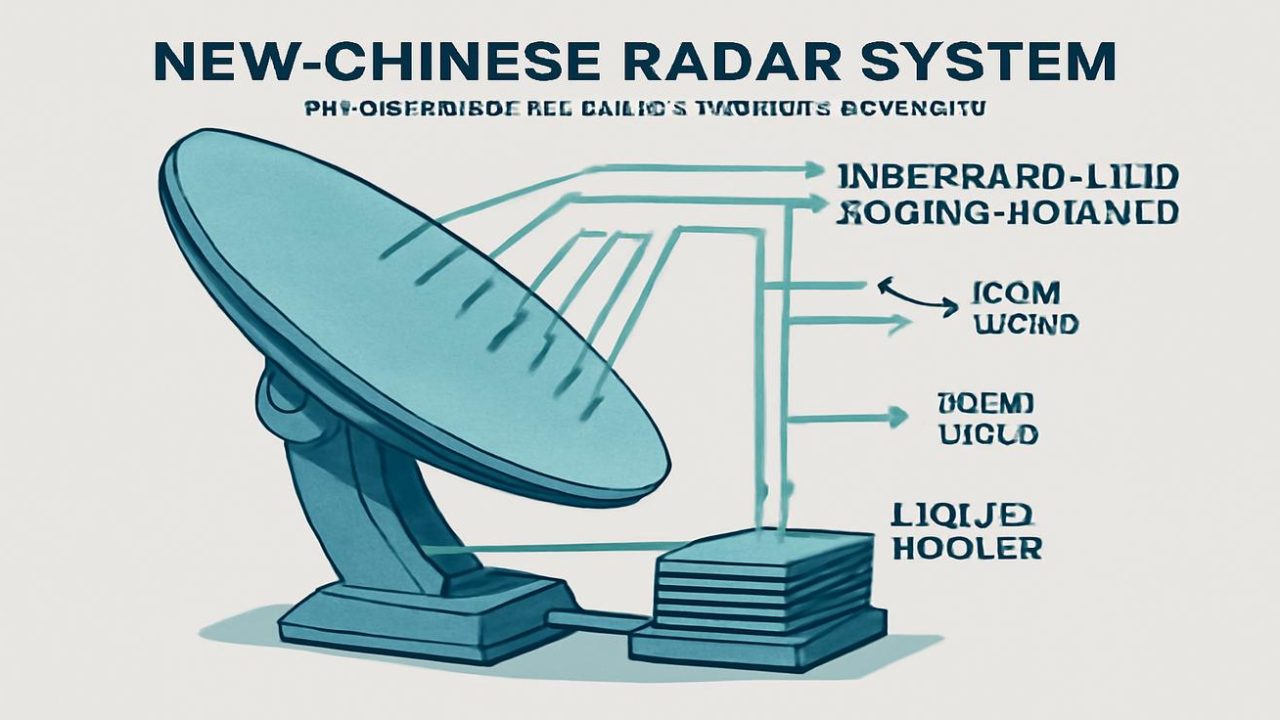
For decades, stealth aircraft have ruled the skies by slipping past radar systems like electronic ghosts. But China’s recent breakthrough in super-radar technology could change that equation entirely — by solving the one problem that has kept these advanced systems from reaching their full potential.
The breakthrough centers on waste heat management, the invisible enemy that has long prevented high-frequency radar systems from operating at maximum power. While most people think of radar as mature World War II-era technology, a quiet revolution is underway in defense circles, with China positioning itself at the forefront of next-generation detection capabilities.
This isn’t just about bigger antenna dishes or stronger radio waves. The new generation of radar technology promises unprecedented resolution through imaging high-frequency radars, quantum-inspired systems, and ultra-wideband networks capable of detecting even the faintest stealth aircraft signatures.

Why Waste Heat Has Been Radar’s Biggest Obstacle
Walk into any high-power radar station and you’ll immediately feel the heat. The constant whir of cooling fans, warm air from ventilation systems, and the faint smell of hot electronics tell the story of radar’s hidden challenge.
Modern radar systems convert electrical power into radio pulses using components like gallium nitride transistors, high-frequency amplifiers, and complex processors. These components are far from perfectly efficient — a significant portion of input energy becomes waste heat rather than useful signal.
Too much heat creates a cascade of problems. Radar operators can’t push transmitters to maximum power without risking component burnout. Systems must pause to cool down, throttle their output, or spread power across larger, heavier installations. In naval applications, this means bulky cooling systems taking up valuable ship space. For aircraft, every kilogram dedicated to cooling reduces fuel capacity, weapons load, or operational range.

The newest “super-radar” concepts are particularly demanding. Operating at higher frequencies for finer resolution and potential stealth-defeating capabilities, these systems require components that switch faster, push harder, and handle more concentrated power. They operate like precision instruments forced to work in a furnace, with waste heat serving as the primary barrier to higher performance.
The Technology Behind China’s Heat Management Breakthrough
China’s reported advance addresses this fundamental cooling challenge through what appears to be an elegantly simple solution: more effective heat extraction from radar components. While specific technical details remain limited, the breakthrough represents a potential game-changer for military radar capabilities.
The implications extend beyond just running cooler systems. Better heat management allows radar operators to:
- Increase transmitter power output without component damage
- Operate continuously without cooling breaks
- Reduce overall system weight and size
- Improve detection range and resolution
- Enable mobile deployment of previously stationary systems
For stealth aircraft detection specifically, this could prove revolutionary. Higher-frequency radar systems with improved heat management can potentially operate at the power levels and frequencies needed to detect radar-absorbing materials and angular stealth designs.
Current Radar Technology Limitations
| Challenge | Current Impact | Heat Management Solution |
|---|---|---|
| Component Overheating | Reduced power output | Higher sustainable power levels |
| Cooling Requirements | Bulky, heavy systems | Compact, mobile designs |
| Operational Breaks | Intermittent coverage | Continuous operation |
| Frequency Limitations | Lower resolution | Higher frequency operation |
What This Means for Modern Air Defense
The race to see first and more clearly represents one of modern defense’s most critical competitions. Traditional radar technology has steadily improved in range and accuracy, but this second, quieter revolution focuses on defeating stealth technology that has dominated air superiority for decades.
China’s heat management breakthrough could provide the first practical implementation of truly effective super-radar systems. These advanced networks promise capabilities that seemed theoretical just years ago: tracking near-space objects, detecting stealth aircraft signatures, and providing unprecedented battlefield awareness.

The technology shift mirrors historical radar developments. Just as World War II radar gave way to more sophisticated systems during the Cold War, today’s heat-limited radar may soon seem primitive compared to systems that can operate at full power continuously.
Military analysts have long recognized that stealth technology’s advantages depend partly on radar limitations. Aircraft designed with careful angles and radar-absorbing materials exploit the fact that detection systems can’t operate at optimal parameters due to heat constraints.
The Broader Implications of Super-Radar Technology
Beyond military applications, improved radar heat management could transform civilian uses. Air traffic control systems could operate with higher resolution and better weather penetration. Maritime navigation could benefit from more precise coastal monitoring. Even space debris tracking could improve with more powerful ground-based radar systems.

The breakthrough also highlights the ongoing technology competition between major powers. While China appears to be leading in this specific area, radar development continues globally, with different nations pursuing various approaches to the same fundamental challenges.
For the aviation industry, effective super-radar deployment could reshape aircraft design philosophy. If stealth technology becomes less effective against advanced detection systems, aircraft manufacturers may need to explore alternative approaches to survivability, potentially including speed, electronic warfare, or entirely new stealth concepts.
What Happens Next in Radar Development
The true test of China’s breakthrough will come through operational deployment and real-world performance. Laboratory advances don’t always translate directly to field conditions, where environmental factors, maintenance requirements, and operational demands create additional challenges.

Other nations will likely accelerate their own super-radar research in response. The United States, European allies, and other military powers have significant radar development programs that may produce competing solutions or entirely different approaches to the heat management problem.
The timeline for widespread deployment remains unclear. Even with effective heat management solutions, super-radar systems require extensive testing, integration with existing defense networks, and training for operators. The transition from breakthrough to battlefield deployment typically spans several years.
Meanwhile, stealth aircraft manufacturers aren’t standing still. As radar technology advances, counter-stealth research continues, potentially leading to new materials, designs, or electronic warfare capabilities that could restore the balance between detection and evasion.

Frequently Asked Questions
What makes this radar technology “super” compared to current systems?
Super-radar operates at higher frequencies with greater power output, potentially providing resolution and detection capabilities that can identify stealth aircraft previously invisible to conventional radar.
How does waste heat actually limit radar performance?
Excess heat forces radar operators to reduce power output, take cooling breaks, or use bulkier systems with extensive cooling equipment, preventing the technology from reaching its theoretical maximum capabilities.
Can this technology detect all stealth aircraft?
The specific capabilities against different stealth designs have not been confirmed, though improved heat management should allow radar systems to operate closer to their theoretical detection limits.

When will this technology be deployed operationally?
No specific deployment timeline has been announced, as the technology likely requires extensive testing and integration before operational use.
Will other countries develop similar heat management solutions?
Other nations with advanced radar programs are likely pursuing their own approaches to the same fundamental cooling challenges that limit current radar performance.
What does this mean for current stealth aircraft?
The long-term impact on existing stealth designs remains unclear and would depend on the actual operational capabilities of deployed super-radar systems.









Leave a Comment