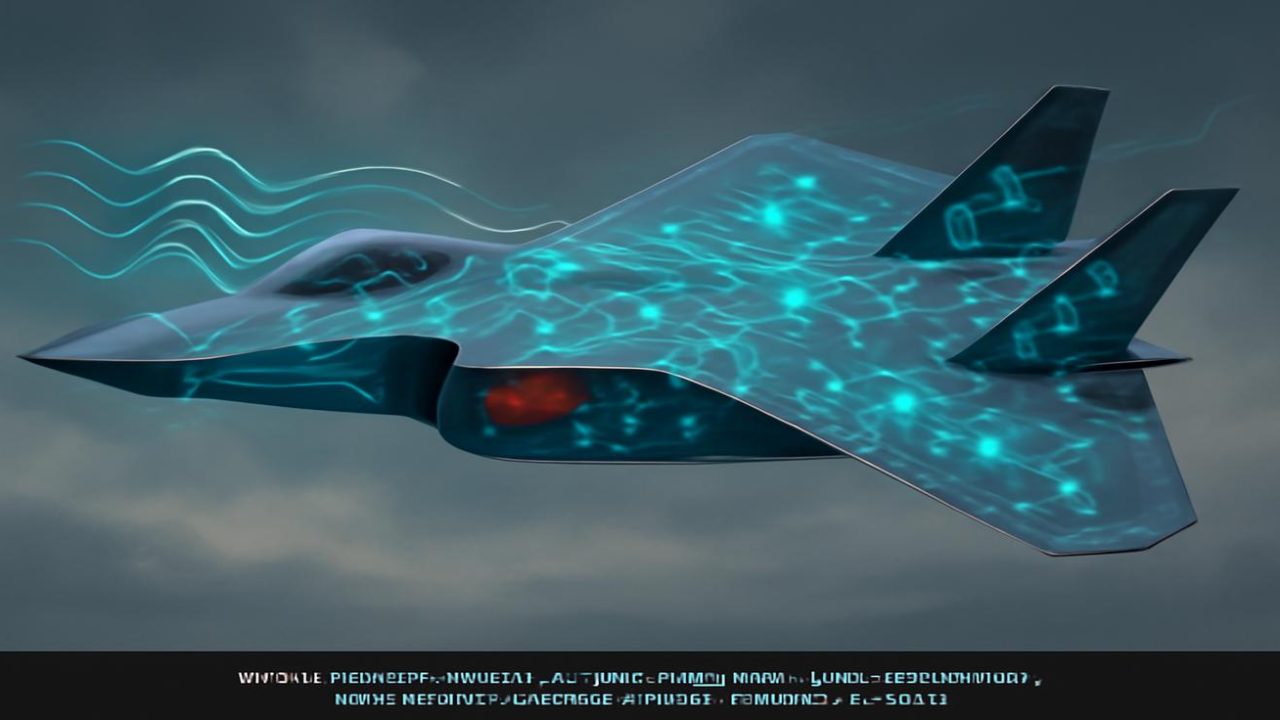
Chinese researchers have developed a revolutionary “6G smart surface” technology that allows stealth aircraft to harvest energy from enemy radar beams while remaining virtually invisible. The breakthrough transforms the traditional cat-and-mouse game of aerial warfare, where aircraft that once simply avoided detection can now feed off the very signals meant to track them.
This technology represents a fundamental shift in stealth capabilities. Instead of just deflecting or absorbing radar waves, the smart surface actively converts hostile radar energy into usable electricity that can power onboard systems, sensors, and future 6G communication devices.
The implications extend far beyond military applications, potentially reshaping how aircraft interact with electromagnetic environments in both defense and civilian contexts.

How Smart Surface Technology Transforms Stealth Aircraft
The 6G smart surface operates through what researchers call reconfigurable intelligent surfaces, also known as metasurfaces. These engineered structures, no thicker than a few human hairs, are arranged in precise patterns beneath the aircraft’s skin.
Unlike traditional stealth technology that simply scatters or absorbs radar energy, this smart surface actively manages incoming electromagnetic waves. The system senses radar pulses, shapes them, and redirects them in three distinct ways: some energy is diffused into atmospheric noise, some is deflected away from radar receivers, and a controlled portion is channeled into tiny circuits for power conversion.
The aircraft’s outer shell essentially becomes a “radar farmer,” harvesting the storm of enemy pulses that surround it during flight operations. This process occurs continuously and automatically, turning what was once a vulnerability into an operational advantage.

The Technology Behind Electromagnetic Energy Harvesting
The smart surface contains a network of small electronic components arranged in geometric tiles across the aircraft’s exterior. Each tile includes diodes, varactors, and micro-antennas that can be individually tuned in real-time through software control.
When radar waves strike the surface, sophisticated algorithms determine how each tile responds. The system makes split-second decisions about which frequencies to absorb, which to deflect, and which to convert into electrical current.
| Component | Function | Response Type |
|---|---|---|
| Diodes | Energy conversion | Convert radar waves to electricity |
| Varactors | Signal tuning | Adjust frequency response |
| Micro-antennas | Wave capture | Collect electromagnetic energy |
This distributed approach means the entire airframe becomes an intelligent interface with the electromagnetic environment, rather than relying on traditional protruding antennas that create radar signatures.

6G Integration and Communication Capabilities
The technology’s 6G capabilities represent preparation for next-generation communications that operate at terahertz frequencies. These extremely high-frequency signals behave almost like light, offering sharp directional properties and massive data capacity.
A smart surface equipped for 6G can simultaneously function as a stealth system and a communication array. The same technology that bends enemy radar waves can also serve as an antenna system for ultra-high-speed data transmission.
This dual functionality eliminates the need for separate communication equipment that might compromise stealth characteristics. Instead of vulnerable antenna arrays, the entire aircraft body becomes a chameleon-like communication organ that adapts to operational requirements.

The system’s ability to operate across multiple electromagnetic spectrums means future aircraft could maintain constant, high-bandwidth communication links while remaining invisible to detection systems.
Military and Civilian Applications
Beyond stealth fighters, this technology could revolutionize various aircraft platforms. Military applications include reconnaissance drones, bomber aircraft, and electronic warfare platforms that need to operate in heavily defended airspace.
The energy harvesting aspect provides practical benefits for extended missions. Aircraft equipped with smart surfaces could potentially reduce their dependence on internal power systems, extending operational range and capability.

Civilian applications may emerge as the technology matures. Commercial aircraft could benefit from improved communication systems and reduced electromagnetic interference, while research aircraft might use the technology for atmospheric studies and environmental monitoring.
The smart surface concept also opens possibilities for ground-based applications, including communication infrastructure and electronic warfare systems that need to operate in contested electromagnetic environments.
Technical Challenges and Future Development
Implementing this technology requires solving complex engineering challenges. The smart surface must maintain its electromagnetic properties while withstanding the extreme conditions of high-speed flight, including temperature variations, mechanical stress, and environmental exposure.

Manufacturing costs and complexity present additional hurdles. Each aircraft would require thousands of precisely calibrated electronic components integrated into its outer skin, demanding new production techniques and quality control methods.
Software development represents another critical challenge. The algorithms controlling tile responses must operate in real-time, making thousands of adjustments per second based on changing electromagnetic conditions and mission requirements.
Maintenance and repair procedures will need complete redesign, as traditional aircraft servicing methods cannot accommodate the sensitive electronic systems embedded throughout the airframe surface.

Strategic Implications for Future Warfare
This technology could fundamentally alter the balance of air power. Aircraft equipped with smart surfaces gain significant advantages in contested airspace, where traditional stealth platforms might struggle against advanced radar systems.
The ability to harvest energy from enemy emissions creates tactical opportunities previously impossible. Aircraft could potentially operate longer in hostile territory, powered partly by the very systems trying to detect them.
Electronic warfare capabilities receive substantial enhancement through smart surface technology. Aircraft could simultaneously defend against radar detection while conducting offensive electronic operations, using the same surface systems for multiple mission roles.

International defense dynamics may shift as this technology spreads. Nations developing similar capabilities will likely accelerate their research programs, while those without access face growing disadvantages in aerial warfare scenarios.
Frequently Asked Questions
How does the smart surface convert radar energy into electricity?
The surface uses tiny electronic components including diodes and micro-antennas arranged in patterns that capture electromagnetic waves and convert them into electrical current through specialized circuits.
Can this technology work against all types of radar systems?
The smart surface is designed to handle multiple frequencies and can be reconfigured in real-time, though specific effectiveness against different radar types has not been detailed in available research.
What happens to aircraft stealth if the smart surface is damaged?
Damage to the smart surface would likely compromise both stealth capabilities and energy harvesting functions, though the distributed nature of the system may provide some redundancy.
When will this technology appear on operational aircraft?
No timeline for operational deployment has been announced, as the technology appears to be in the research and development phase.
How much power can the smart surface generate from enemy radar?
Specific power generation figures have not been disclosed in the available research, though the system is designed to supplement onboard power systems rather than replace them.
Will civilian aircraft eventually use this technology?
Potential civilian applications exist for communication and electromagnetic interference reduction, but implementation would depend on cost, regulatory approval, and practical benefits for commercial aviation.











Leave a Comment