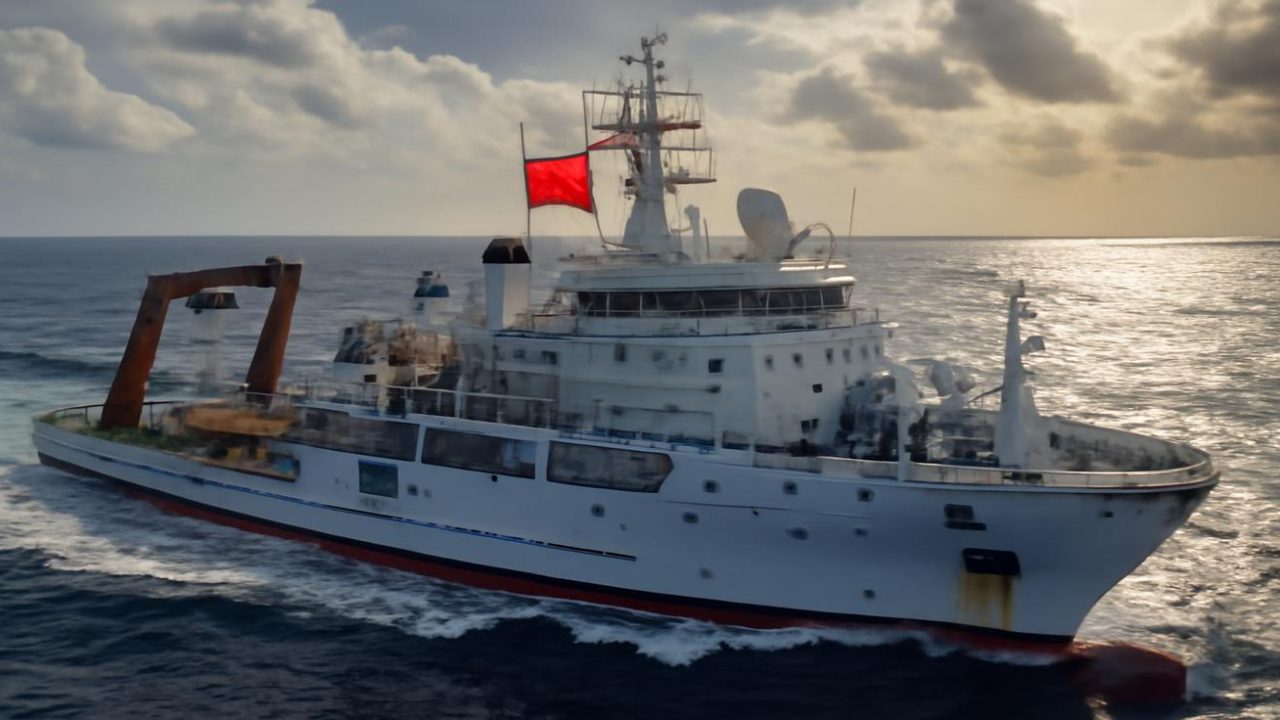
China’s latest research vessel represents more than just another ship in the water—it’s a floating laboratory designed to unlock secrets from the deepest parts of our oceans. As nations race to explore Earth’s final frontier, this sophisticated vessel could position China at the forefront of deep-sea discovery.
The ship sits quietly in Sanya Bay, its sleek white and blue exterior concealing an interior that hums with cutting-edge technology. Unlike traditional maritime vessels, this research craft transforms the very concept of ocean exploration into a high-tech scientific mission.
Step aboard, and you’ll find yourself in what feels more like a space station than a ship. The corridors don’t lead to passenger quarters—they connect specialized laboratories where the real work of ocean science happens around the clock.

More Laboratory Than Traditional Vessel
The vessel’s true purpose becomes clear the moment you walk through its corridors. The air carries the electrical hum of server racks, refrigeration systems, and water circulation equipment that keeps delicate scientific instruments operational in harsh ocean conditions.
Glass-fronted rooms flood with clinical lighting house wet laboratories where seawater samples wait in transparent cylinders. Scientists filter these samples for microbes and trace elements that could reveal new insights about marine ecosystems and deep-sea biology.
Adjacent dry laboratories smell faintly of solder and plastic, dominated by screens, 3D printers, sensor racks, and robotic components. These facilities allow researchers to analyze findings in real-time and even manufacture replacement parts while at sea—a crucial capability for extended deep-ocean missions.

The ship’s design reflects China’s strategic approach to ocean exploration: comprehensive, self-sufficient, and technologically advanced. Every square meter serves the mission of pushing deeper into unexplored waters than previous generations of research vessels.
Why Deep Ocean Exploration Matters Now
The deep ocean remains one of Earth’s greatest mysteries. Scientists estimate we’ve explored less than 5% of our planet’s underwater realm, leaving vast territories unknown and untapped.
This knowledge gap represents both scientific opportunity and strategic advantage. The deep sea contains resources that could reshape global economics, from rare earth minerals essential for technology manufacturing to new species that might revolutionize medicine and biotechnology.

Climate change research also depends heavily on deep-ocean data. Understanding how deep currents move heat around the planet, how marine ecosystems respond to changing conditions, and how carbon cycles through ocean systems requires the kind of advanced research capabilities this vessel provides.
Nations recognize that leadership in ocean exploration could translate into leadership in multiple fields—from environmental science to resource extraction to biotechnology development.
Advanced Capabilities Set This Ship Apart
The vessel’s technological specifications demonstrate China’s commitment to comprehensive ocean research:

- Wet laboratories equipped for immediate sample processing and analysis
- Dry laboratories with 3D printing capabilities for equipment manufacturing at sea
- Advanced sensor arrays for real-time data collection
- Robotic systems for deep-sea exploration and sample collection
- Sophisticated computing infrastructure for data processing and analysis
- Self-contained life support systems for extended missions
These capabilities allow researchers to conduct experiments and analysis that would typically require returning to shore-based facilities. The ability to manufacture replacement parts using onboard 3D printers means missions can continue even when equipment fails in remote locations.
The ship’s server infrastructure enables real-time data transmission back to mainland research institutions, allowing shore-based scientists to collaborate with sea-based teams and adjust research priorities based on discoveries.
| Research Capability | Traditional Vessels | Advanced Research Ship |
|---|---|---|
| Sample Processing | Shore-based only | Real-time onboard analysis |
| Equipment Repair | Return to port required | 3D printing capabilities |
| Data Analysis | Post-mission processing | Live analysis and transmission |
| Mission Duration | Limited by logistics | Extended self-sufficient operations |
The Global Race for Ocean Dominance
China’s investment in advanced ocean exploration reflects a broader international competition for deep-sea knowledge and resources. Other nations have recognized the strategic importance of ocean research, but few have committed to the comprehensive approach this vessel represents.

The United States, Japan, and European nations maintain strong ocean research programs, but China’s integrated approach—combining advanced technology with sustained investment—could provide significant advantages in the race to map and understand deep-sea environments.
Private companies have also entered ocean exploration, particularly for resource extraction and tourism. However, government-backed research vessels like China’s new ship focus on comprehensive scientific understanding rather than narrow commercial objectives.
The competition extends beyond pure science. Nations that develop superior deep-sea exploration capabilities position themselves to claim resources, establish territorial presence, and influence international maritime policy.

What This Means for Ocean Science
Advanced research vessels like this one could accelerate ocean discovery dramatically. The ability to conduct sophisticated analysis at sea, manufacture equipment as needed, and maintain extended missions opens research possibilities that weren’t feasible with traditional approaches.
Real-time data processing means researchers can adjust their strategies based on immediate findings rather than waiting months for shore-based analysis. This responsiveness could lead to more targeted discoveries and more efficient use of research time.
The ship’s capabilities also enable research in previously inaccessible areas. Extended mission duration and self-sufficiency allow exploration of remote ocean regions that required prohibitively expensive logistics with conventional vessels.

International collaboration could benefit from these advances, as the ship’s data transmission capabilities allow global research teams to participate in missions remotely. However, the strategic nature of ocean exploration means much research may remain within national programs.
As climate change accelerates and resource demands increase, the ocean science conducted by vessels like this one becomes increasingly crucial for understanding and managing our planet’s future.
Frequently Asked Questions
Where is this Chinese research vessel based?
The ship operates from Sanya Bay, where it undergoes final preparations and diagnostics before missions.

What makes this vessel different from traditional research ships?
It functions more like a floating laboratory with wet and dry labs, 3D printing capabilities, and advanced computing infrastructure for real-time analysis.
How long can the ship stay at sea?
The vessel is designed for extended self-sufficient operations, though specific mission durations have not been disclosed.
What types of research will the ship conduct?
The ship is equipped for comprehensive ocean research including sample analysis, robotic deep-sea exploration, and real-time data collection.
Can other countries access this research?
The level of international collaboration and data sharing has not been specified in available information.
How does this compare to other nations’ ocean research capabilities?
While other countries maintain strong ocean research programs, this vessel’s integrated approach combining advanced technology with comprehensive capabilities represents a significant advancement in the field.











Leave a Comment