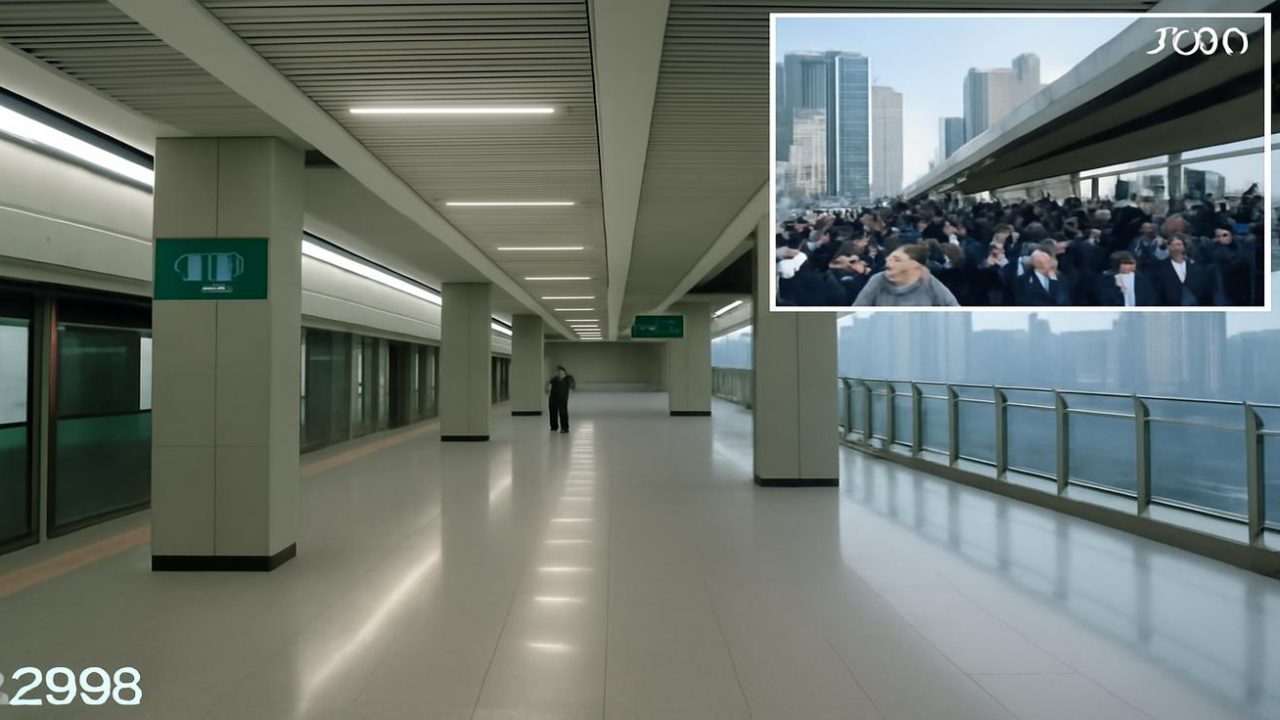
In 2008, gleaming metro stations sprouted across China in what seemed like the middle of nowhere — surrounded by empty fields, farmhouses, and silence instead of the bustling crowds you’d expect. Critics called them “ghost stations” and “vanity projects,” dismissing them as examples of reckless overbuilding and wasted resources.
Fifteen years later, those same stations anchor thriving urban districts, and the world has learned a hard lesson about underestimating China’s long-term urban planning strategy.
The story of these seemingly abandoned transit hubs reveals how China revolutionized city development by flipping the traditional script: instead of building transportation to serve existing populations, they built the infrastructure first and let entire cities grow around it.

When Empty Stations Looked Like Planning Mistakes
The scene was surreal for anyone who witnessed it firsthand. Spotless glass-and-steel station entrances jutting out of flat, winter-brown fields. No shops, no apartments, no traffic — just security guards, stray dogs, and distant farmhouses on the horizon.
One station bore the name “Future City Station,” which in 2008 felt more like wishful thinking than urban planning. Observers riding buses past these isolated transit stops couldn’t help but laugh at what seemed like obvious miscalculations.
The criticism was swift and merciless. Urban legends spread about stations so empty that staff fell asleep on plastic chairs, and last trains pulling into deserted platforms that looked like science fiction movie sets. Online forums buzzed with jokes about “the smartest rats in China living in these shiny empty tunnels.”

Even transportation professionals struggled to understand the logic. In most cities worldwide, public transit follows people — lines get built where houses already exist and businesses are already booming. China was doing the opposite, and it looked like madness.
The Transit-Oriented Development Strategy Nobody Understood
City planners and engineers tried explaining their approach, but their technical language mostly fell on deaf ears. Terms like “transit-oriented development,” “guiding urban form,” and “building the skeleton before the body” sounded like jargon designed to justify enormous spending on empty infrastructure.
What China was actually doing was using transit lines as tools to shape where future development would occur. Instead of letting cities sprawl randomly and then scrambling to connect them with transportation, they were creating the transportation backbone first and using it to guide growth in planned directions.

The strategy required enormous patience and faith. For several years, these stations existed in a strange twilight — not completely abandoned, since trains still stopped and staff still showed up, but far from the bustling hubs they were designed to become.
Ridership numbers during this period told the story clearly: heavy usage on inner-city stops, thin and fragile numbers at the edges of the map where the “premature” stations waited for their neighborhoods to materialize.
The Transformation That Proved the Skeptics Wrong
The vindication didn’t happen overnight. For years, visitors getting off at these fringe stations found themselves in areas that seemed undecided about existing. Fenced-off plots displayed faded banners promising “International Eco-City” or “Future Financial Hub,” while lone convenience stores kept their lights on through long, empty days.

But the infrastructure was there, waiting. And gradually, development began clustering around the transit nodes exactly as planners had envisioned. What started as isolated stations in fields became anchors for dense, mixed-use developments.
The transformation revealed the genius of the approach: by placing high-quality transit infrastructure first, China created powerful incentives for developers and residents to build and live in specific locations. The stations became magnets that pulled urban development toward them in organized, sustainable patterns.
| Development Phase | Timeline | Characteristics |
|---|---|---|
| Initial Construction | 2008-2010 | Empty stations, minimal ridership, widespread criticism |
| Transition Period | 2010-2015 | Gradual development, mixed success, continued skepticism |
| Maturation | 2015-Present | Thriving districts, high ridership, international recognition |
Why the World Misunderstood China’s Metro Station Strategy
The fundamental misunderstanding came from applying Western development patterns to a completely different approach. Most observers expected Chinese cities to grow the same way American or European cities had developed — organically, with infrastructure following population rather than leading it.

China’s rapid economic growth and urbanization created a unique opportunity to plan entire districts from scratch. With millions of people moving from rural areas to cities every year, the question wasn’t whether development would happen, but where and how it would be organized.
The “build it and they will come” strategy only worked because China had both the centralized planning authority to coordinate development and the demographic pressure of massive urbanization to fill the new spaces once they were created.
Critics who focused on short-term ridership numbers missed the longer-term vision. The stations weren’t built for the China of 2008 — they were built for the China of 2020 and beyond.

The Global Impact of Getting It Wrong
The misreading of China’s infrastructure strategy had consequences beyond urban planning circles. International investors, policy makers, and development experts who dismissed these projects as wasteful spending failed to recognize a new model of coordinated urban growth.
Cities around the world now study China’s transit-oriented development approach as a potential solution to sprawl, traffic congestion, and inefficient land use. What once looked like overreach is now seen as visionary planning.
The lesson extends beyond transportation infrastructure. China’s willingness to invest in long-term projects that showed little immediate return challenged conventional wisdom about development timelines and the relationship between infrastructure and economic activity.

For observers trying to understand China’s broader economic strategy, the metro station story serves as a reminder that short-term metrics don’t always capture long-term planning success. The country that seemed to be building subway stops to nowhere was actually building the foundation for sustainable urban growth.
Frequently Asked Questions
Why did China build metro stations in empty areas?
China used a transit-oriented development strategy, building infrastructure first to guide and organize future urban growth rather than following existing development patterns.
How long did it take for these stations to become successful?
The transformation typically took 5-10 years, with most stations seeing significant development and ridership growth between 2010-2015.

What made critics think these stations were failures?
Initial low ridership, isolated locations surrounded by empty fields, and the contrast with traditional Western development patterns led many to dismiss them as wasteful spending.
Do other countries use this same approach now?
Many cities worldwide now study China’s transit-oriented development model as a solution to urban sprawl and inefficient growth patterns.
What was the key to making this strategy work?
China’s centralized planning authority combined with massive urbanization pressure created the conditions for this approach to succeed where it might fail in other contexts.
How did this change international perceptions of Chinese planning?
The success of these initially criticized projects demonstrated China’s capacity for long-term strategic planning and challenged conventional wisdom about infrastructure investment timing.











Leave a Comment