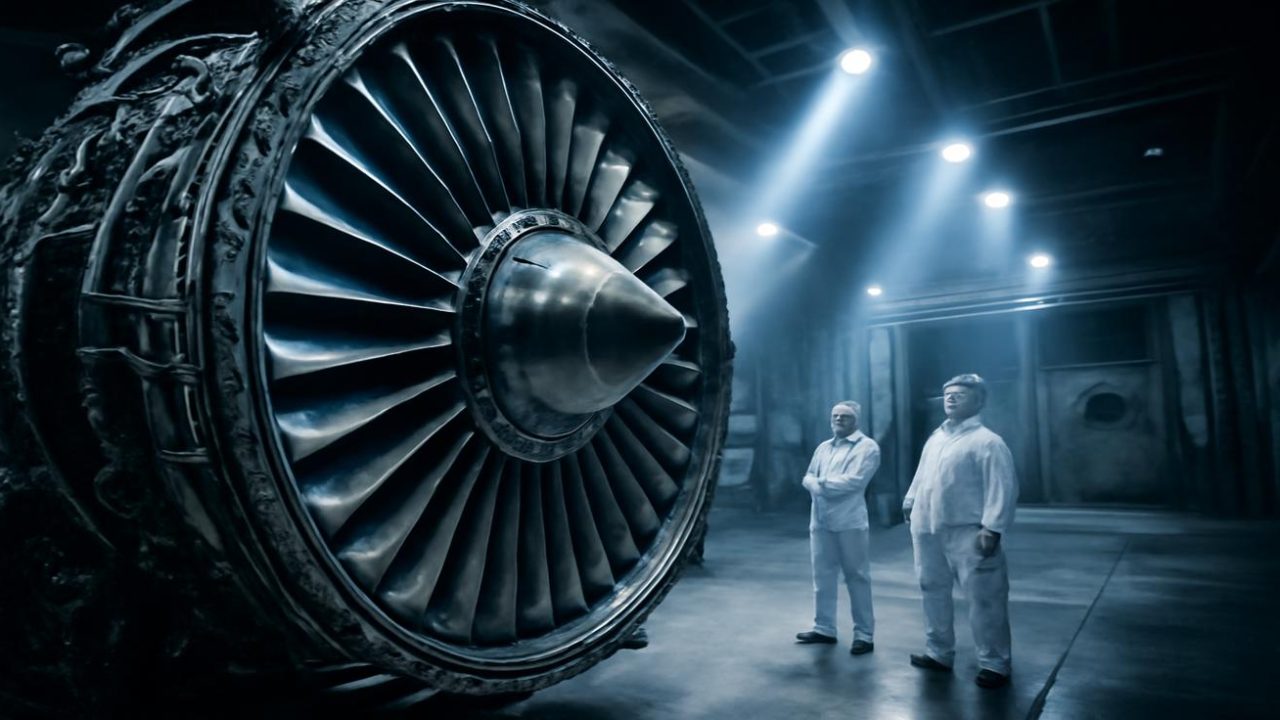
The United States military already dominates the skies with what many consider the world’s most advanced fighter jet engines, but a revolutionary new design called the XA100 is quietly rewriting the rules of aerial warfare. This adaptive cycle engine doesn’t just promise incremental improvements—it represents a fundamental shift in how military aircraft generate power and perform missions.
Unlike traditional jet engines that operate with fixed internal configurations, the XA100 can literally reshape its internal airflow patterns during flight. This means a single engine can optimize itself for different mission requirements, switching between fuel efficiency for long-range patrols and maximum thrust for combat scenarios.
The development signals that even technological superiority comes with an expiration date, and the military’s next-generation fighters will need capabilities that today’s engines simply cannot provide.

How Adaptive Cycle Engines Change Everything
Traditional fighter engines like those powering the F-22 and F-35 represent decades of engineering excellence. These afterburning turbofans deliver exceptional thrust and reliability, making them the gold standard for military aviation worldwide.
But they operate with a fundamental limitation: their internal design is fixed. Air enters, gets compressed and heated, ignites with fuel, and exits—all following the same basic pattern regardless of mission requirements.
The XA100 breaks this constraint through what engineers call an adaptive cycle design. The engine can modify how air flows through its internal components, essentially giving it multiple personalities that can be switched during flight.

When maximum fuel efficiency is needed for long-range missions, the engine configures itself like a high-bypass turbofan similar to those on commercial airliners. When combat situations demand raw power, it shifts to a low-bypass configuration that prioritizes thrust over fuel economy.
This flexibility addresses a growing challenge in modern warfare: missions are getting longer, aircraft are carrying more sophisticated electronics, and pilots need engines that can adapt to rapidly changing tactical situations.
Why Current Engines Hit Their Limits
The push for adaptive engines stems from evolving mission requirements that have stretched traditional designs to their breaking points. Modern fighter aircraft carry increasingly heavy loads of sensors, networking equipment, and stealth coatings that demand more electrical power and cooling.

Simultaneously, potential conflict zones have expanded geographically, requiring aircraft to fly longer distances while maintaining combat readiness. Traditional engines force designers to choose between fuel efficiency and performance—a compromise that becomes increasingly problematic as mission complexity grows.
The current generation of fighter engines excels in their designed roles, but they cannot dynamically adjust to changing conditions. A pilot flying a long patrol mission uses the same engine configuration as one engaged in close air support, even though these scenarios have vastly different power requirements.
| Engine Type | Primary Advantage | Key Limitation |
|---|---|---|
| Traditional Fighter Engine | Proven reliability and performance | Fixed configuration limits adaptability |
| Adaptive Cycle (XA100) | Variable configuration for different missions | Increased complexity |
This technological evolution reflects a broader shift in military thinking. Air superiority now depends not just on having the fastest or most maneuverable aircraft, but on maintaining operational flexibility across diverse mission profiles.

The Real-World Impact on Air Power
The implications extend far beyond technical specifications. Adaptive engines could fundamentally alter how air forces plan and execute missions, potentially allowing smaller numbers of aircraft to cover larger areas more effectively.
For pilots, the technology means aircraft that can optimize themselves for specific mission phases without requiring different engine variants or external modifications. A single fighter could efficiently patrol vast distances, then immediately reconfigure for high-intensity combat without landing for refueling or maintenance.
The strategic implications are equally significant. Nations that field adaptive engine technology could maintain air superiority with fewer aircraft and support infrastructure, reducing both costs and logistical complexity.

However, the technology also introduces new challenges. Adaptive engines are inherently more complex than traditional designs, potentially requiring new maintenance procedures and training programs for ground crews and pilots.
The increased complexity raises questions about reliability in combat conditions, where mechanical failures can have catastrophic consequences. Engineers must ensure that the benefits of adaptability don’t come at the cost of the proven durability that makes current fighter engines so effective.
What This Means for Future Fighter Development
The XA100 represents more than just an engine upgrade—it’s a preview of how next-generation fighters will integrate multiple advanced technologies. Future aircraft will likely feature engines that communicate directly with flight control systems, automatically optimizing performance based on real-time mission data.

This integration could enable entirely new tactical approaches. Aircraft might loiter efficiently in patrol configurations, then instantly switch to combat mode when threats are detected, all while maintaining optimal fuel consumption and electrical power generation.
The technology also suggests that future air combat will increasingly favor aircraft that can rapidly adapt to changing conditions rather than those designed for specific roles. Multi-mission flexibility may become more valuable than specialized performance in any single area.
For military planners, adaptive engines represent both an opportunity and a challenge. The technology promises greater operational flexibility, but it also requires rethinking fundamental assumptions about aircraft deployment and mission planning.

The success of adaptive cycle engines could influence fighter design for decades, potentially making traditional fixed-configuration engines obsolete for front-line combat aircraft. Nations that fail to develop or acquire this technology may find their air forces at a significant disadvantage in future conflicts.
Frequently Asked Questions
What makes the XA100 different from current fighter engines?
The XA100 uses an adaptive cycle design that can change its internal airflow configuration during flight, unlike traditional engines that operate with fixed configurations.
Which aircraft will use the XA100 engine?
The source material doesn’t specify which specific aircraft platforms will incorporate the XA100 technology.

How does an adaptive cycle engine change configuration during flight?
The engine can modify how air moves through its internal components, switching between fuel-efficient and high-thrust configurations as mission requirements change.
Will adaptive engines replace all current fighter engines?
While the technology shows promise, the timeline and extent of adoption across different aircraft platforms hasn’t been confirmed.
Are adaptive cycle engines more reliable than traditional designs?
The source material doesn’t provide specific reliability data comparing adaptive engines to traditional fighter engine designs.
How much more fuel efficient are adaptive engines?
Specific fuel efficiency improvements and performance metrics aren’t detailed in the available information.










Leave a Comment