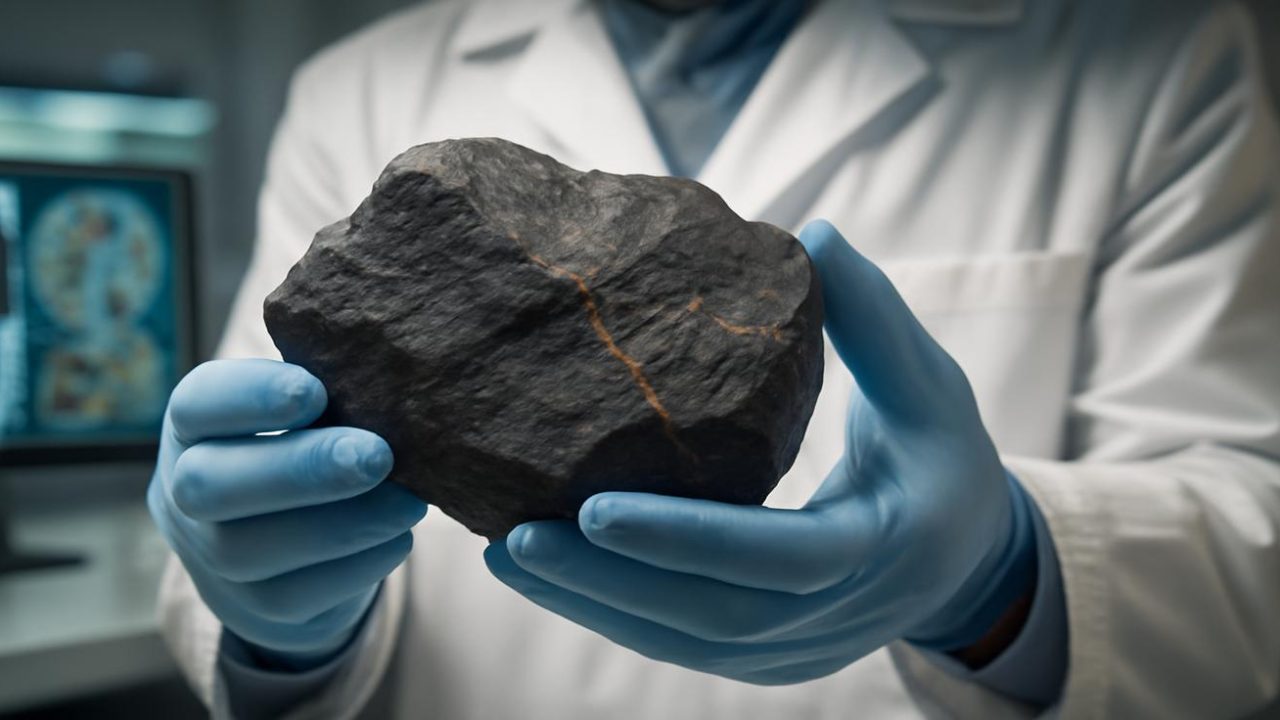
A fist-sized rock purchased in a Moroccan market in 2011 has provided scientists with direct evidence that thermal water once flowed beneath the surface of Mars. What appeared to be just another weathered stone in the sunbaked markets turned out to be a fragment of the Red Planet itself, carrying secrets locked away for millions of years.
The meteorite’s journey to Earth began with catastrophic violence on Mars. Something struck the planet with enough force to blast chunks of its crust into space, where they wandered the solar system as silent travelers for millions of years before gravity eventually steered one toward our planet.
The fragment burned through Earth’s atmosphere as a streak of light that likely went unnoticed in the desert, then hit the ground and waited to be discovered by someone with the knowledge to recognize its extraordinary nature.

How Martian Meteorites Reach Earth
Morocco’s meteorite trade operates in the quiet spaces between desert and town, between science and speculation. The country has become a hotspot for meteorite discoveries, with fragments regularly turning up in markets and shops throughout the region.
Collectors and dealers have developed an eye for the telltale signs that distinguish space rocks from terrestrial stones. The slightly melted outer crust formed during atmospheric entry, unusual weight compared to Earth rocks, and distinctive internal characteristics all serve as clues to a meteorite’s extraterrestrial origin.
The 2011 discovery represents just one example of how valuable scientific specimens can emerge from this informal network of collectors and traders. What makes this particular find significant is not just its Martian origin, but the specific evidence it contains about ancient water activity on Mars.

Evidence of Ancient Martian Hot Springs
The meteorite fragment contains mineral signatures that indicate the presence of thermal water on Mars in the distant past. These clues suggest that hot water systems, similar to hot springs or hydrothermal vents on Earth, once existed beneath the Martian surface.
Such discoveries are crucial for understanding Mars’ geological history and its potential to have supported life. Water, especially warm water, is considered one of the key ingredients necessary for life as we know it. The presence of thermal water systems would have created environments where microbial life might have thrived.
The mineral composition preserved in the meteorite provides a direct window into Mars’ past that complements the data being gathered by rovers and orbiters currently studying the planet. While remote sensing can reveal surface features and some subsurface characteristics, meteorite samples offer hands-on laboratory analysis of actual Martian material.

What This Means for Mars Exploration
The discovery adds to a growing body of evidence that Mars once had a much more active hydrological cycle than previously understood. Rather than being a perpetually cold and dry world, early Mars appears to have had periods of significant water activity, including subsurface thermal systems.
This finding has implications for future Mars exploration missions. Areas where similar thermal water activity occurred could be prime targets for searching for signs of past life. The mineral signatures identified in the meteorite could help scientists identify similar locations on Mars that warrant closer investigation.
Current and planned Mars missions are already focusing heavily on areas where water once flowed. The Perseverance rover, for example, is exploring an ancient river delta in Jezero Crater, collecting samples that may eventually be returned to Earth for detailed analysis.

| Discovery Aspect | Significance |
|---|---|
| Location Found | Morocco market, 2011 |
| Size | Fist-sized fragment |
| Evidence Type | Thermal water mineral signatures |
| Scientific Value | Direct proof of ancient Martian hot water systems |
The Role of Meteorite Markets in Science
The Moroccan meteorite trade highlights an interesting intersection between commercial collecting and scientific research. While some scientists prefer that meteorites be immediately turned over to research institutions, the reality is that many important discoveries emerge through collector networks.
Professional meteorite hunters and dealers often have extensive knowledge about identifying and preserving space rocks. Their expertise, developed through years of handling specimens, can be invaluable in ensuring that scientifically important materials are recognized and preserved.
The challenge lies in ensuring that valuable specimens eventually make their way to research institutions where they can be properly studied and their findings shared with the scientific community. The 2011 Moroccan discovery demonstrates how this process can work effectively.

What Scientists Are Learning Next
Research into Martian meteorites continues to reveal new details about the Red Planet’s past. Each specimen provides a unique snapshot of different periods in Mars’ geological history, helping scientists piece together a more complete picture of how the planet evolved.
The thermal water evidence from the 2011 meteorite is being combined with data from other Martian samples and ongoing mission observations. This multi-source approach allows researchers to build increasingly sophisticated models of ancient Martian environments.
Future meteorite discoveries may reveal additional evidence about the extent and duration of water activity on Mars. Scientists are particularly interested in finding samples that might contain preserved organic compounds or other biosignatures that could indicate past life.

The techniques used to analyze the Moroccan meteorite are also being refined and applied to other specimens. As analytical methods improve, even previously studied meteorites may yield new insights about Martian history and the potential for past life on the planet.
Frequently Asked Questions
How do scientists know this meteorite came from Mars?
Martian meteorites have distinctive chemical and isotopic signatures that match measurements taken by spacecraft and rovers on Mars, making their origin unmistakable.
How common are Martian meteorites?
Martian meteorites are extremely rare, with only a few hundred confirmed specimens known to exist on Earth out of tens of thousands of meteorites found worldwide.

What evidence of thermal water was found in the meteorite?
The meteorite contains specific mineral signatures that form only in the presence of hot water, indicating ancient hydrothermal activity on Mars.
How long ago did this thermal water activity occur on Mars?
Could this thermal water have supported life?
Thermal water systems create environments that could potentially support microbial life, though the meteorite itself does not contain direct evidence of past life.

Are there other Martian meteorites that show evidence of water?
Yes, several Martian meteorites have provided evidence of past water activity on Mars, contributing to our understanding of the planet’s wet past.










Leave a Comment