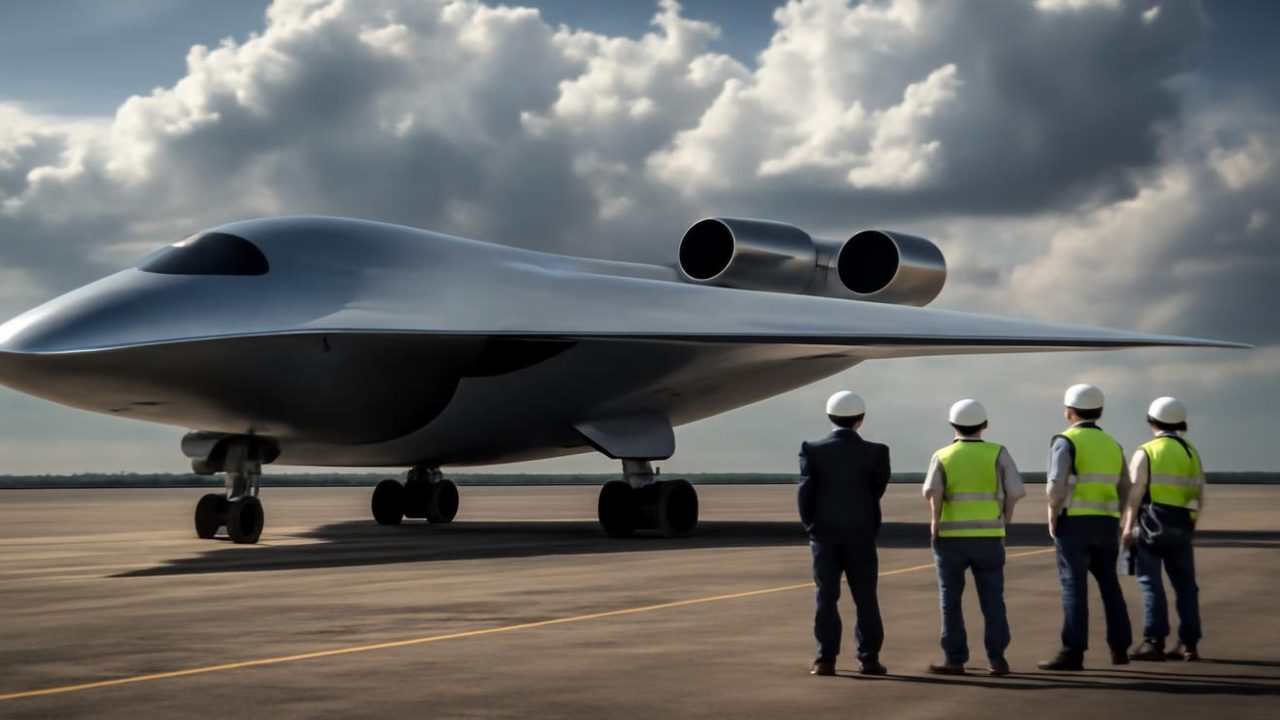
A revolutionary French aircraft promises to slash aviation energy consumption by using up to eleven times less fuel than conventional planes, potentially transforming an industry under mounting pressure to reduce its environmental impact.
The experimental aircraft, currently being tested along France’s Atlantic coast, defies traditional aviation design with its unconventional wing configuration and bird-like nose. Unlike the roaring jet engines that power commercial flights, this machine operates with whisper-quiet efficiency, skimming over water and lifting off with minimal disturbance.
What makes this aircraft particularly striking is how it challenges everything we expect from aviation technology, earning it the “impossible plane” nickname from skeptics who initially dismissed the concept.

How the French “Impossible Plane” Defies Aviation Norms
The aircraft’s appearance immediately signals its departure from conventional design. Engineers have created a machine with wings that look “all wrong” compared to traditional aircraft, featuring a slim, almost birdlike nose and a gently tapered fuselage.
Rather than the bulky construction typical of commercial aviation, this aircraft presents an unassuming, modest profile on the tarmac. The absence of roaring jet engines creates an entirely different experience for observers, who describe watching it rise into the air as “whisper-quiet” and “almost effortless.”
The development team, working with a mix of calm routine and barely contained excitement, has been quietly advancing this technology despite years of skepticism from industry observers. The “impossible” label wasn’t chosen as marketing—it reflects the genuine disbelief the concept initially generated in aviation circles.

Small teams of engineers in practical gear continue testing the aircraft in coastal conditions, where salt air and metal create the working environment for this groundbreaking experiment.
The Technology Behind Radical Energy Efficiency
The aircraft’s dramatic energy reduction comes from its fundamental departure from how conventional planes approach flight. Instead of “brute-forcing” its way through the sky like traditional aircraft, this design works with aerodynamic principles in entirely new ways.
The energy efficiency claims aren’t modest improvements—using eleven times less energy would represent a revolutionary leap in aviation technology. For context, commercial aviation currently accounts for approximately 2-3% of global carbon emissions, making such efficiency gains potentially transformative for the industry’s environmental impact.

| Aircraft Type | Energy Approach | Operational Characteristics |
|---|---|---|
| Conventional Aircraft | High-energy, brute-force flight | Roaring engines, heavy fuel consumption |
| French “Impossible” Aircraft | Ultra-efficient, biomimetic design | Whisper-quiet, 11x less energy usage |
The design philosophy appears to draw inspiration from natural flight, with its bird-like characteristics suggesting biomimetic engineering approaches. This represents a fundamental shift from the power-intensive methods that have dominated aviation for decades.
Why This Aircraft Could Transform Aviation’s Future
The implications of such dramatic energy efficiency extend far beyond technical achievement. Aviation faces increasing pressure to reduce its environmental footprint, with governments and consumers demanding cleaner transportation options.
Current commercial aviation relies heavily on fossil fuels, with limited alternatives available for long-distance flight. Electric aircraft remain constrained by battery technology, while hydrogen-powered flight faces infrastructure challenges. An aircraft requiring eleven times less energy could make existing fuel sources last dramatically longer while producing proportionally fewer emissions.

The quiet operation also addresses noise pollution concerns that affect communities near airports. Traditional jet engines create significant noise impact, limiting flight schedules and airport expansion. A whisper-quiet aircraft could potentially operate with fewer restrictions.
For passengers accustomed to the sensory experience of conventional flight—the engine roar, the forceful takeoff, the mechanical intensity—this aircraft promises something entirely different. Observers describe the experience as watching “something alive discovering it can fly” rather than a machine forcing its way skyward.
The Development Challenge and Industry Skepticism
The path to developing this aircraft hasn’t been smooth. Industry skeptics initially dismissed the concept, whispering about it in “conference corners” rather than taking it seriously as a viable aviation solution.

The team’s persistence in the face of skepticism reflects the typical challenges facing revolutionary technology in conservative industries. Aviation, with its emphasis on safety and proven systems, tends to resist radical departures from established approaches.
Testing continues along France’s Atlantic coast, where the aircraft demonstrates its capabilities in real-world conditions. The coastal environment provides both opportunities and challenges, with salt air and variable weather testing the aircraft’s systems and materials.
The engineers working on the project maintain their focus despite the unconventional nature of their creation. Their mix of routine professionalism and excitement suggests confidence in the technology’s potential, even as the broader industry remains cautious.

What Happens Next for Ultra-Efficient Aviation
The current testing phase represents just the beginning of what could be a lengthy development process. Aviation certification requires extensive testing and documentation, particularly for aircraft that deviate significantly from established designs.
The aircraft’s unconventional appearance and operation will likely require new regulatory frameworks. Existing aviation standards assume traditional engine configurations and flight characteristics, potentially necessitating updated certification processes.
If successful, this technology could influence broader aviation development. The eleven-times efficiency improvement would make traditional aircraft “look positively gluttonous” by comparison, potentially driving industry-wide innovation toward similar approaches.

The whisper-quiet operation could also enable new flight patterns and airport operations, particularly in noise-sensitive areas where current aircraft face restrictions.
Frequently Asked Questions
How much less energy does the French aircraft actually use?
The aircraft is designed to use up to eleven times less energy than conventional planes, though this represents testing claims rather than certified performance.
What makes this aircraft so much quieter than regular planes?
The aircraft operates without traditional roaring jet engines, resulting in whisper-quiet flight that observers describe as almost effortless.

Where is this aircraft being tested?
Testing is taking place along France’s Atlantic coast, where the aircraft demonstrates its ability to skim over water and lift off with minimal disturbance.
Why did people call this aircraft “impossible”?
Industry skeptics initially dismissed the concept, quietly labeling it “impossible” when the idea first emerged in aviation circles years ago.
What does the aircraft look like compared to normal planes?
It features unconventional wings, a slim bird-like nose, and a gently tapered fuselage that looks unassuming and modest compared to bulky commercial aircraft.
When will this aircraft be available for commercial use?
The timeline for commercial availability has not yet been confirmed, as the aircraft is currently in the experimental testing phase.











Leave a Comment