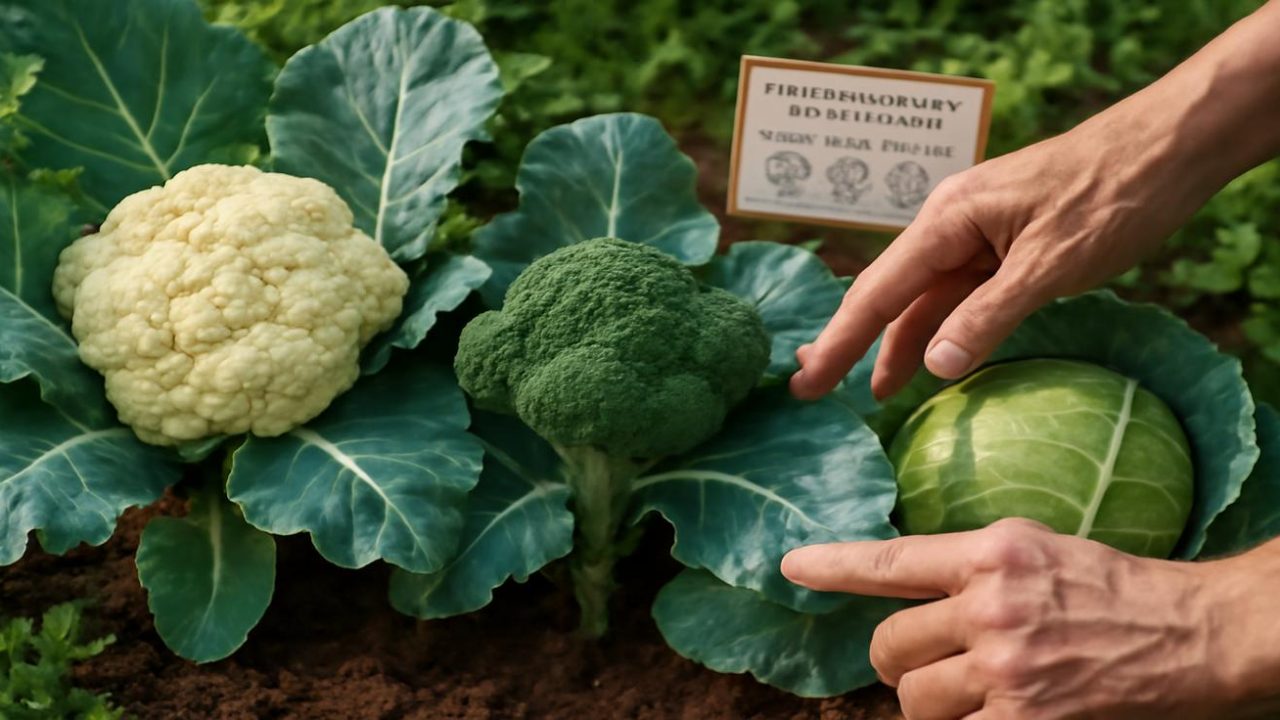
Cauliflower, broccoli, and cabbage may look completely different on your dinner plate, but they share an extraordinary secret: they’re all the same species of plant. These seemingly distinct vegetables are actually variations of Brassica oleracea, shaped by thousands of years of selective cultivation.
This botanical revelation challenges everything most people assume about the produce aisle. What appears to be three separate vegetables is really one incredibly adaptable plant that humans have molded into wildly different forms over millennia.
The transformation from a single wild ancestor into today’s diverse vegetable lineup represents one of agriculture’s most remarkable success stories.

How One Plant Became Three Different Vegetables
The journey begins with a tough, coastal cliff-dwelling plant that served as the common ancestor for all these vegetables. Through selective breeding, farmers gradually emphasized different parts of the plant to create distinct varieties.
For broccoli, cultivators focused on developing the flowering heads, creating those familiar green tree-like clusters. With cauliflower, the emphasis shifted to producing compact, white flower heads that form tight, globe-like structures. Cabbage took a completely different path, with farmers selecting for plants that formed dense, layered leaves wrapped into rounded heads.
Each variety represents humans choosing specific traits and breeding plants that expressed those characteristics most strongly. Over generations, these selections became more pronounced, eventually creating vegetables that look nothing alike but remain genetically identical at the species level.
The process demonstrates the incredible plasticity of plant genetics when guided by human intervention. The same DNA blueprint can produce vastly different physical expressions depending on which genes are activated or suppressed through breeding.
The Science Behind These Vegetable Transformations
Understanding how one species produces such different vegetables requires looking at plant development patterns. Brassica oleracea contains genetic instructions for various plant structures, but selective breeding determines which instructions get emphasized.
The key lies in how different plant parts develop. Broccoli and cauliflower both focus on flower development, but through different pathways. Broccoli maintains chlorophyll production in its flowering heads, keeping them green, while cauliflower varieties were selected to minimize chlorophyll, creating the characteristic white appearance.

Cabbage represents an entirely different developmental focus, emphasizing leaf production and the plant’s ability to form tight, protective outer layers. The genetic potential for this leaf arrangement existed in the original wild plant, but selective breeding amplified this trait dramatically.
| Vegetable | Plant Part Emphasized | Key Characteristics | Breeding Focus |
|---|---|---|---|
| Broccoli | Flower heads | Green, tree-like clusters | Flowering development with chlorophyll |
| Cauliflower | Flower heads | White, compact globes | Flowering development without chlorophyll |
| Cabbage | Leaves | Layered, wrapped heads | Dense leaf formation |
What This Means for Your Kitchen and Nutrition
Recognizing these vegetables as the same species explains why they share similar nutritional profiles and cooking behaviors. All three contain comparable levels of vitamins C and K, fiber, and beneficial compounds like glucosinolates.
The shared genetics also explain why these vegetables respond similarly to cooking methods. They all develop sweetness when roasted, become tender at similar rates when steamed, and break down comparably when overcooked.

From a culinary perspective, understanding this relationship opens up substitution possibilities. While flavors differ, the basic cooking principles remain consistent across all three vegetables.
This knowledge also helps explain why people who dislike one of these vegetables might struggle with the others. The underlying plant compounds that create distinctive flavors are related, even though the physical structures differ dramatically.
The Broader Brassica Family Connection
Cauliflower, broccoli, and cabbage aren’t the only vegetables hiding this shared identity. The Brassica oleracea species also includes Brussels sprouts, kale, and kohlrabi, making the family reunion even more surprising.

Each variety represents a different approach to developing the same genetic material. Brussels sprouts emphasize small, cabbage-like buds along the stem. Kale focuses on large, loose leaves rather than tight heads. Kohlrabi develops an enlarged stem structure.
This extensive family demonstrates the remarkable potential within a single plant species when guided by human cultivation over thousands of years. What started as one wild coastal plant has become a diverse collection of vegetables that appear in cuisines worldwide.
The success of Brassica oleracea cultivation has made these vegetables dietary staples across cultures, though most people remain unaware of their shared origins.

Why This Agricultural Achievement Matters Today
The Brassica oleracea story offers important lessons for modern agriculture and food security. It demonstrates how selective breeding can create diverse food sources from limited genetic starting material.
This principle becomes increasingly relevant as climate change and population growth challenge global food systems. Understanding how traditional breeding techniques created such variety from single species could inform future agricultural strategies.
The success of these vegetables also highlights the importance of preserving genetic diversity within crop species. The wild ancestors that gave rise to modern broccoli, cauliflower, and cabbage contained genetic potential that took thousands of years to fully explore.

Modern plant breeding continues this tradition, though with more sophisticated tools and faster timelines. The fundamental principle remains the same: identifying desirable traits within existing genetic material and amplifying them through selective cultivation.
Frequently Asked Questions
Are broccoli, cauliflower, and cabbage really the same plant?
Yes, they are all varieties of Brassica oleracea, the same species that has been selectively bred to emphasize different plant parts over thousands of years.
Can these vegetables cross-pollinate with each other?
Since they’re the same species, they can technically cross-pollinate, though this rarely happens in commercial cultivation due to controlled growing conditions.

Do broccoli, cauliflower, and cabbage have the same nutritional value?
They share similar nutritional profiles with comparable levels of vitamins C and K, fiber, and beneficial plant compounds, though exact amounts vary slightly.
What other vegetables belong to this same plant family?
Brussels sprouts, kale, and kohlrabi are also varieties of Brassica oleracea, making them part of the same species as broccoli, cauliflower, and cabbage.
How long did it take to develop these different varieties?
The selective breeding process occurred over thousands of years, with farmers gradually emphasizing different traits to create the distinct varieties we recognize today.
Why do these vegetables taste different if they’re the same plant?
Different plant parts contain varying concentrations of compounds that affect flavor, and the breeding process has emphasized different characteristics in each variety.










Leave a Comment