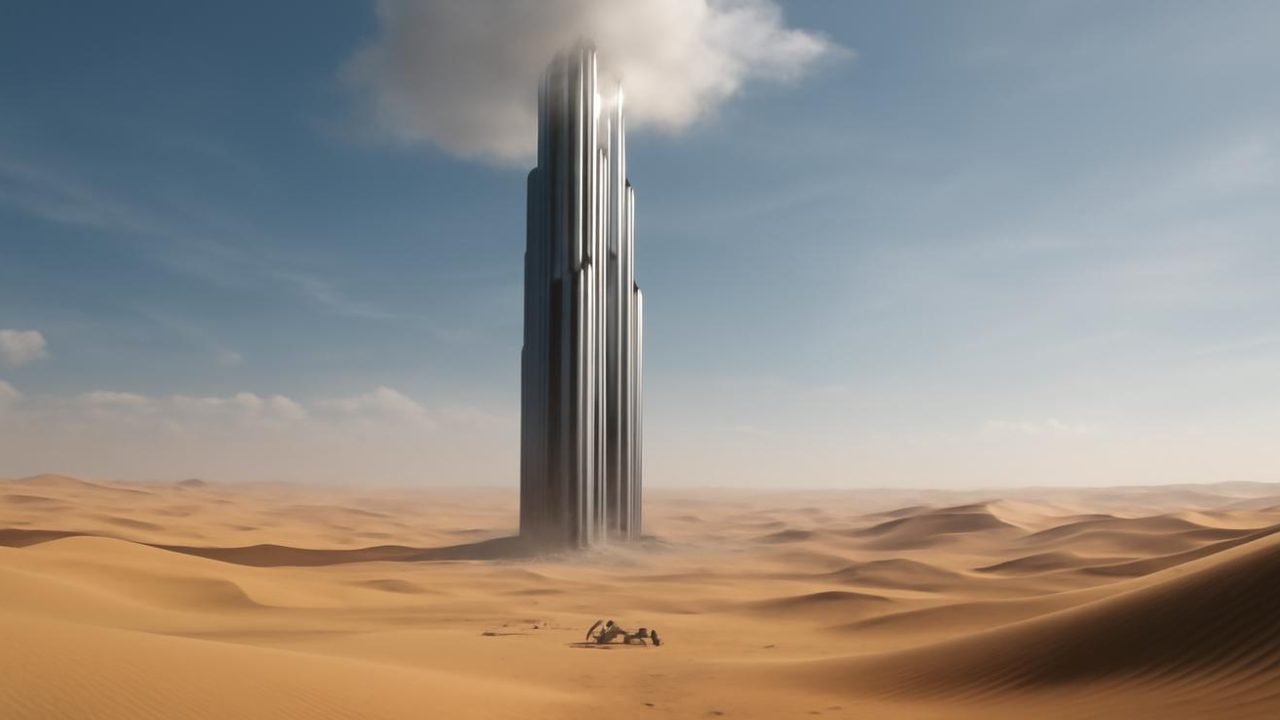
A kilometer-high tower rising from an empty desert represents one of the most audacious architectural proposals in modern history, yet critics argue it embodies everything wrong with contemporary urban planning. The structure, rendered in glass and steel, would dwarf existing skyscrapers and create a vertical city in one of Earth’s most inhospitable environments.
When you first encounter the architectural renderings, the sheer impossibility of the scale becomes apparent. This isn’t just another tall building—it’s a complete reimagining of how humans might live, work, and survive in extreme conditions.
The project represents more than engineering ambition. It’s become a flashpoint in debates about sustainable development, resource allocation, and whether humanity’s drive to build higher necessarily equals progress.

The Desert Tower Vision Defies Natural Logic
The proposed structure would rise from barren desert landscape with no existing infrastructure, natural landmarks, or human-scale development to provide context. Marketing materials frame this isolation as an advantage, suggesting the tower represents humanity’s ability to create habitable space anywhere on Earth.
The environmental challenges alone stagger the imagination. Desert temperatures that feel less like weather and more like “an intention—relentless, personal, and unbothered by your discomfort” would require massive mechanical systems running continuously to maintain livability.
The tower would need to function as a completely self-contained ecosystem. Office suites, residential units, retail spaces, and recreational facilities including rooftop pools would all exist within this single vertical structure, supported by “vast mechanical floors beating like an artificial heart to keep the whole thing habitable.”

Critics point out that the project’s marketing emphasizes spectacle over practicality, using drone footage and glossy animations to sell a vision that may be technically possible but environmentally questionable.
Why Building Higher Doesn’t Always Mean Building Better
The fundamental criticism of the desert tower project centers on its disconnect from sustainable urban development principles. Traditional city planning considers factors like transportation networks, utility infrastructure, community integration, and environmental impact.
This approach abandons those considerations entirely. Instead of working with natural landscapes and existing communities, it imposes a singular architectural statement onto an environment that actively resists human habitation.

The energy requirements alone raise serious questions about the project’s environmental footprint:
- Continuous air conditioning for 1,000 meters of interior space in desert heat
- Water supply and waste management for thousands of occupants in an arid location
- Transportation systems to move people efficiently through extreme vertical distances
- Emergency evacuation procedures for a structure with no nearby support infrastructure
Urban planning experts argue that truly innovative architecture should enhance human communities and work with natural systems, not dominate them through brute force engineering.
The Real Cost of Vertical Ambition
Beyond environmental concerns, the desert tower represents a troubling trend in contemporary development: prioritizing visual impact over practical benefit. The project’s supporters frame it as proof that “humanity can bend even the harshest landscapes to its will.”

This philosophy raises fundamental questions about resource allocation and development priorities. The enormous financial and material resources required for such a project could alternatively support distributed development that serves existing communities and works with natural systems rather than against them.
| Traditional Urban Development | Desert Tower Approach |
|---|---|
| Builds on existing infrastructure | Creates isolated vertical city |
| Integrates with natural landscape | Dominates through scale alone |
| Serves established communities | Attracts new residents to harsh environment |
| Considers long-term sustainability | Emphasizes engineering spectacle |
The project’s critics describe it not as visionary architecture, but as “a farewell letter to common sense, written in mirrored glass and air-conditioned bravado.”
What This Says About Modern Development Priorities
The desert tower controversy reflects broader tensions in contemporary architecture and urban planning. As climate change makes environmental sustainability increasingly urgent, projects that prioritize spectacle over efficiency face growing scrutiny.

The disconnect between the project’s marketing language and its practical implications illustrates how development rhetoric often obscures environmental and social costs. Terms like “vision” and “the future” mask questions about whether such projects actually improve human life or simply demonstrate technological capability.
Architecture critics argue that truly progressive design should address pressing human needs: affordable housing, energy efficiency, community building, and environmental stewardship. Measured against these criteria, a kilometer-high tower in the desert appears to serve primarily symbolic rather than practical purposes.
The project also raises questions about who benefits from such developments. Mega-projects often serve wealthy investors and future residents while imposing environmental costs on broader populations.

The Alternative Vision for Human-Scale Progress
Rather than building single massive structures in hostile environments, sustainable development advocates propose distributed approaches that work with natural systems and serve existing communities.
This alternative vision prioritizes human-scale architecture that enhances rather than dominates landscapes. Instead of creating isolated vertical cities, it focuses on improving transportation, housing, and infrastructure in places where people already live and work.
The resources required for one kilometer-high desert tower could support thousands of energy-efficient housing units, renewable energy systems, or transportation infrastructure that serves broader populations.

Critics argue that the desert tower represents a fundamental misunderstanding of what constitutes progress. True advancement in architecture and urban planning should make human life better, more sustainable, and more connected to natural systems—not simply taller and more isolated.
The project’s emphasis on conquering harsh environments through engineering force reflects an outdated relationship between humanity and nature that contemporary environmental challenges make increasingly untenable.
Frequently Asked Questions
What makes the desert tower project controversial?
Critics argue it prioritizes engineering spectacle over practical benefits, requiring massive energy consumption to maintain habitability in an extremely hostile environment.

How tall would the proposed tower actually be?
The structure would reach 1,000 meters (one kilometer) in height, making it significantly taller than any existing building.
What would the environmental impact be?
The tower would require continuous air conditioning, water supply, and waste management systems operating in desert conditions, creating substantial energy demands.
Who is behind the desert tower project?
What do urban planning experts think about the project?
Critics describe it as disconnected from sustainable development principles and argue it represents “a farewell letter to common sense.”
Are there alternatives to such mega-projects?
Urban planning advocates suggest distributed development that works with existing communities and natural systems rather than imposing isolated structures on hostile environments.










Leave a Comment