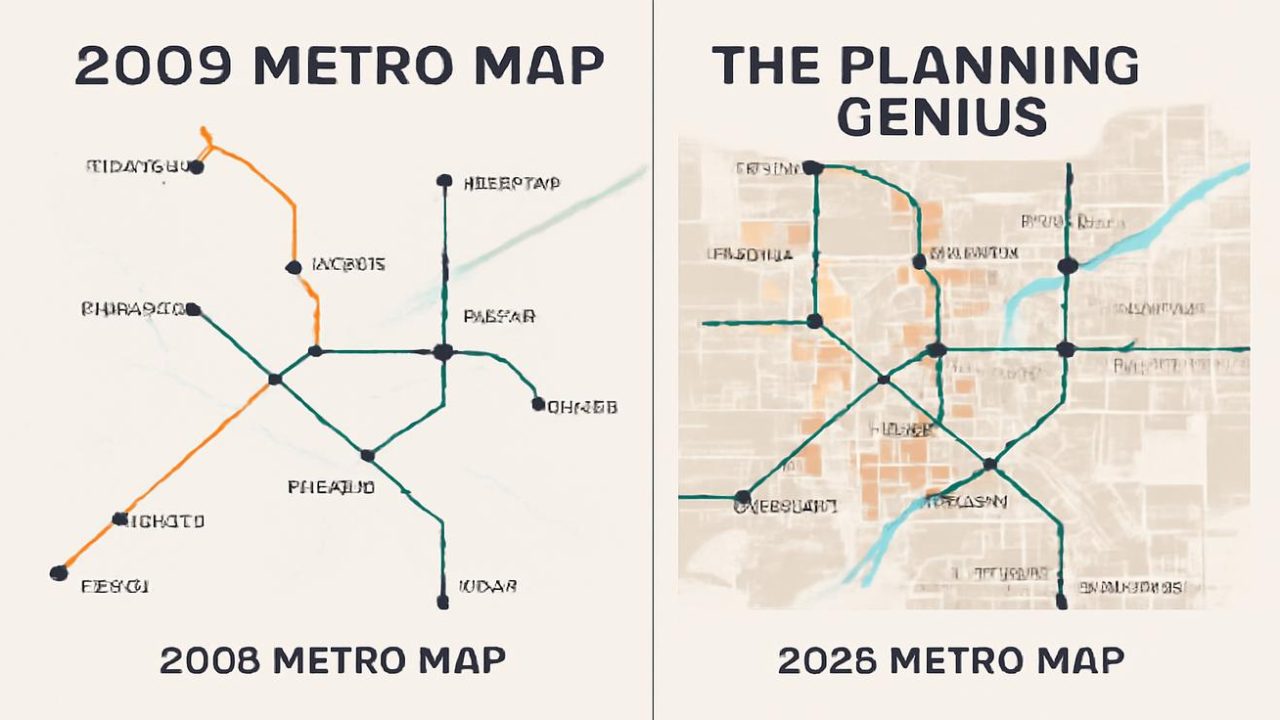
In 2008, China built gleaming metro stations that opened their doors to nothing but farmland and empty fields. Train doors chimed politely as they opened to platforms where the only passengers were occasional farmers, and escalators hummed softly beneath fluorescent lights while outside lay vast stretches of undeveloped countryside.
These weren’t construction mistakes or planning failures. They were the opening moves in one of the most ambitious urban development strategies in modern history—one that would transform how the world thinks about building cities.
What seemed like wasteful spending to outside observers was actually a calculated gamble on China’s explosive growth. The country was betting that if you build the infrastructure first, the cities will follow.

The Strategy Behind China’s “Ghost Stations”
The scene in 2008 was almost surreal. Brand-new metro stations stood in locations where the nearest building might be a farmhouse kilometers away. The air carried that distinctive smell of fresh construction—new paint, concrete, and machine oil—but stepping outside revealed patchwork fields and distant hills instead of the urban density you’d expect around rapid transit.
Cities like Shenzhen, Guangzhou, and areas on the outskirts of Beijing became testing grounds for this infrastructure-first approach. Local residents joked about “ghost stations” that seemed to serve no immediate purpose, while international visitors took photos of the empty platforms as examples of government overreach.
The strategy defied conventional urban planning wisdom, which typically calls for transportation infrastructure to follow population density rather than precede it. But China was operating on a different timeline and scale than most countries had ever attempted.

These stations represented massive upfront investments in areas where immediate ridership couldn’t justify the costs. Each station required millions in construction expenses, ongoing maintenance, and operational staff—all for platforms that might see only a handful of passengers per day initially.
How the “Build It and They Will Come” Approach Actually Worked
The transformation didn’t happen overnight, but it did happen. What looked like empty countryside in 2008 gradually filled in with residential complexes, office buildings, shopping centers, and all the infrastructure of modern urban life.
The metro stations became anchors for development, attracting real estate investment and commercial activity. Developers knew that properties near transit lines would become more valuable as the surrounding areas developed, creating a self-reinforcing cycle of growth.

Areas that had been accessible only by car or bus suddenly became connected to city centers via rapid transit. This connectivity made previously remote locations attractive for both residential and commercial development, as commuters could now reach downtown areas quickly and reliably.
The strategy leveraged China’s unique position during its economic boom years. The country had the financial resources to make massive infrastructure investments before they were immediately profitable, and the population growth and urbanization rates to eventually fill in the gaps.
| Development Phase | Timeline | Characteristics |
|---|---|---|
| Initial Construction | 2008-2010 | Empty stations, farmland surroundings, minimal ridership |
| Early Development | 2010-2015 | First residential and commercial projects, increasing connectivity |
| Urban Integration | 2015-Present | Full urban development, high ridership, established neighborhoods |
Why This Model Worked in China’s Specific Context
The success of China’s infrastructure-first approach depended on several factors that made it particularly suited to the country’s situation during its rapid development period.

China’s centralized planning system allowed for long-term investments that might not make immediate economic sense but would pay off over decades. Private companies or local governments with shorter planning horizons might not have been able to justify such upfront costs.
The country was experiencing unprecedented urbanization, with millions of people moving from rural areas to cities each year. This provided a steady stream of potential residents and workers for areas that were being opened up by new transit connections.
Land acquisition was more straightforward than in many other countries, allowing planners to secure large areas for development before property values increased. This made it possible to plan comprehensive neighborhoods rather than trying to retrofit transit into already-developed areas.

The rapid economic growth of the period meant that what seemed like remote locations in 2008 were likely to become valuable urban real estate within a decade, justifying the initial infrastructure investments.
The Real-World Impact on Chinese Urban Development
The stations that once served empty fields now anchor thriving urban districts. Former farmland has been transformed into dense residential neighborhoods, business districts, and mixed-use developments that house millions of people.
This approach allowed Chinese cities to expand in a more organized way than typical urban sprawl. Instead of development spreading randomly outward from city centers, growth followed the planned transit lines, creating more sustainable urban forms.

The strategy also helped distribute population and economic activity more evenly across metropolitan areas, reducing pressure on historic city centers while creating new hubs of activity.
For residents, the long-term result has been access to affordable housing in areas with good transit connections—something many major cities struggle to provide when they try to add transit to already-developed areas where land costs have skyrocketed.
The model has influenced urban planning discussions worldwide, though few other countries have the specific combination of centralized planning authority, rapid growth, and available capital that made it possible in China.

What This Reveals About Urban Planning Strategy
The success of China’s “ghost stations” challenges conventional wisdom about the relationship between infrastructure and development. Rather than waiting for demand to justify supply, China created supply to generate demand.
This approach requires significant upfront investment and tolerance for short-term inefficiency, but it can result in more coherent urban development patterns than reactive planning that tries to catch up with growth after it has already occurred.
The strategy also demonstrates how transportation infrastructure can shape urban form rather than simply responding to it. By determining where high-quality transit would be available, planners could influence where future development would concentrate.

However, the model’s success depended on China’s specific circumstances during a period of rapid economic growth and urbanization. The same approach might not work in countries with different economic conditions, planning systems, or demographic trends.
Frequently Asked Questions
Why did China build metro stations in undeveloped areas?
China used an infrastructure-first strategy, building transit before development to guide and anchor future urban growth in planned locations.
Were these “ghost stations” considered successful?
Yes, many of these stations now serve thriving urban districts that developed around the transit infrastructure over the following decade.
Could other countries use this same approach?
The strategy required China’s specific combination of centralized planning, rapid economic growth, and available capital, making it difficult to replicate elsewhere.
How long did it take for the areas around these stations to develop?
Development typically occurred over 5-15 years, with early residential and commercial projects appearing within a few years of station opening.
What cities used this infrastructure-first approach?
Cities including Shenzhen, Guangzhou, and areas around Beijing built metro stations in undeveloped areas as part of this strategy.
Did all of these early stations eventually succeed?
While many became successful urban anchors,











Leave a Comment