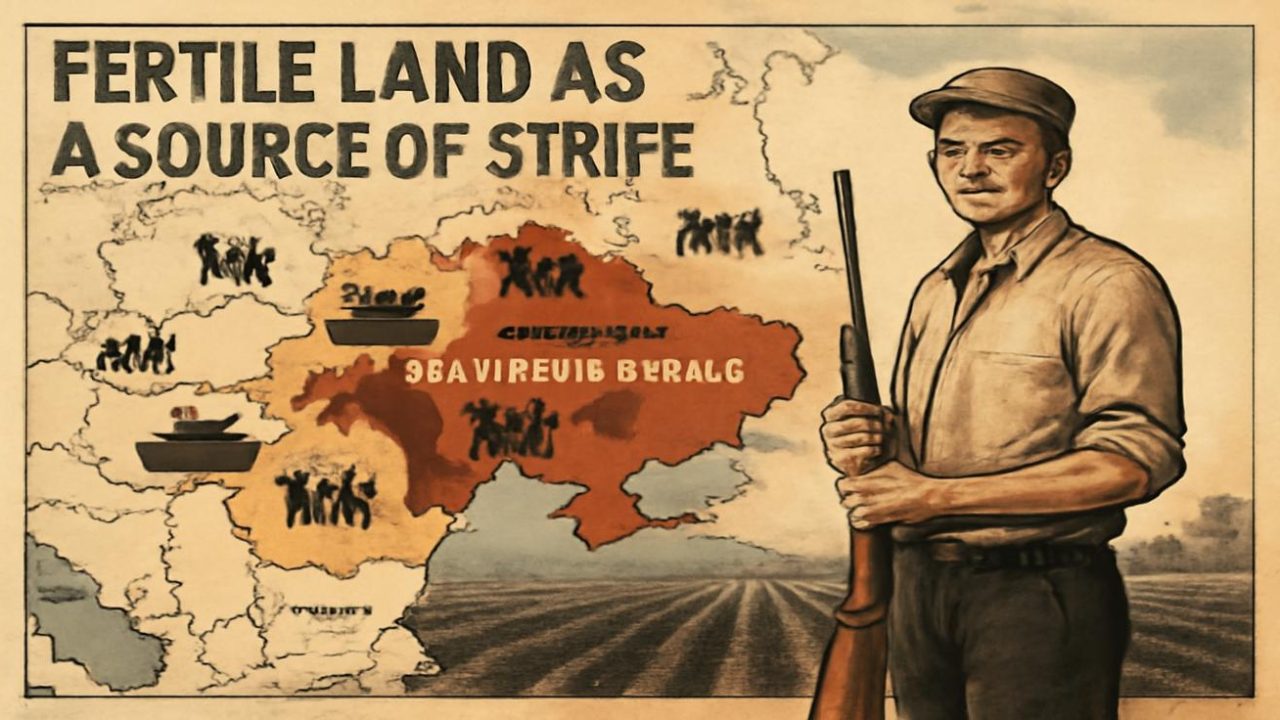
A band of the world’s most fertile soil stretches across Eastern Europe and Central Asia, from Ukraine’s plains through Russia’s southern steppes to northern Kazakhstan. This chernozem—meaning “black earth” in Russian—once fed empires and stabilized economies. Today, it’s becoming a source of conflict that’s turning farmers against each other and deepening geopolitical tensions.
The soil is so dark it seems to absorb light, so rich it crumbles like chocolate cake between your fingers. For generations, farmers in these regions considered it their inheritance and safety net—something that could outlast political regimes, wars, and economic collapse.
But that story is changing. These fertile fields are no longer just about harvests and seasons. They’ve become battlegrounds of influence, ownership, and borders.

Why Chernozem Soil Matters More Than Ever
Chernozem represents some of the planet’s most productive agricultural land. The black earth that gives this soil type its name comes from centuries of decomposed organic matter, creating a natural foundation that can support massive grain production with minimal intervention.
This soil helped build and sustain empires throughout history. Grains grown in chernozem fields provided food security for entire regions and became crucial exports that shaped international trade relationships.
The chernozem belt spans three countries now caught in complex geopolitical struggles: Ukraine, Russia, and Kazakhstan. Each nation controls portions of this agricultural treasure, making soil ownership inseparable from national security and economic power.
Farmers who once shared knowledge and resources across these invisible lines now find themselves on opposite sides of international conflicts. The same earth that promised stability has become a source of division.
The Geography of Black Gold
The chernozem belt follows a distinctive geographic pattern shaped by climate, topography, and centuries of natural processes. Understanding this distribution helps explain why control over these regions carries such strategic importance.
| Country | Chernozem Coverage | Primary Crops | Strategic Importance |
|---|---|---|---|
| Ukraine | Sweeping western plains | Wheat, corn, sunflower | Europe’s breadbasket |
| Russia | Southern steppe regions | Wheat, barley, sugar beets | Global grain exports |
| Kazakhstan | Northern agricultural zones | Wheat, barley | Central Asian food security |
The soil’s quality varies across this belt, but even the least fertile sections produce yields that surpass most other agricultural regions worldwide. This consistency makes the entire zone valuable for large-scale farming operations.
Wind patterns across these open landscapes help distribute nutrients naturally, while the continental climate provides the temperature variations that chernozem formation requires. These natural advantages can’t be replicated elsewhere.
How Fertile Soil Became a Source of Conflict
Modern conflicts over chernozem extend far beyond traditional farming disputes. Satellite imagery, legal documents, and international borders now determine who can access and profit from this black earth.
Farmers who once operated across regional boundaries find their movements restricted by new political realities. Traditional farming practices that developed over generations are being disrupted by geopolitical tensions.
The same characteristics that make chernozem valuable for agriculture—its consistent quality and vast scale—make it attractive for large-scale land acquisition and control. International agricultural corporations and state actors view these soil resources as strategic assets.
Land ownership patterns are shifting as political pressures mount. Farmers report increasing difficulty maintaining operations that span multiple regions or countries, even when their families have worked the same areas for decades.
Export controls and trade restrictions now affect how crops grown in chernozem soil reach global markets. Political decisions made in distant capitals directly impact farming operations and rural livelihoods.

The Human Cost of Soil Politics
Individual farmers bear the immediate consequences of these larger conflicts. Families that built their lives around chernozem agriculture face uncertainty about their future access to the land.
Traditional knowledge about working with black earth—passed down through generations—risks being lost as communities are divided by political boundaries. Farming techniques specifically adapted to chernozem soil require continuity and local expertise.
Rural communities built around shared agricultural practices find themselves isolated from neighbors and markets. Transportation routes that moved grain and equipment efficiently for decades now cross contested borders.

Young farmers face particular challenges deciding whether to continue family operations or seek opportunities elsewhere. The instability surrounding land access makes long-term agricultural planning nearly impossible.
Food security for local populations depends on maintaining productive relationships with the land, regardless of political changes. When soil becomes a political weapon, everyone loses access to its benefits.
What Happens Next for the World’s Black Gold
The future of chernozem agriculture depends on resolving conflicts that extend far beyond farming itself. Political stability in the region directly affects global food production and distribution.

International agricultural markets are adapting to uncertainty about crop supplies from the chernozem belt. Alternative production regions are being developed, though none match the natural advantages of black earth.
Technological solutions like precision agriculture and soil monitoring could help maximize productivity from existing chernozem areas. However, these innovations require investment and stability that current conflicts make difficult to achieve.
Climate change adds another layer of complexity to chernozem management. The soil’s natural resilience provides some protection against environmental stress, but maintaining its productivity requires consistent stewardship.

Resolution of current tensions could restore collaborative agricultural relationships across the region. The soil itself remains unchanged—only human conflicts prevent its full utilization for feeding populations worldwide.
Frequently Asked Questions
What makes chernozem soil so special for agriculture?
Chernozem contains high levels of organic matter that create natural fertility, allowing crops to grow with minimal intervention and producing consistently high yields.
Which countries control the most chernozem soil?
The chernozem belt spans Ukraine, Russia, and Kazakhstan, with each country controlling significant portions of this fertile soil type.
How are current conflicts affecting food production in these regions?
Political tensions disrupt traditional farming practices, limit cross-border agricultural cooperation, and create uncertainty about land access for farmers.
Can chernozem soil be found in other parts of the world?
Small areas of similar black earth exist in other regions, but the extensive chernozem belt across Eastern Europe and Central Asia represents the world’s largest concentration of this soil type.
What role does chernozem play in global food security?
Crops grown in chernozem soil help feed populations worldwide through grain exports, making political stability in these regions crucial for international food supplies.
How long has chernozem been important for agriculture?
Farmers have recognized the exceptional fertility of black earth for centuries, with chernozem agriculture helping to sustain empires and build regional economies throughout history.





Leave a Comment