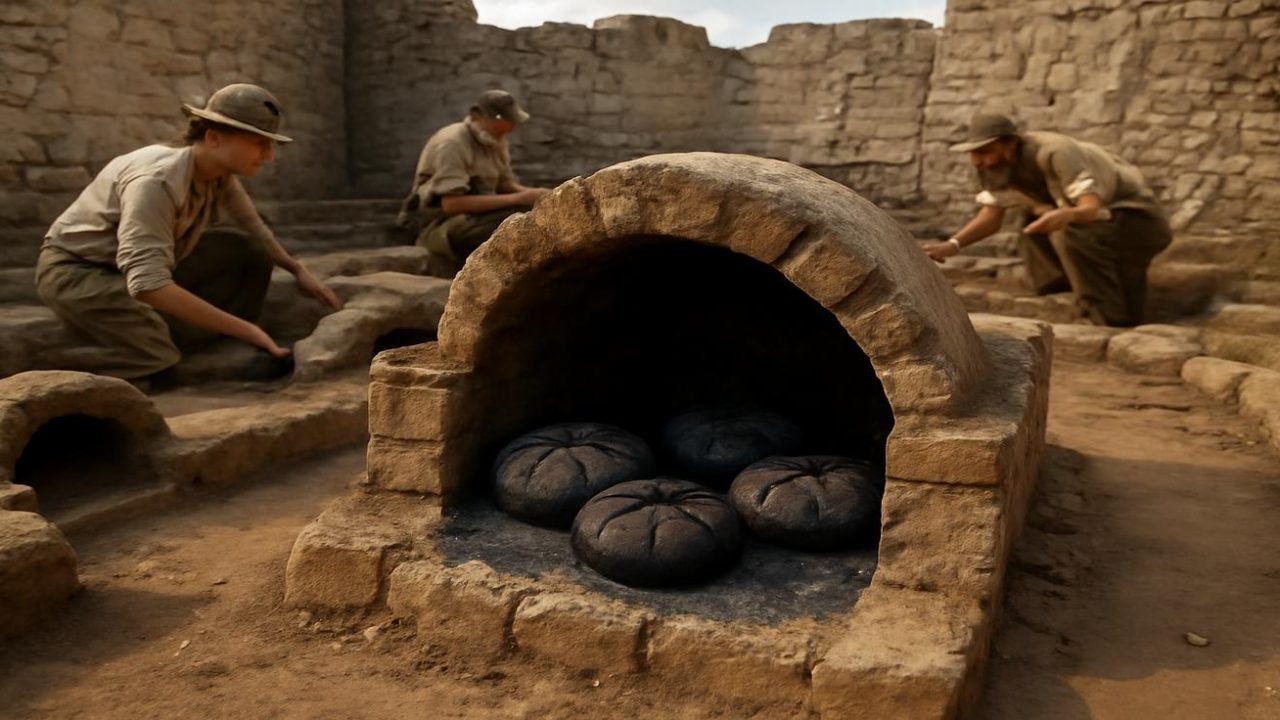
A 3,500-year-old Egyptian military fortress has been discovered in the Sinai Desert, complete with remarkably preserved ancient ovens and fossilized dough that offer an unprecedented glimpse into daily life at Egypt’s eastern frontier. The discovery reveals how pharaohs of the New Kingdom maintained their grip on this strategic borderland through a network of fortified positions along the ancient “Horus Road.”
The fortress represents one of the most significant archaeological finds in the region, providing tangible evidence of Egypt’s military presence during the 18th Dynasty. What makes this discovery particularly extraordinary is the preservation of organic materials that rarely survive millennia in archaeological sites.
The harsh Sinai Desert, where dry winds carry dust across endless horizons, has paradoxically served as the perfect preservative for this ancient military installation and its contents.

How Archaeologists Found the Hidden Fortress
The discovery began with satellite imagery that revealed geometric shadows beneath the desert surface. These mysterious patterns, combined with mid-20th century excavation reports mentioning pottery shards and defensive walls, pointed to something substantial buried in the sand.
Modern archaeological teams returned to this windswept stretch of the Sinai Peninsula following these tantalizing clues. The pharaohs of the New Kingdom, particularly those of the 18th Dynasty, had extended Egyptian influence deep into this borderland region, establishing fortresses along the legendary Horus Road.
The Horus Road served as a crucial military and trade route connecting the Nile Valley to Canaan and territories beyond. This strategic pathway required fortified positions to protect Egyptian interests and maintain control over valuable trade flows.

Just meters below the surface, archaeologists uncovered the foundation of a massive military fortress. The walls still traced clear geometric patterns, revealing the sophisticated engineering and planning that went into securing Egypt’s eastern gateway.
The Remarkable Preservation of Ancient Military Life
Within the fortress walls, researchers discovered what may be the most well-preserved ancient military bakery ever found. The facility contains ovens that appear almost ready for use, despite their incredible age.
The bakery’s preservation is so exceptional that visitors can almost imagine hearing the sounds of ancient military life: soldiers’ bowls clattering and the low crackle of fires that fed an entire garrison. This level of preservation provides invaluable insights into how Egyptian forces sustained themselves in remote frontier positions.

The fossilized dough found within the ovens represents an extraordinary archaeological treasure. Organic materials like bread dough typically decompose rapidly, making this discovery scientifically significant for understanding ancient Egyptian military provisioning and daily routines.
The fortress layout suggests it housed a substantial garrison responsible for monitoring and controlling movement along this critical section of the Horus Road. The presence of such elaborate baking facilities indicates the Egyptians planned for extended occupations rather than temporary outposts.
Strategic Importance of Egypt’s Eastern Frontier
The Sinai Peninsula represented Egypt’s most vulnerable border, requiring constant military attention during the New Kingdom period. The 18th Dynasty pharaohs understood that controlling this region was essential for maintaining Egypt’s security and economic interests.

The Horus Road fortress network served multiple purposes beyond simple defense. These installations facilitated trade, projected Egyptian power into neighboring territories, and provided staging areas for military campaigns into Canaan and beyond.
Archaeological evidence suggests this particular fortress was part of a larger defensive system designed to monitor and control access to Egypt proper. The substantial investment in permanent facilities like bakeries indicates the Egyptians viewed their presence here as long-term rather than temporary.
The fortress’s location provided excellent visibility across the surrounding desert, allowing Egyptian forces to spot approaching threats or trading caravans from considerable distances. This strategic positioning maximized the garrison’s effectiveness while minimizing the number of troops required for frontier defense.

What the Discovery Reveals About Ancient Egyptian Military Organization
The fortress layout and facilities provide new insights into how ancient Egyptian military forces organized themselves for extended frontier duty. The sophisticated bakery suggests a high degree of logistical planning and self-sufficiency.
The preservation of everyday items like fossilized dough humanizes these ancient soldiers, revealing the mundane realities behind Egypt’s imperial ambitions. These men required regular meals and comfortable quarters to maintain their effectiveness far from the Nile Valley’s comforts.
The fortress design reflects advanced understanding of desert warfare and the challenges of maintaining military positions in harsh environments. Egyptian engineers clearly considered factors like water storage, food preservation, and protection from sandstorms when designing these installations.

The discovery also highlights the sophisticated supply chains required to maintain frontier fortresses. While the garrison could bake its own bread, raw materials like grain had to be transported from Egypt’s agricultural heartland, demonstrating impressive logistical capabilities.
Archaeological Significance and Future Research
This discovery adds crucial evidence to our understanding of New Kingdom military strategy and Egypt’s relationship with its northeastern neighbors. The fortress provides a physical anchor for historical accounts of Egyptian activities in the region.
The exceptional preservation opens new research possibilities that extend beyond military history. Analysis of the fossilized dough could reveal details about ancient Egyptian grain varieties, baking techniques, and dietary practices among frontier troops.

Future excavations may uncover additional facilities within the fortress complex, potentially including weapons storage, living quarters, and administrative areas. Each discovery could provide new insights into how ancient Egypt projected power across its borders.
The site’s preservation suggests that other similar installations may await discovery beneath the Sinai’s shifting sands. This fortress could represent just one example of a much larger network of Egyptian military positions that once secured the empire’s eastern approaches.
Frequently Asked Questions
How old is the Egyptian fortress discovered in the Sinai Desert?
The fortress is approximately 3,500 years old, dating to Egypt’s New Kingdom period, specifically the 18th Dynasty.

What made this archaeological discovery so unusual?
The exceptional preservation of organic materials, including fossilized dough found in ancient ovens, makes this discovery particularly significant since such materials rarely survive millennia.
What was the Horus Road?
The Horus Road was an ancient military and trade route connecting Egypt’s Nile Valley to Canaan and territories beyond, requiring fortified positions for protection and control.
How did archaeologists locate the buried fortress?
Satellite imagery revealed geometric shadows beneath the desert surface, combined with earlier 20th-century excavation reports mentioning pottery shards and defensive walls in the area.
Why was this location strategically important to ancient Egypt?
The Sinai Peninsula represented Egypt’s eastern frontier and required military control to protect trade routes and prevent invasions from neighboring territories.
What does the discovery tell us about ancient Egyptian military organization?
The sophisticated bakery facilities suggest advanced logistical planning and indicate that Egyptian forces were prepared for extended occupations rather than temporary outposts.










Leave a Comment