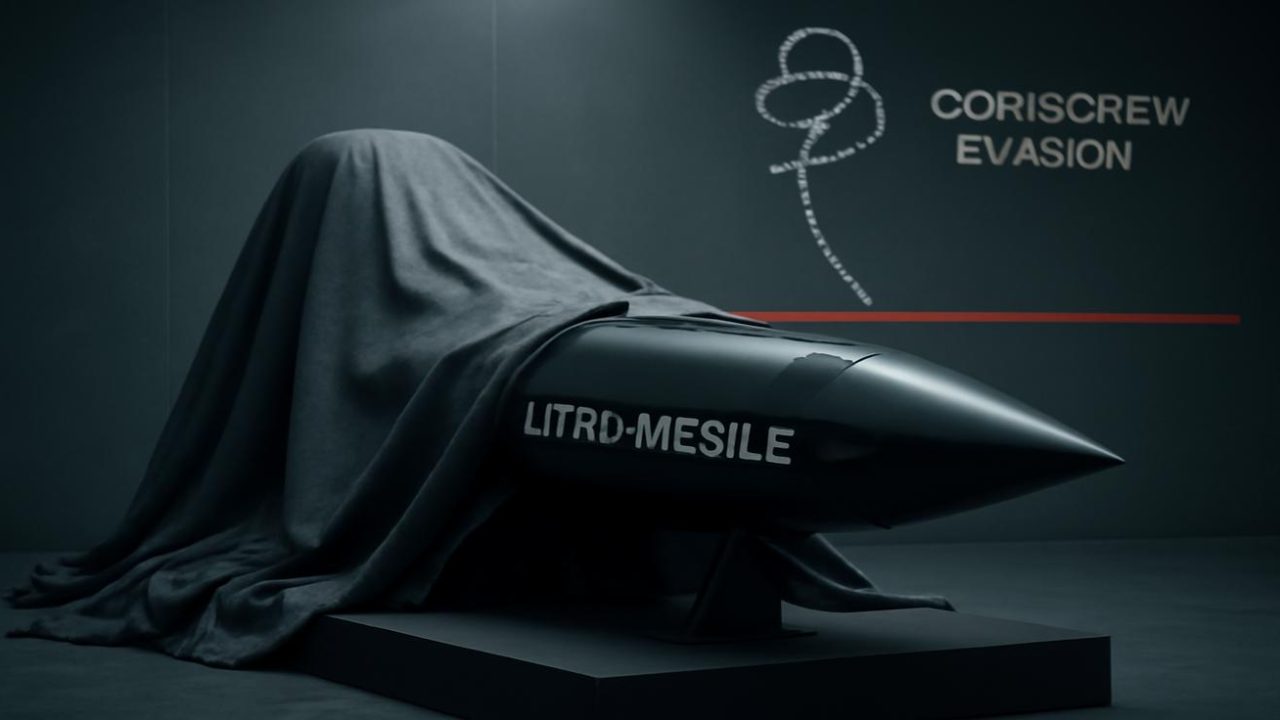
Japan has developed a new stealth missile capable of striking targets more than 1,000 kilometers away while performing corkscrew evasive maneuvers that can outfox traditional air defense systems. The weapon represents a fundamental shift in Japan’s post-World War II defense posture, breaking decades of carefully maintained military restraint.
For the first time since 1945, Japan now possesses the ability to project military force far beyond its borders. The missile’s 1,000-kilometer range puts major regional targets within reach, including distances equivalent to Tokyo to Shanghai or from Okinawa deep into contested areas of the East China Sea.
The development has split observers into two camps: supporters who view it as essential deterrence against regional threats, and critics who warn it pushes the region toward a more dangerous military balance.

How Japan’s New Missile Breaks Traditional Defense Patterns
Unlike conventional missiles that follow predictable flight paths, Japan’s new weapon employs sophisticated evasive maneuvers that make it nearly impossible for enemy air defense systems to intercept. The missile can spiral, zigzag, and corkscrew through the sky in patterns that defy traditional interception methods.
Traditional air defense systems work by calculating where a missile will be, not where it currently is. They predict flight paths and position interceptors accordingly. But a missile that refuses to fly in straight, calculable lines disrupts this entire defensive framework.
The weapon’s stealth capabilities add another layer of complexity for defenders. Its skin is shaped to scatter radar pulses, allowing it to slip past detection systems. It can hug terrain to exploit radar shadows and arrive from unexpected angles that defenders didn’t anticipate.

Japan’s Ministry of Defense describes the weapon using careful, clinical language as a “standoff capability” designed to provide “counterstrike options” in the event of an attack. But the technical specifications tell a different story about Japan’s evolving military capabilities.
Key Technical Capabilities That Change Regional Defense Calculations
The missile represents a significant leap in Japan’s military technology, combining multiple advanced systems that work together to penetrate modern air defenses:
- Range: Over 1,000 kilometers, enabling strikes across major regional distances
- Evasive maneuvers: Corkscrew and spiral flight patterns that confuse interception systems
- Stealth design: Low-observable characteristics that reduce radar detection
- Terrain masking: Ability to use geographical features to avoid detection
- Unpredictable approach angles: Can attack from directions defenders don’t expect
| Capability | Traditional Missiles | Japan’s New System |
|---|---|---|
| Flight Pattern | Predictable arc | Corkscrew evasion |
| Range | Limited defensive reach | 1,000+ kilometers |
| Radar Signature | Easily detectable | Low observability |
| Interception Difficulty | Standard | Extremely challenging |
The missile’s guidance system continuously adjusts its flight path, making small corrections that trace subtle spirals through the air. Each twist and turn represents what defense analysts call “a small act of defiance” against modern air defense shields.

Breaking Seven Decades of Military Restraint
Since World War II, Japan’s defense policy has been built on carefully curated restraint. The country maintained Self-Defense Forces rather than a traditional army, and limited itself to weapons that could be framed as purely defensive. The unspoken rule was simple: Japan does not reach out very far.
That unwritten rule has now been fundamentally broken. The new missile gives Japan the ability to strike targets at distances that transform its military posture from defensive to potentially offensive.
The weapon’s development reflects broader changes in Japan’s security environment and defense thinking. Regional tensions and evolving threats have pushed Japanese policymakers to reconsider long-held limitations on military capabilities.

For supporters, the missile provides crucial deterrent value. If potential adversaries believe Japanese strikes could penetrate their prized defense systems, they might hesitate before launching their own attacks. The theory suggests the weapon might never need to be fired to serve its strategic purpose.
Regional Impact and the New Military Balance
The missile’s introduction comes as nations across Asia are racing to integrate layered defense systems combining radars, interceptors, and electronic warfare capabilities. Each new defensive layer inspires counter-moves in what defense experts describe as a brutal chess game.
Japan’s new weapon represents another significant move in this competition. The corkscrew maneuvers aren’t just engineering innovation—they send a clear message that Japanese strikes could potentially penetrate advanced air defense networks.

Critics worry this development pushes the region toward a more dangerous military balance where multiple nations possess long-range strike capabilities. They argue such weapons lower the threshold for conflict by making preemptive strikes more tempting during crises.
The missile’s 1,000-kilometer range puts it in a category that regional neighbors will likely view as inherently threatening, regardless of Japan’s stated defensive intentions. Geography means the weapon could reach major population and military centers across multiple countries.
What This Means for Regional Security
The missile’s development signals Japan’s transition from a nation focused purely on territorial defense to one capable of projecting power across significant distances. This shift has implications that extend far beyond Japan’s borders.

Regional defense planners must now account for Japanese strike capabilities when designing their own military strategies. The missile’s evasive capabilities mean traditional air defense approaches may prove inadequate.
The weapon also represents a technological benchmark that other nations will likely seek to match or exceed. Its combination of range, stealth, and maneuverability sets new standards for regional military capabilities.
For Japan, the missile provides options that didn’t exist under its previous defensive posture. But it also commits the country to a path that moves decisively away from its post-war military limitations.

Frequently Asked Questions
How far can Japan’s new missile travel?
The missile can strike targets more than 1,000 kilometers away, roughly the distance from Tokyo to Shanghai.
What makes this missile different from traditional weapons?
It can perform corkscrew and spiral evasive maneuvers while maintaining stealth characteristics, making it extremely difficult to intercept.
Does this change Japan’s defense policy?
Yes, it represents the first time since World War II that Japan has developed weapons capable of striking targets far beyond its borders.

How do the evasive maneuvers work?
The missile’s guidance system continuously adjusts its flight path, tracing unpredictable spirals that confuse air defense systems designed to intercept weapons following predictable trajectories.
What do critics say about this development?
Critics argue it pushes the region toward a more dangerous military balance and represents a concerning departure from Japan’s post-war restraint.
What do supporters argue?
Supporters view it as essential deterrence, arguing that potential adversaries will hesitate to attack if they believe Japan can penetrate their defenses.











Leave a Comment