A 19.45-kilometre transmission line carrying 220 kilovolts of clean solar energy has just set a new world record in China, connecting the massive Tianwan solar plant to the national grid in what engineers are calling a breakthrough in renewable energy infrastructure.
The record-breaking achievement represents more than just impressive numbers. This transmission line creates a direct pathway for solar power to flow from one of China’s most ambitious renewable energy installations into the homes and businesses that need it most.
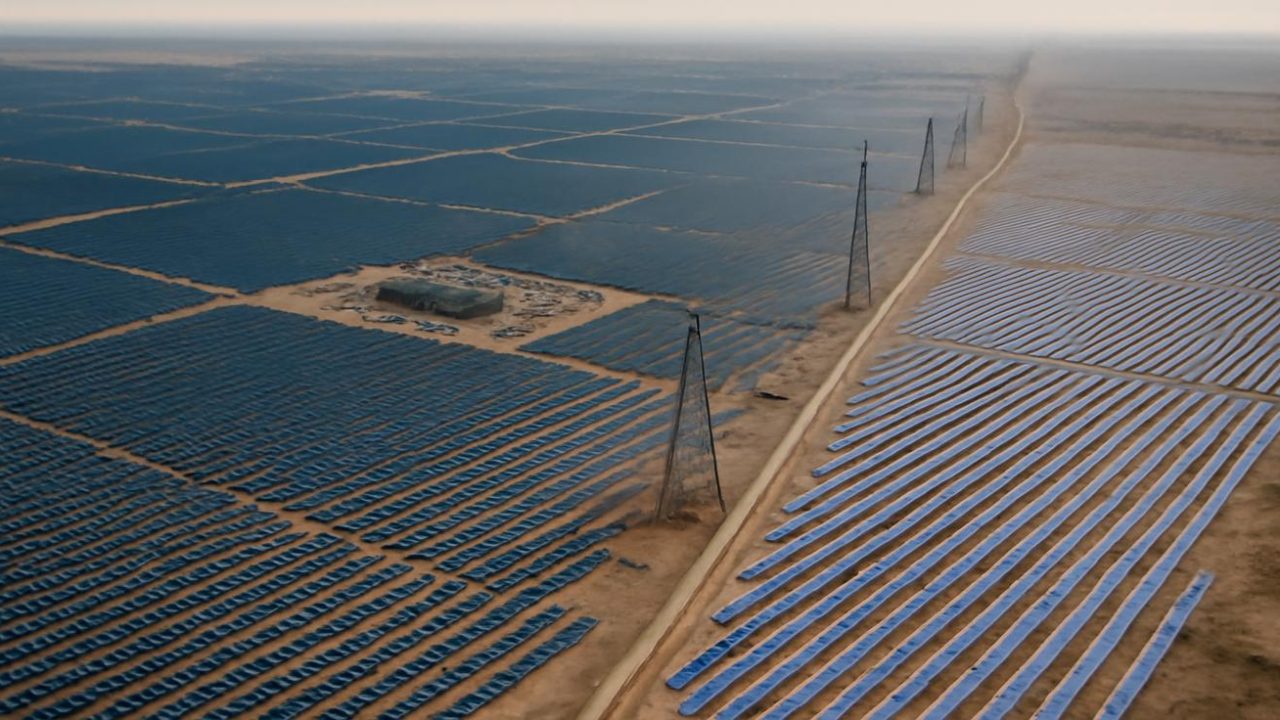
Standing beneath the steel towers that carry this energy across the landscape, the scale becomes immediately apparent. This isn’t just another solar project—it’s a fundamental reimagining of how clean energy can be captured, transmitted, and delivered at unprecedented distances.

How the Tianwan Solar Plant Breaks New Ground
The Tianwan solar installation stretches across the landscape like a metallic sea, with thousands of solar panels aligned with mathematical precision. Each panel is positioned at carefully calculated angles to maximize sunlight capture throughout the changing seasons.
The facility operates as a coordinated system where individual solar cells feed into combiner boxes, which then channel electricity through transformers that step up the voltage. This process amplifies the power before it enters the substation where the record-setting 220 kV transmission line begins.
What makes this achievement remarkable isn’t just the plant’s capacity, but how efficiently it channels that power across such an extraordinary distance. The 19.45-kilometre line had to navigate complex terrain including hills, waterways, farmland, and populated areas while maintaining optimal electrical performance.

Engineers describe the transmission route like a river of energy, requiring careful navigation around geographical and environmental obstacles. Each tower placement and cable angle involved extensive calculation to balance electrical efficiency with practical construction challenges.
The Engineering Behind the World Record
Creating a 220 kV transmission line of this length required solving multiple technical challenges simultaneously. The engineering team had to account for power loss over distance, weather resistance, and the structural demands of carrying high-voltage electricity across varied terrain.
Key technical specifications of the project include:

- Total transmission distance: 19.45 kilometres
- Voltage capacity: 220 kilovolts
- Connection from Tianwan solar plant to national grid
- Steel tower infrastructure spanning multiple terrain types
- Advanced substation technology for voltage management
The solar plant itself operates through a complex network of components working in perfect synchronization. Inverters convert the direct current from solar panels into alternating current suitable for grid transmission, while mechanical switches manage load distribution throughout the system.
| Component | Function | Impact |
|---|---|---|
| Solar Panels | Photon to electron conversion | Primary energy generation |
| Inverters | DC to AC conversion | Grid compatibility |
| Transformers | Voltage stepping | Transmission efficiency |
| 220 kV Line | Long-distance transmission | Record-breaking delivery |
What This Record Means for Renewable Energy
The Tianwan achievement demonstrates that solar power can be effectively transmitted over much longer distances than previously thought practical. This breakthrough could reshape how countries approach renewable energy infrastructure planning.
Traditional solar installations often face limitations based on proximity to population centers. The success of this 19.45-kilometre transmission line proves that solar plants can be built in optimal locations for sun exposure, even when those locations are far from energy demand centers.

The project also showcases advanced grid integration capabilities. By successfully connecting such a large-scale solar installation to China’s national electrical grid, the Tianwan plant can contribute clean energy to multiple regions simultaneously.
This technological advancement could influence renewable energy projects worldwide. Countries with abundant solar resources in remote areas now have a proven model for transmitting that power to urban centers where electricity demand is highest.
The Human Element Behind the Technology
Before any solar panel was installed, survey teams spent months mapping the terrain with GPS units and detailed notebooks. They traced potential transmission line routes, evaluating each option for feasibility, environmental impact, and construction challenges.

The coordination required for this project involved thousands of individual components working together—from individual solar cells to high-tension insulators on the transmission towers. Every element had to be synchronized to create a seamless flow of electricity from sunlight to grid.
Construction teams faced the challenge of building across diverse landscapes while maintaining the precise engineering tolerances required for high-voltage transmission. Each tower foundation had to account for local soil conditions, weather patterns, and long-term structural stability.
The project represents months of planning, calculation, and careful construction work by specialists in solar technology, electrical engineering, and high-voltage transmission systems.

What Comes Next for Solar Transmission
The success of the Tianwan solar plant and its record-breaking transmission line sets a new benchmark for renewable energy infrastructure projects. Other countries and regions are likely to study this model for their own large-scale solar developments.
The technology demonstrated here could enable solar installations in previously impractical locations—desert areas, remote plains, or other regions with excellent sun exposure but limited local electricity demand.
China’s achievement also highlights the potential for international renewable energy cooperation. Countries with abundant solar resources could potentially export clean electricity to neighboring regions through similar long-distance transmission systems.

As solar panel efficiency continues to improve and transmission technology advances, projects like Tianwan may become the standard rather than the exception for major renewable energy installations.
Frequently Asked Questions
What makes the Tianwan solar plant transmission line a world record?
The 19.45-kilometre 220 kV transmission line represents the longest direct connection from a solar plant to the grid at this voltage level.
How does electricity travel from the solar panels to the transmission line?
Solar panels convert sunlight to electricity, which flows through combiner boxes and transformers that step up the voltage before entering the 220 kV transmission line.

What challenges did engineers face building this transmission line?
Engineers had to navigate hills, waterways, farmland, and villages while maintaining optimal electrical performance across the 19.45-kilometre distance.
How does this project impact renewable energy development?
The success demonstrates that solar plants can be built in optimal sun-exposure locations even when far from population centers, potentially reshaping renewable energy planning.
What technology enables the solar plant to coordinate thousands of components?
The facility uses inverters, mechanical switches, and transformers working in synchronization to manage electricity flow from individual panels to the high-voltage transmission system.
Could this transmission technology be used in other countries?
The proven model could influence renewable energy projects worldwide, especially in countries with abundant solar resources in remote areas.











Leave a Comment