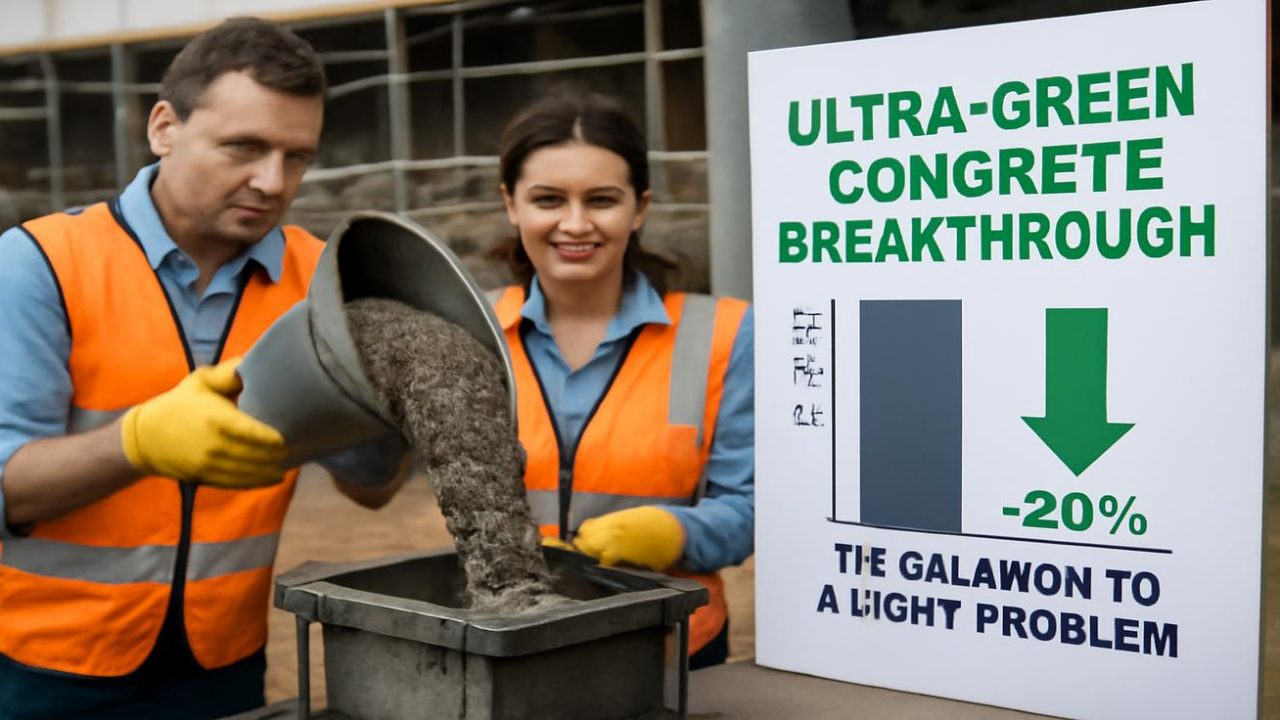
Humanity produces 952 tonnes of concrete every single second—a staggering rate that makes this grey material the most widely used human-made substance on Earth. By the time you finish reading this paragraph, thousands more tonnes will have been poured into foundations, highways, and high-rises around the globe.
This relentless concrete production comes with a massive environmental cost. Cement, the key ingredient that binds concrete together, is responsible for an estimated 7-8% of global carbon dioxide emissions—more than all the world’s aircraft combined. Now, Australian researchers may have discovered a way to keep building with concrete while dramatically reducing its climate impact.
The solution isn’t about abandoning concrete entirely. Instead, it focuses on changing the recipe that has dominated construction for over a century.

The Hidden Climate Impact of Our Built World
Walk through any city and you’re surrounded by a single material. Concrete forms the bones of buildings, the surface beneath your feet, and the infrastructure that connects it all. More than four billion tonnes of cement are produced annually, mixed with sand, gravel, and water to create the grey foundation of modern civilization.
The environmental problem lies in how cement is made. Limestone must be heated in massive kilns to temperatures between 1,400-1,500°C. This process requires enormous amounts of energy, typically from burning fossil fuels. Even worse, the chemical reaction itself—breaking down limestone into lime—releases huge quantities of CO₂ directly into the atmosphere.
Every road paved and tower constructed carries this carbon shadow. As global construction accelerates, that shadow grows darker. The climate math is unforgiving: to stay on a safe climate trajectory, construction emissions must fall sharply and soon.

Yet concrete remains indispensable because it works. It’s strong, versatile, relatively cheap, and durable. Architects and engineers understand it intimately. Banks finance concrete projects without hesitation. Alternative materials often seem fragile or impractical by comparison.
Why We Can’t Stop Using Concrete
The scale of concrete production defies easy comprehension. In the time it takes to inhale and exhale, another thousand tonnes enter the world as foundations thicken, apartment blocks rise, and new infrastructure spreads across the landscape.
This massive output reflects concrete’s unique advantages:

- Exceptional strength and durability for major construction projects
- Relatively low cost compared to alternative building materials
- Well-established supply chains and construction expertise worldwide
- Versatility for everything from dams to decorative elements
- Fire resistance and structural reliability
Governments can procure concrete by the megatonne. Construction crews know how to work with it efficiently. The entire building industry is structured around concrete’s properties and availability.
This dependence creates a paradox: we need to dramatically reduce construction emissions, but we also need to keep building homes, schools, hospitals, and infrastructure for a growing global population.
The Australian Approach to Cleaner Concrete
Rather than replacing concrete entirely, Australian researchers are focusing on cleaning up the binder—the cement that holds everything together. This approach recognizes that concrete will remain essential while targeting the component responsible for most emissions.

The strategy involves changing the fundamental chemistry of concrete production. Instead of completely reimagining construction methods or retraining entire industries, this approach works within existing systems while addressing the core environmental problem.
At Australian construction sites, the changes might not be immediately visible. Workers still wear high-visibility vests, steel reinforcement bars are still positioned carefully, and concrete trucks still arrive with their familiar rotating drums. But the concrete mixture itself represents a potentially revolutionary shift in how we build.
| Concrete Production Facts | Current Reality |
|---|---|
| Global production rate | 952 tonnes per second |
| Annual cement production | Over 4 billion tonnes |
| Share of global CO₂ emissions | 7-8% |
| Kiln operating temperature | 1,400-1,500°C |
The Australian innovation represents years of research into alternative binding agents and production methods. By keeping the familiar concrete workflow while changing the emissions-intensive components, this approach could scale more rapidly than solutions requiring entirely new construction techniques.

What Makes This Solution Different
Previous attempts to green the construction industry often focused on wholesale replacements for concrete—materials like timber, bamboo, or experimental alternatives. While these have their place, they can’t match concrete’s performance in major infrastructure projects or high-rise construction.
The Australian research takes a different path. Instead of asking builders to abandon concrete, it asks: what if we could keep concrete’s benefits while eliminating the emissions? This approach acknowledges that concrete isn’t going anywhere—global production continues at 952 tonnes per second regardless of environmental concerns.
By targeting the cement binder specifically, researchers can address the component responsible for the vast majority of concrete’s carbon footprint. The limestone heating process and chemical reactions that release CO₂ could be replaced with cleaner alternatives while maintaining the structural properties builders depend on.

This strategy also works with existing infrastructure. Concrete plants wouldn’t need complete overhauls. Construction crews wouldn’t need extensive retraining. The supply chains and expertise that support the global concrete industry could adapt rather than being replaced entirely.
The Road Ahead for Concrete Innovation
While the Australian approach shows promise, significant challenges remain. Any new concrete formulation must prove it can match traditional concrete’s strength, durability, and reliability over decades of use. Building codes and regulations must evolve to accommodate new materials and methods.
Cost remains a critical factor. Construction projects operate on tight margins, and any concrete alternative must compete economically with established methods. The path from laboratory innovation to widespread adoption often takes years or decades in the conservative construction industry.

Yet the urgency of climate change is forcing faster innovation cycles. With concrete production at 952 tonnes per second and rising, the industry faces mounting pressure to decarbonize quickly. Solutions that work within existing systems may have better chances of rapid scaling than approaches requiring fundamental changes to how we build.
The Australian research represents hope that we might not have to choose between building the infrastructure our growing world needs and protecting the climate. Instead, we might be able to do both—keeping concrete’s benefits while eliminating its environmental costs.
Frequently Asked Questions
How much concrete does humanity actually produce?
Humanity produces approximately 952 tonnes of concrete every second, making it the most widely used human-made substance on Earth.

Why is concrete so bad for the environment?
Cement production requires heating limestone to 1,400-1,500°C using fossil fuels, and the chemical process itself releases CO₂, making cement responsible for 7-8% of global carbon emissions.
What makes the Australian approach different from other concrete alternatives?
Rather than replacing concrete entirely, Australian researchers are focusing on changing the cement binder while keeping concrete’s familiar properties and construction methods.
How much cement is produced globally each year?
More than four billion tonnes of cement are produced annually and mixed with sand, gravel, and water to create concrete.
Can we just stop using concrete to solve the emissions problem?
Concrete remains essential because it’s strong, versatile, relatively cheap, and well-understood by the construction industry, making complete replacement impractical for major infrastructure projects.
When will cleaner concrete alternatives become widely available?
The timeline for widespread adoption has not yet been confirmed, as new concrete formulations must prove their long-term durability and meet building code requirements.









Leave a Comment