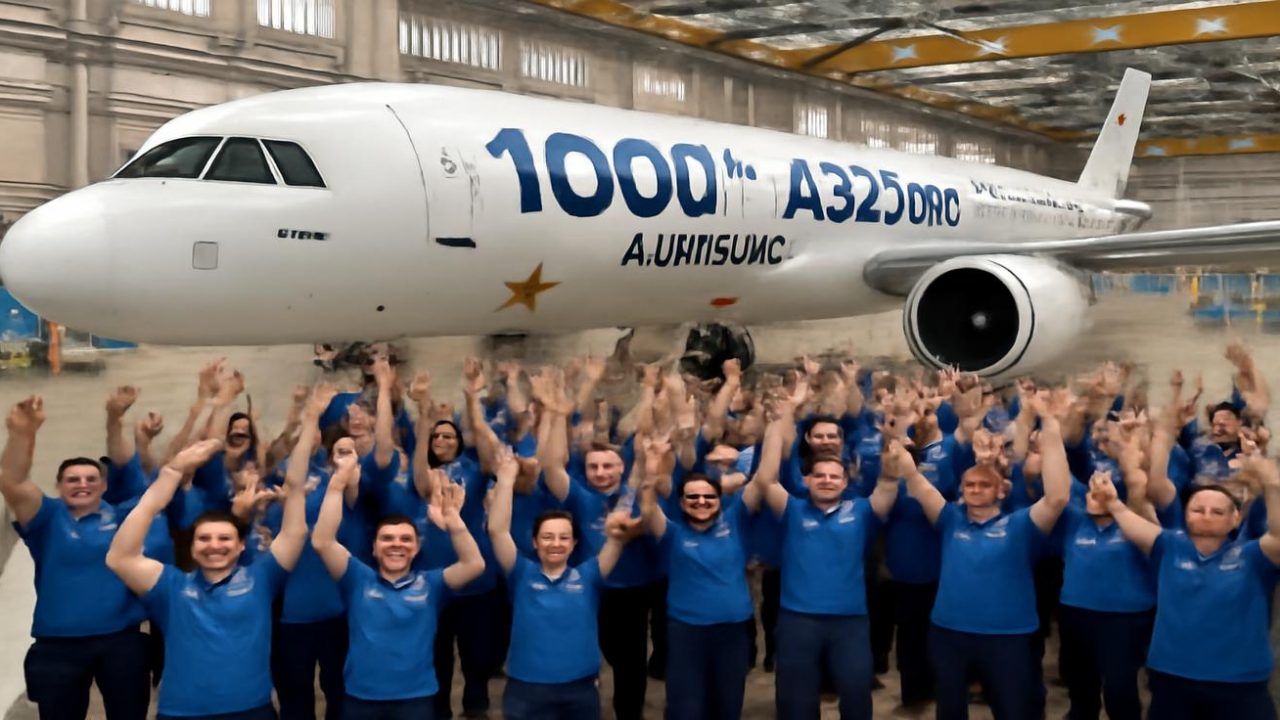
Airbus’ A320neo family has quietly crossed a psychological milestone in late 2023 and into 2024, pulling decisively ahead of Boeing’s 737 MAX in orders, delivered aircraft, active fleets, and momentum. This symbolic threshold marks the moment when Airbus stopped merely keeping up with Boeing and began leaving it behind in the narrow-body market.
The shift represents more than just numbers on industry charts. Single-aisle jets like the A320neo and 737 MAX form the heart of commercial aviation, handling the short- and medium-haul routes that keep airlines profitable. For Boeing, whose 737 has dominated the skies for decades, falling behind here means risking the very core of the aviation market.
Walk through major airports in Europe or Asia today, and you’ll likely see rows of A320neos lined up at gates—their distinctive silver-gray engines and skyward-arcing winglets now a common sight across the global fleet.

The Battle Between Aviation’s Two Giants
The rivalry between Airbus and Boeing has shaped modern aviation for decades. These two superpowers have competed for every airline order, route opportunity, and technology upgrade, creating a duopoly that influences how the world travels.
Throughout the 1990s and 2000s, the Boeing 737 and Airbus A320 families maintained an uneasy balance. Airlines typically aligned as “Boeing houses” or Airbus operators, choosing their workhorse jets based on durability, fuel efficiency, maintenance support, and familiarity.
The turning point came as fuel costs soared and environmental concerns intensified. Airlines began demanding specific improvements: dramatically better efficiency without starting from scratch. They wanted new engines and savings on airframes their pilots already knew and maintenance crews already trusted.

Airbus moved first with the A320neo program—essentially a re-engined, refined version of its A320 family. The “new engine option” promised significant fuel savings, quieter operations, and lower emissions while maintaining the familiar operational characteristics airlines valued.
What Makes the A320neo Different
The A320neo family represents an evolution rather than a revolution. Airbus fitted next-generation, fuel-efficient engines and aerodynamic improvements to its proven A320 platform, transforming a reliable bestseller into what industry observers now call a runaway phenomenon.
Key improvements include:

- Advanced engine options that significantly reduce fuel consumption
- Sharklet-tipped wings that improve aerodynamic efficiency
- Quieter operations compared to previous generations
- Lower emissions profile meeting stricter environmental standards
- Maintained pilot training compatibility with existing A320 family aircraft
The aircraft produces a distinctly different sound during startup—described as more of a concentrated rush than the traditional roar, like wind funneled through a canyon rather than thunder.
This approach allowed airlines to achieve next-generation efficiency while leveraging existing pilot training, maintenance procedures, and operational knowledge.
The Numbers Behind the Milestone
The symbolic milestone wasn’t marked by a single dramatic announcement. Instead, it emerged from a convergence of trends across multiple metrics throughout 2023 and into 2024.

| Metric | A320neo Performance | Competitive Position |
|---|---|---|
| Orders | Pulling ahead of 737 MAX | Leading |
| Delivered Aircraft | Surpassing direct rival | Ahead |
| Active Fleet Size | Growing faster than competition | Expanding lead |
| Market Momentum | Accelerating growth | Decisive advantage |
The milestone represents the point where abstract industry charts translated into visible real-world dominance. Airport gates worldwide increasingly feature A320neo aircraft, reflecting the family’s transformation from competitive option to market leader.
Impact on the Aviation Industry
This shift affects multiple stakeholders across the aviation ecosystem. Airlines benefit from the A320neo’s fuel efficiency and operational flexibility, while passengers experience quieter flights with potentially lower ticket prices due to reduced operating costs.
For Boeing, the challenge extends beyond corporate pride. The narrow-body market represents the foundation of commercial aviation profitability. Airlines use these aircraft for the bread-and-butter routes that generate consistent revenue and keep operations financially viable.

The competitive dynamics also influence:
- Airline fleet planning decisions for the next decade
- Airport gate allocation and infrastructure planning
- Pilot training programs and certification requirements
- Maintenance facility investments and spare parts inventory
- Fuel consumption patterns across global aviation
Maintenance crews and pilots worldwide are adapting to the A320neo’s growing presence, while airports adjust their operations to accommodate the increasing number of these aircraft.
What This Means for Air Travel
The A320neo’s market success signals broader changes in how people will fly in the coming years. The aircraft’s efficiency improvements contribute to airlines’ ability to offer more routes while managing operational costs.

Passengers can expect to encounter A320neo aircraft more frequently, particularly on short- and medium-haul routes. The quieter engines and improved fuel efficiency may contribute to more sustainable air travel options and potentially more competitive pricing on popular routes.
The milestone also reflects the aviation industry’s response to environmental pressures. Airlines increasingly prioritize aircraft that can reduce emissions while maintaining operational efficiency, making the A320neo’s success partly a result of changing environmental expectations.
For the millions of passengers who board flights daily expecting their journey to simply work, the A320neo’s market dominance represents a shift toward newer, more efficient technology becoming the standard rather than the exception in commercial aviation.

Frequently Asked Questions
What exactly is the A320neo?
The A320neo is Airbus’ “new engine option” version of its popular A320 family, featuring fuel-efficient engines and aerodynamic improvements while maintaining operational compatibility with existing A320 aircraft.
When did the A320neo surpass the Boeing 737 MAX?
The milestone occurred gradually through late 2023 and into 2024, when the A320neo family pulled ahead across multiple metrics including orders, deliveries, and active fleet size.
Why is this milestone significant for airlines?
Single-aisle aircraft like the A320neo handle the short- and medium-haul routes that form the core of airline profitability, making market leadership in this segment crucial for manufacturers.

How does the A320neo differ from previous A320 models?
The neo features next-generation engines that significantly reduce fuel consumption, quieter operations, lower emissions, and improved aerodynamics while maintaining pilot training compatibility.
What does this mean for Boeing?
Boeing faces increased competitive pressure in the narrow-body market, which represents the foundation of commercial aviation and airline profitability.
Will passengers notice flying on an A320neo?
Passengers may notice quieter engine operation during startup and flight, and airlines may offer more competitive pricing due to the aircraft’s improved fuel efficiency.











Leave a Comment