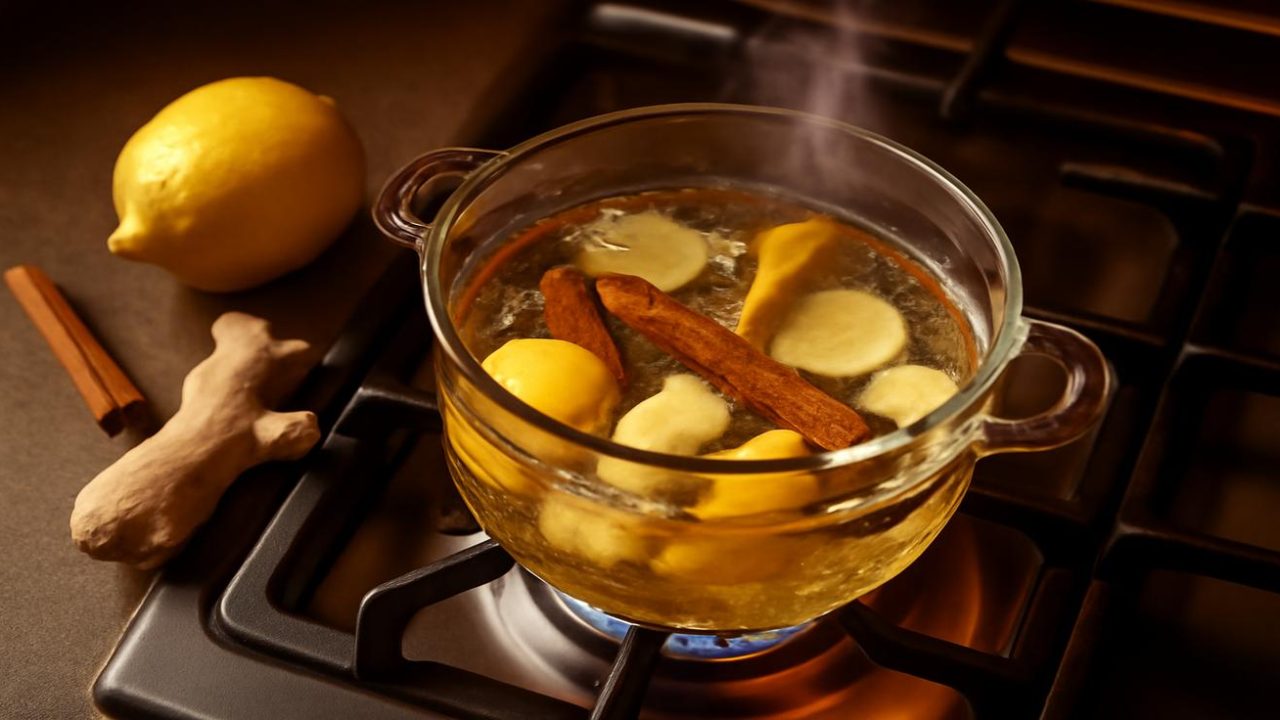
The kitchen fills with an unmistakable aroma before the water even reaches a rolling boil — citrusy brightness from lemon peel, earthy sweetness from cinnamon, and the sharp heat of fresh ginger rising through the steam. This simple combination has quietly become one of the most recommended home remedies shared between neighbors, passed from aunt to niece, and spread across social media with promises ranging from modest comfort to dramatic health transformations.
All over the world, people are dropping lemon peels, slices of ginger, and cinnamon sticks into pots of water, letting them simmer into fragrant infusions. No fancy equipment required, no rare ingredients — just scraps, roots, and bark that most kitchens already contain.
But what’s actually happening when you boil these three ingredients together? The answer lies somewhere between ambitious online claims and genuine scientific compounds that have been studied for their potential health benefits.

The Science Behind Your Kitchen Scraps
Lemon peel, the part most people toss in the bin without a second thought, actually contains the highest concentration of beneficial compounds in the entire fruit. Those tiny, glistening oil glands dotting the yellow skin are packed with limonene, the compound responsible for that clean, bright aroma that transforms your kitchen.
When hot water hits lemon peel, it extracts essential oils and bitter flavonoids like hesperidin and eriocitrin. These plant compounds have been studied in research settings for their potential antioxidant and anti-inflammatory properties. While they won’t work miracles, they do contribute to a drink that feels cleaner and lighter than sugary alternatives.
Ginger brings both literal and figurative heat to the mixture. The knobby root’s signature compounds — gingerol and shogaol — create that warming sensation that spreads through your chest with each sip. Cultures worldwide have turned to ginger for centuries to ease nausea, support digestion, and provide warmth during cold weather.

Cinnamon adds the third layer of complexity. Whole cinnamon sticks, with their tightly rolled bark layers, contain compounds like cinnamaldehyde, which gives cinnamon its distinctive aroma and has been investigated for potential effects on blood sugar regulation and inflammation.
The important distinction: boiling these ingredients together creates a gentle herbal infusion, not a pharmaceutical drug. It’s a plant-rich drink that can contribute helpful compounds to your day — less magic bullet, more quiet nudge toward better choices.
What People Actually Use This Mixture For
This simple brew slides easily into everyday life, serving different purposes for different people. The flexibility explains much of its widespread appeal and persistent recommendations.

Many people describe using the mixture as part of a “detox” ritual, though the term gets thrown around more than it should. Your liver and kidneys already work continuously to filter and process what your body doesn’t need. What this drink actually provides is a warm, plant-based beverage that feels cleansing and fresh — a psychological and sensory experience that can support healthier habits.
Others turn to the combination specifically for digestive comfort. Ginger’s well-documented effects on nausea and digestion make it a logical choice when your stomach feels unsettled. The warm liquid itself can be soothing, while the aromatic compounds provide a multi-sensory experience that many find calming.
During cold months, people often reach for this mixture as a warming drink that doesn’t rely on caffeine or added sugars. The heat from ginger, combined with the bright citrus notes and woody cinnamon warmth, creates a satisfying beverage that feels both comforting and energizing.

The Real Benefits vs. Online Claims
Spend ten minutes searching online for this lemon peel, cinnamon, and ginger combination, and you’ll encounter dramatic promises: “melts belly fat,” “detoxes your liver,” “cures colds overnight.” The language is bold, the photos glossy, and the claims often wildly ambitious.
The reality is more modest but still meaningful. This mixture provides a low-calorie, plant-based drink rich in aromatic compounds that have been studied for various potential benefits. It’s not a cure-all, but it offers a healthier alternative to many commercial beverages while delivering compounds that may support overall wellness.
| Ingredient | Key Compounds | Traditional Uses |
|---|---|---|
| Lemon Peel | Limonene, hesperidin, eriocitrin | Digestive support, aromatic therapy |
| Ginger | Gingerol, shogaol | Nausea relief, digestive aid, warming |
| Cinnamon | Cinnamaldehyde | Blood sugar support, warming, flavor |
The persistence of this recipe across cultures and generations suggests something more subtle than miracle cures — it represents a simple, accessible way to incorporate beneficial plant compounds into daily routines while creating a moment of comfort and ritual.

How to Make and Use the Mixture Safely
The beauty of this combination lies in its simplicity. Most people use organic lemon peels to avoid pesticide residues, fresh ginger root sliced thin, and whole cinnamon sticks rather than powder. The ingredients simmer in water for 10-15 minutes, creating a fragrant tea that can be consumed warm or cooled.
Some people drink it first thing in the morning as part of a morning routine. Others sip it throughout the day as a replacement for sugary drinks or caffeinated beverages. The mixture can be made in larger batches and stored in the refrigerator for several days.
While generally safe for most people, those taking medications for blood sugar control should be aware that cinnamon may enhance these effects. People with sensitive stomachs might find the ginger too intense on an empty stomach. As with any herbal preparation, moderation remains key.

Why This Simple Recipe Keeps Spreading
The continued popularity of boiling lemon peel with cinnamon and ginger reflects something deeper than health trends. In a world of complex supplements and expensive wellness products, this mixture offers accessibility — ingredients most people already have, a simple process anyone can follow, and immediate sensory rewards through aroma and taste.
The ritual itself provides value beyond the compounds it delivers. Taking time to prepare something warm and fragrant, inhaling the steam, and sitting with a cup of homemade herbal tea creates a moment of pause in busy days. This psychological component may be as important as any physical benefits.
Rather than seeking miracle cures, people seem drawn to this mixture because it feels like a small, positive choice they can control. It’s a way to incorporate more plant-based elements into their routine while creating a comforting ritual that costs very little and requires no special expertise.

Frequently Asked Questions
How long should I boil lemon peel, cinnamon, and ginger together?
Most people simmer the mixture for 10-15 minutes to extract the beneficial compounds and create a fragrant tea.
Can I use powdered cinnamon instead of cinnamon sticks?
Whole cinnamon sticks work better for this preparation, as they release compounds more gradually and won’t make the drink gritty like powder might.
Should I use organic lemons for the peel?
Organic lemon peels are recommended to avoid pesticide residues, since you’ll be consuming the outer skin of the fruit.

How often can I drink this mixture safely?
Most people can enjoy this herbal tea daily in moderation, though those on blood sugar medications should consult healthcare providers about cinnamon intake.
Will this mixture actually help me lose weight?
While online claims about dramatic weight loss are exaggerated, this low-calorie, plant-based drink can be part of a healthy routine when replacing higher-calorie beverages.
Can I store the prepared mixture in the refrigerator?
Yes, you can make larger batches and store the strained liquid in the refrigerator for several days, drinking it warm or cold.











Leave a Comment