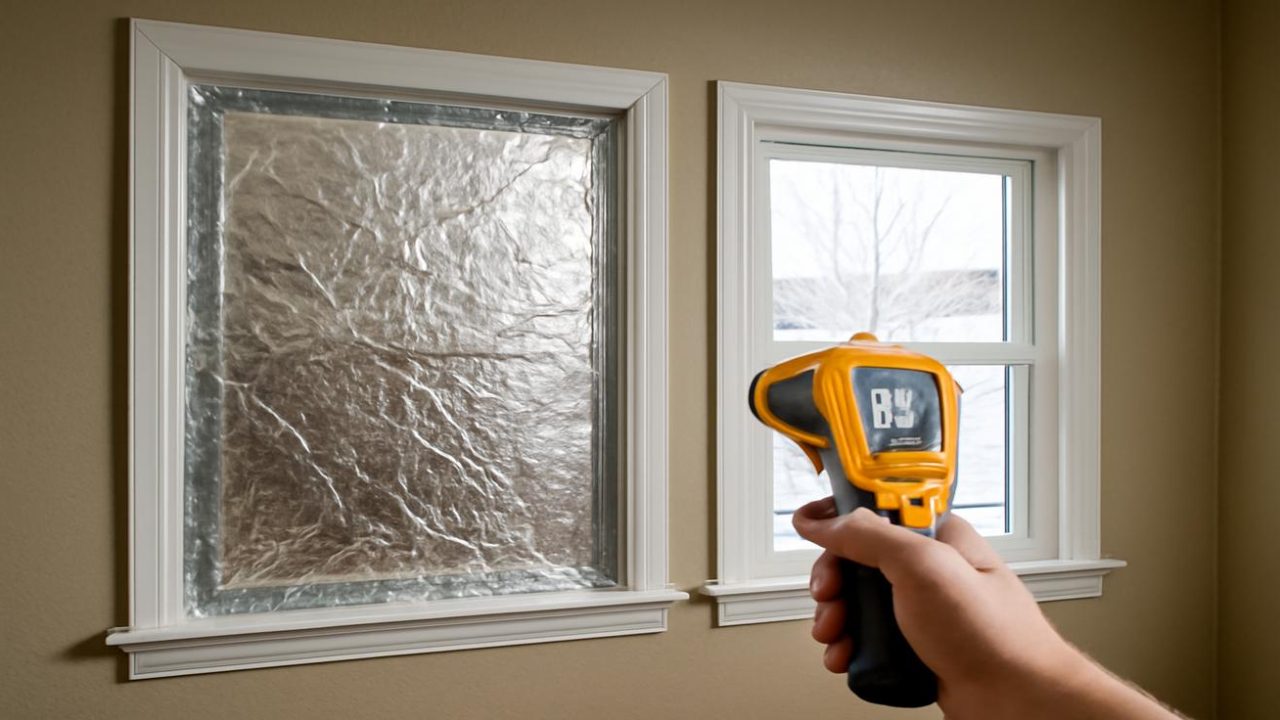
Trevor glanced up from his coffee as his neighbor Gladys pressed aluminum foil against her living room window. “What on earth are you doing over there?” he called out from his porch. She looked back with a grin, smoothing another sheet of the shiny material along the window frame. “Saving money on my heating bill, that’s what!”
What started as whispered conversations between neighbors has exploded into a full-blown social media phenomenon. Across the country, homeowners are lining their window edges with aluminum foil, convinced they’ve discovered a simple hack to slash their energy costs.
But does this metallic window treatment actually work, or is it just another internet myth that sounds too good to be true?

The Science Behind the Shiny Solution
The aluminum foil window trend isn’t entirely baseless. The concept relies on basic physics principles that engineers have understood for decades. Heat moves through windows in three main ways: conduction, convection, and radiation.
Aluminum foil can indeed reflect radiant heat back into your home rather than letting it escape through glass. The reflective surface acts like a mirror for thermal energy, bouncing warmth back toward your living space instead of allowing it to dissipate outdoors.
The reflective properties of aluminum are legitimate, but the application method matters enormously. Simply taping foil to window edges won’t create the thermal barrier most people expect.
— Dr. Rebecca Chen, Thermal Engineering Specialist

However, the reality is more nuanced than viral videos suggest. While aluminum foil does possess reflective qualities, its effectiveness depends heavily on proper installation and realistic expectations about energy savings.
Most DIY installations involve pressing foil directly against glass or taping it around window frames. This approach creates minimal insulation value and may actually trap moisture, leading to condensation problems that could damage your windows over time.
What Engineers Actually Recommend
Professional energy auditors and building engineers have mixed reactions to the aluminum foil trend. While they appreciate homeowners taking initiative to reduce energy costs, they worry about misplaced expectations and potential property damage.

Here’s what thermal engineering experts say about aluminum foil window treatments:
- Minimal heat loss reduction: Properly applied foil might reduce heat loss by 5-10%, far less than advertised online
- Installation challenges: Effective thermal barriers require air gaps and proper sealing techniques
- Moisture concerns: Foil pressed against glass can create condensation issues
- Aesthetic impact: Reflective windows may violate neighborhood covenants or local ordinances
- Cost-benefit ratio: The time and material investment rarely justifies the minimal energy savings
I’ve seen homeowners spend hours applying foil to their windows, hoping for dramatic energy savings. The reality is that proper weatherstripping or caulking around those same windows would deliver far better results for the same effort.
— Marcus Rodriguez, Certified Energy Auditor
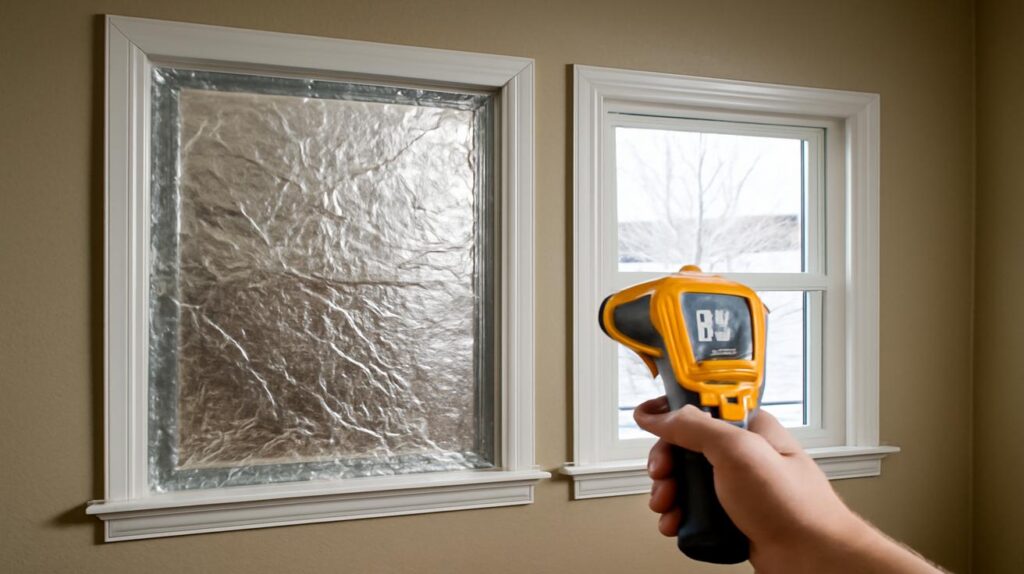
The table below shows how aluminum foil stacks up against other common winterization methods:

| Method | Cost | Heat Loss Reduction | Installation Time |
|---|---|---|---|
| Aluminum foil on windows | $10-20 | 5-10% | 2-3 hours |
| Window weatherstripping | $15-30 | 15-25% | 1-2 hours |
| Plastic window film | $20-40 | 20-30% | 2-4 hours |
| Thermal curtains | $50-150 | 25-35% | 30 minutes |
Better Alternatives That Actually Work
Instead of reaching for aluminum foil, energy efficiency experts recommend focusing on proven methods that deliver measurable results. These alternatives often cost similar amounts but provide significantly better thermal performance.
Window weatherstripping remains one of the most effective DIY solutions. Quality weatherstripping materials seal gaps around window frames, preventing cold air infiltration and warm air escape. This method addresses the primary source of window heat loss without creating moisture problems.
Most heat loss around windows happens through air leaks, not radiation. Sealing those leaks with proper materials will cut your heating costs far more than any reflective surface treatment.
— Jennifer Walsh, Building Performance Contractor

Plastic window insulation kits offer another superior alternative. These kits create an insulating air pocket between the plastic film and your window glass, dramatically reducing heat transfer. The installation process is straightforward, and the results are immediately noticeable.
For homeowners willing to invest slightly more, thermal curtains or cellular shades provide excellent insulation while maintaining attractive window treatments. These products trap air in their cellular structure, creating effective thermal barriers that work day and night.
The Real Impact on Your Energy Bills
While aluminum foil window treatments won’t deliver the dramatic savings promised in viral social media posts, understanding realistic expectations helps homeowners make informed decisions about winterization strategies.

A typical home losing $200 monthly to heating costs might save $10-20 with properly applied aluminum foil treatments. The same home could save $30-50 monthly with comprehensive weatherstripping and window film applications.
Homeowners get excited about quick fixes, but energy efficiency requires a systematic approach. Start with the biggest heat loss sources first, then work your way down to smaller improvements.
— David Park, Residential Energy Consultant
The aluminum foil trend highlights a positive development: more people are actively seeking ways to reduce energy consumption and lower utility bills. However, channeling that motivation toward proven methods will deliver better results with less frustration.

Professional energy audits can identify the most effective improvements for your specific home. These assessments often reveal surprising heat loss sources that simple DIY fixes can address affordably.
FAQs
Does aluminum foil actually reduce heat loss through windows?
Yes, but minimally. Properly applied foil might reduce heat loss by 5-10%, which is significantly less than other weatherization methods.
Can aluminum foil damage my windows?
Potentially yes. Foil applied directly to glass can trap moisture and cause condensation problems that may damage window frames or seals.

What’s the best alternative to aluminum foil for window insulation?
Window weatherstripping and plastic insulation film offer superior performance for similar costs and effort.
How much money can I actually save with aluminum foil on windows?
Most homes might save $10-20 monthly during heating season, assuming proper application and realistic expectations.
Is the aluminum foil window trend worth trying?
Your time and money are better invested in proven weatherization methods like sealing air leaks and adding proper window treatments.
Will aluminum foil on windows affect my home’s appearance?
Yes, reflective windows are quite noticeable and may violate neighborhood aesthetic guidelines or local ordinances.










Leave a Comment