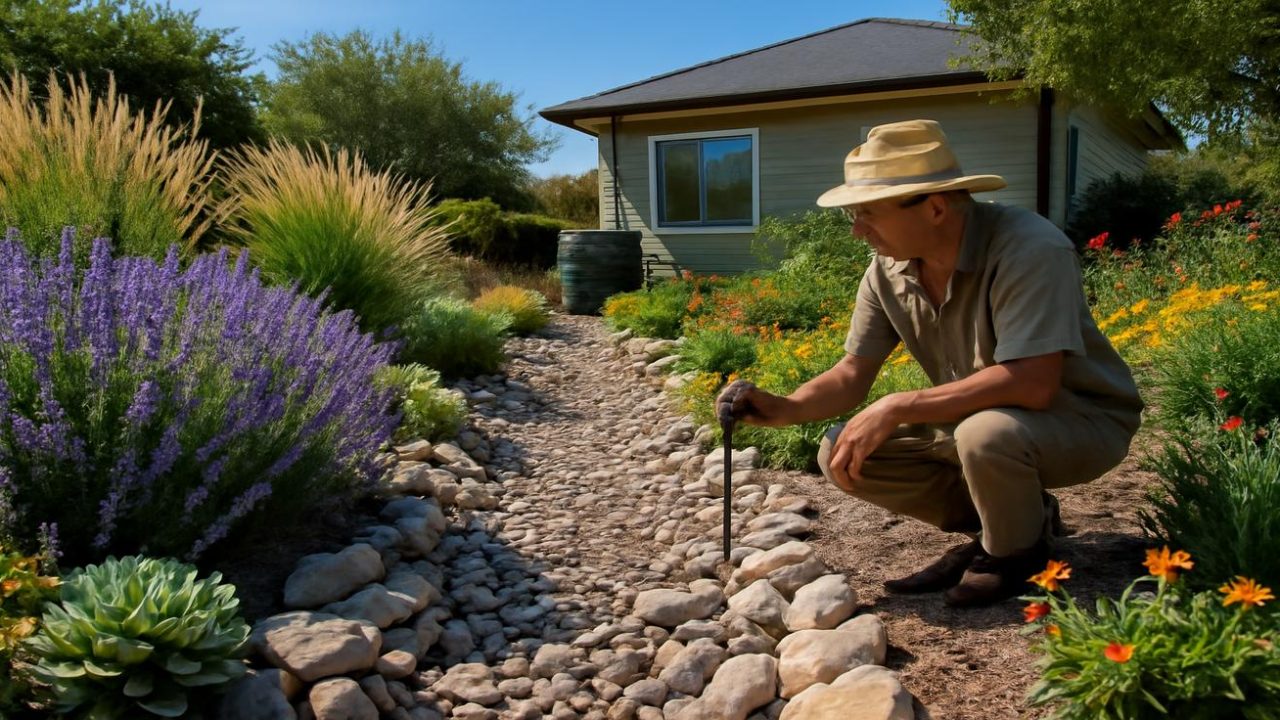
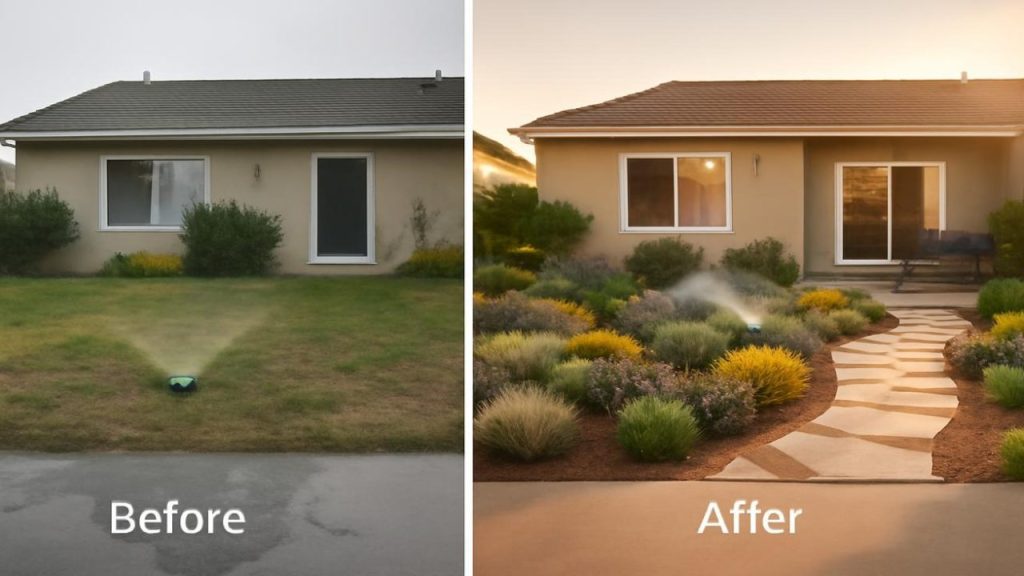
The morning Beatrice stepped onto her back patio, coffee mug in hand, she couldn’t ignore it anymore. The sprinklers had been running for twenty minutes, sending streams of water across her once-beautiful garden. Half the plants looked stressed despite the constant watering, while her water bill had tripled over the summer.
“I don’t understand,” she muttered to her neighbor over the fence. “I water everything every day, but it still looks terrible.”
Her neighbor smiled knowingly. “Maybe that’s exactly the problem.”

Beatrice’s frustration reflects a hidden crisis in millions of American yards. We’re drowning our gardens with water while watching them struggle to survive, all because of fundamental design mistakes that most homeowners don’t even realize they’re making.
Why Most Gardens Are Water Disasters Waiting to Happen
The uncomfortable truth is that traditional landscaping approaches set us up for failure from day one. Most gardens are designed like they’re living in England’s cool, rainy climate instead of facing our increasingly hot, dry summers.
When landscape designers or homeowners choose plants without considering water needs, group thirsty and drought-tolerant species together, or ignore natural water flow patterns, they create gardens that demand constant irrigation just to survive.

The biggest mistake I see is people treating their entire yard like it needs the same amount of water. It’s like trying to feed a hummingbird and an elephant the same meal.
— Marcus Chen, Sustainable Landscape Designer
The problem starts with soil that can’t hold moisture effectively, continues with plant choices that fight against local climate conditions, and ends with irrigation systems that waste more water than they deliver to plant roots.
But here’s what gives me hope: these problems are completely fixable without tearing out your entire garden or sacrificing the beauty you want.

Smart Design Solutions That Slash Water Usage
The most effective water-saving strategies work with nature instead of against it. These approaches can reduce outdoor water consumption by 30-60% while creating more resilient, attractive landscapes.
Strategic Plant Grouping
- Create hydrozones by grouping plants with similar water needs
- Place thirsty plants in naturally moist areas like low spots
- Position drought-tolerant species on slopes and sunny exposures
- Use native plants that evolved to thrive in your specific climate
Soil Improvement Techniques
- Add organic compost to increase water retention capacity
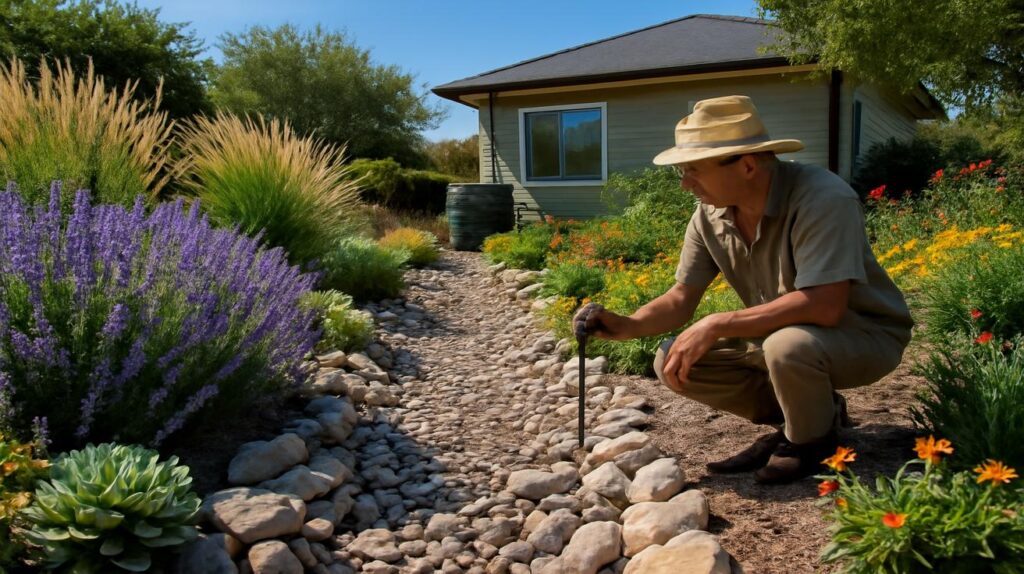
- Install rain gardens in low areas to capture natural runoff
- Create berms and swales to direct water where it’s needed most
- Apply 2-3 inch mulch layers to reduce evaporation
| Water-Saving Strategy | Potential Water Reduction | Implementation Cost | Maintenance Level |
|---|---|---|---|
| Native Plant Conversion | 40-70% | Medium | Low |
| Drip Irrigation System | 30-50% | Medium | Medium |
| Mulching Program | 25-40% | Low | Low |
| Rain Water Harvesting | 20-60% | High | Low |
| Soil Amendment | 15-30% | Low | Very Low |
I’ve seen homeowners cut their water bills in half just by switching from spray irrigation to drip systems and choosing the right plants for each microclimate in their yard.
— Jennifer Martinez, Water Conservation Specialist
Smart Irrigation Upgrades
- Install drip irrigation for precise water delivery to root zones
- Add smart controllers that adjust watering based on weather conditions
- Use moisture sensors to prevent overwatering
- Schedule watering for early morning to minimize evaporation
Beautiful Gardens That Barely Need Water
The most stunning sustainable gardens prove that water conservation and visual appeal aren’t competing goals. These landscapes often look more interesting and dynamic than traditional high-water designs.

Mediterranean-style gardens combine drought-tolerant herbs like lavender and rosemary with ornamental grasses and succulents. Prairie-inspired designs use native wildflowers and grasses that provide year-round interest while supporting local wildlife.
Desert-adapted gardens aren’t just cacti and rocks. They can include flowering shrubs like desert willow, architectural plants like agave, and colorful groundcovers that create sophisticated, modern aesthetics.
People are always surprised when they see how lush and beautiful a water-wise garden can be. We’re not talking about sacrificing beauty – we’re talking about choosing plants that look their best without constant watering.
— David Thompson, Xeriscaping Specialist
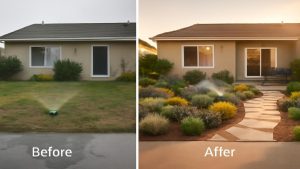
The key is understanding that different doesn’t mean less attractive. These gardens offer unique textures, seasonal changes, and wildlife benefits that traditional landscapes often lack.
Making the Change Without Breaking the Bank
Transforming a water-hungry garden doesn’t require a complete overnight renovation. The most successful transitions happen gradually, allowing homeowners to spread costs and learn what works best in their specific conditions.
Start with the areas that struggle most – usually the spots where plants frequently die or look stressed despite regular watering. These problem zones often become the most dramatic success stories.

Focus first on improving soil and adding mulch, changes that benefit any garden regardless of plant choices. Then gradually replace struggling plants with water-wise alternatives that suit your aesthetic preferences.
The homeowners who stick with water-wise landscaping are the ones who make changes slowly and choose plants they genuinely love. It’s not about following rigid rules – it’s about finding what works for your lifestyle and taste.
— Angela Rodriguez, Landscape Architect
Many utility companies offer rebates for water-saving landscape improvements, and the reduced water bills typically offset initial investments within two to three years.

The most rewarding part isn’t just the lower bills or reduced maintenance. It’s discovering that gardens designed to work with natural patterns are more resilient, more interesting, and ultimately more satisfying than landscapes that require constant intervention to survive.
FAQs
How much can I realistically reduce my outdoor water usage?
Most homeowners can reduce outdoor water consumption by 30-50% with smart plant choices and efficient irrigation, while some achieve 70% reductions with comprehensive water-wise designs.
Will drought-tolerant plants look good in my climate?
Every climate has beautiful native and adapted plants that use less water. The key is choosing species that naturally thrive in your specific conditions rather than fighting against them.
How long does it take for water-wise plants to establish?
Most drought-tolerant plants need regular watering for the first 1-2 years while establishing root systems, then become largely self-sufficient except during extreme dry periods.
Can I still have a green lawn with water-wise landscaping?
Yes, but consider reducing lawn size and choosing drought-tolerant grass varieties, or explore alternatives like clover, native groundcovers, or artificial turf for high-use areas.
What’s the biggest mistake people make when transitioning to water-wise gardens?
Trying to change everything at once instead of gradually transitioning areas, and choosing plants based solely on water needs rather than considering aesthetics and maintenance preferences.
Do water-wise gardens require special maintenance skills?
Actually, they typically require less maintenance once established. The main difference is learning to water deeply but less frequently, and understanding that some seasonal dormancy is normal and healthy.








Leave a Comment