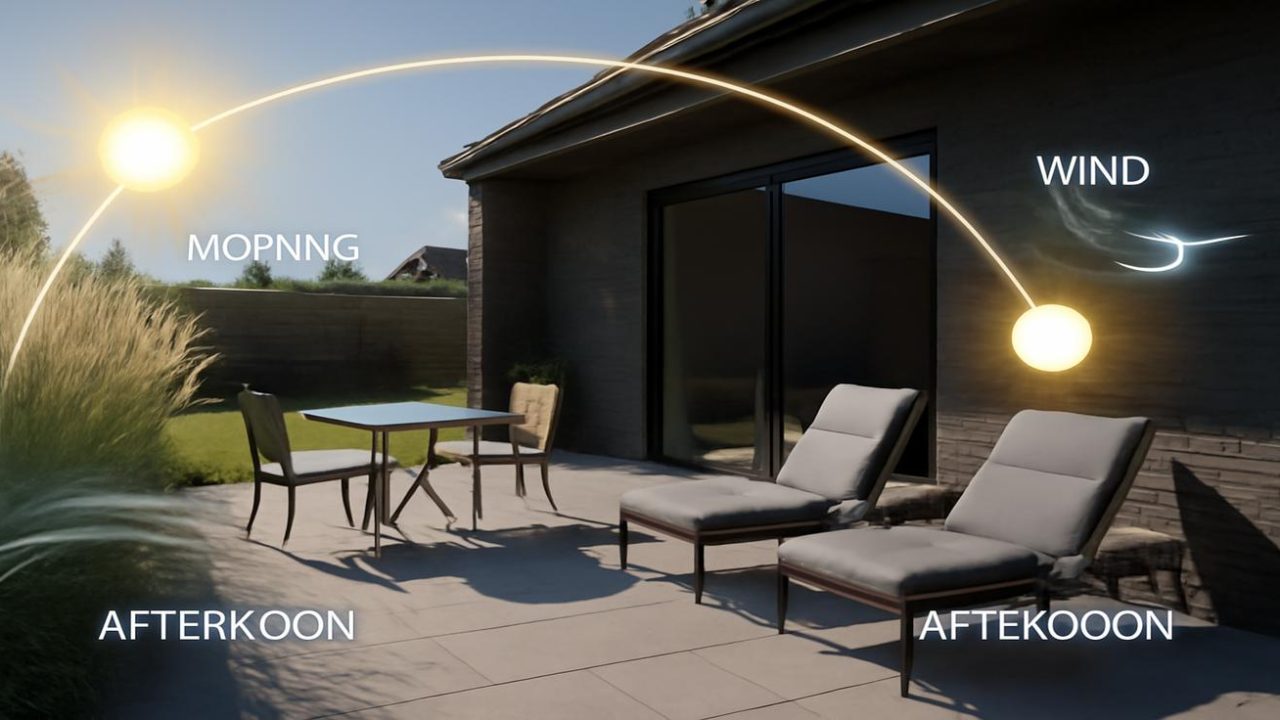
Trevor adjusted his outdoor cushions for the third time in an hour, chasing the last sliver of shade on his supposedly “perfect” patio. His wife laughed from the sliding door. “Maybe we should have thought about where the sun actually goes before we spent fifteen grand on this thing,” she called out, fanning herself with a magazine.
He’d been so proud of their new outdoor space just six months ago. The contractor had assured them the southwest-facing orientation would be “ideal for entertaining.” Now Trevor realized he’d been sold a beautiful oven that baked his guests and turned every summer barbecue into an endurance test.
Trevor’s expensive mistake isn’t uncommon. Most homeowners focus on size, materials, and style when planning their outdoor spaces, completely overlooking the natural forces that will make or break their patio’s usability.

Why Your Patio’s Orientation Controls Everything
Your patio’s relationship with the sun, wind, and surrounding structures determines whether you’ll actually want to spend time there. A poorly oriented patio can remain unusable for months, suffer premature wear from harsh elements, and offer zero privacy when you need it most.
The orientation affects three critical factors: thermal comfort, structural durability, and functional privacy. Get these wrong, and you’ve essentially built an expensive outdoor storage area.
Most people think about their patio like an indoor room, but outdoor spaces are completely at the mercy of natural elements. Ignoring sun patterns is like building a house without considering the foundation.
— Marcus Chen, Landscape Architect

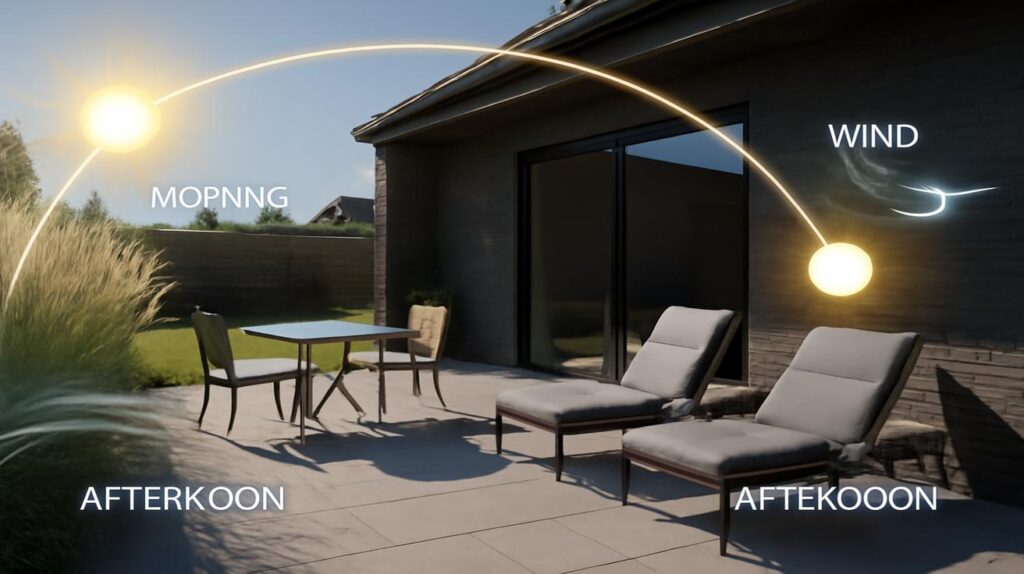
Understanding your patio’s exposure starts with mapping sun movement throughout the day and across seasons. The sun’s path changes dramatically between summer and winter, creating different heat zones and shadow patterns that most homeowners never consider.
How to Analyze Your Space Like a Pro
Proper patio analysis requires tracking multiple environmental factors over time. Here’s what professional designers evaluate before finalizing any outdoor space:
| Factor | Morning Impact | Afternoon Impact | Evening Impact |
|---|---|---|---|
| East-facing exposure | Direct morning sun | Afternoon shade | Cool, comfortable |
| West-facing exposure | Cool, shaded | Intense heat buildup | Extended hot conditions |
| South-facing exposure | Moderate sun | Maximum heat | Late-day warmth |
| North-facing exposure | Limited direct sun | Consistent shade | Cool, potentially damp |
Start your analysis by spending time in your proposed patio area during different times and seasons. Take note of when the space becomes uncomfortably hot, when shadows provide relief, and how wind patterns change throughout the day.

- Track sun exposure hourly from 8 AM to 8 PM during peak summer months
- Note wind direction and intensity during different weather conditions
- Identify sight lines from neighboring properties and windows
- Observe how rain and moisture affect the area
- Document seasonal changes in nearby tree coverage and shadows
I tell my clients to sit in their planned patio spot with a cup of coffee every morning for a week. By day three, they usually understand why orientation matters more than the fancy furniture they picked out.
— Sarah Rodriguez, Outdoor Design Consultant
Reading the Wind Patterns That Everyone Ignores
Wind analysis is the most overlooked aspect of patio planning, yet it dramatically affects comfort and durability. Prevailing winds can turn your outdoor dining area into a napkin-chasing nightmare or create perfect natural ventilation that makes hot days bearable.
Most regions have predictable wind patterns based on geography and seasonal weather systems. Coastal areas typically experience onshore breezes during the day and offshore winds at night. Inland areas often have thermal winds created by temperature differences between urban and rural zones.

Document wind patterns by observing trees, flags, or even smoke from chimneys during different times of day. Strong, consistent winds require windbreaks or strategic furniture placement. Gentle breezes should be channeled and preserved through smart design choices.
Wind can be your best friend or worst enemy. A well-positioned patio uses prevailing breezes for natural cooling, while a poorly planned space becomes a wind tunnel that makes outdoor dining impossible.
— David Park, Environmental Design Specialist
Privacy Problems You Haven’t Considered Yet
Privacy issues change throughout the day as sun angles shift and neighbors use their own outdoor spaces. Your morning coffee spot might become completely visible to the house next door by evening, or your afternoon reading nook could be in full view of a busy street.

Seasonal changes add another layer of complexity. Deciduous trees provide excellent summer privacy but leave your space exposed during winter months. New construction or landscape changes on neighboring properties can eliminate privacy you’ve counted on for years.
Evaluate privacy from multiple angles and elevations. Check sight lines from second-story windows, raised decks, and even public sidewalks. Consider how lighting affects nighttime privacy and whether your patio activities might disturb neighbors during different hours.
Quick Fixes for Common Orientation Problems
Even poorly oriented patios can be rescued with strategic modifications. The key is working with natural forces rather than fighting them.
- Add retractable awnings or pergolas to control harsh afternoon sun
- Install privacy screens that double as windbreaks
- Use strategic landscaping to create microclimates
- Position furniture to take advantage of natural shade patterns
- Consider portable shade solutions for maximum flexibility
You don’t need to rebuild your entire patio. Sometimes moving the seating area six feet or adding the right shade structure completely transforms how usable the space becomes.
— Jennifer Liu, Landscape Designer
The most successful patio improvements work incrementally. Start with temporary solutions like umbrellas or portable screens to test different configurations before investing in permanent structures.
FAQs
What’s the best orientation for a patio?
East or southeast-facing patios typically offer the best balance of morning warmth and afternoon shade, but the ideal orientation depends on your climate and how you plan to use the space.

How do I know if my patio gets too much sun?
If the space becomes uncomfortably hot by mid-morning or stays blazing hot past dinner time, you likely have too much sun exposure for comfortable use.
Can I fix a west-facing patio that gets too hot?
Yes, west-facing patios benefit greatly from overhead shade structures, strategic landscaping, or privacy screens that block late-day sun while maintaining airflow.
How much wind is too much for outdoor dining?
If you can’t keep lightweight items on the table or conversation becomes difficult due to wind noise, you need windbreaks or a more sheltered location.

Do I need professional help to analyze my patio orientation?
Most homeowners can do basic analysis themselves, but complex sites with multiple microclimates or significant privacy concerns benefit from professional landscape consultation.
What’s the biggest mistake people make with patio placement?
Focusing only on the view or proximity to the house without considering how sun, wind, and privacy will affect daily usability throughout different seasons.









Leave a Comment