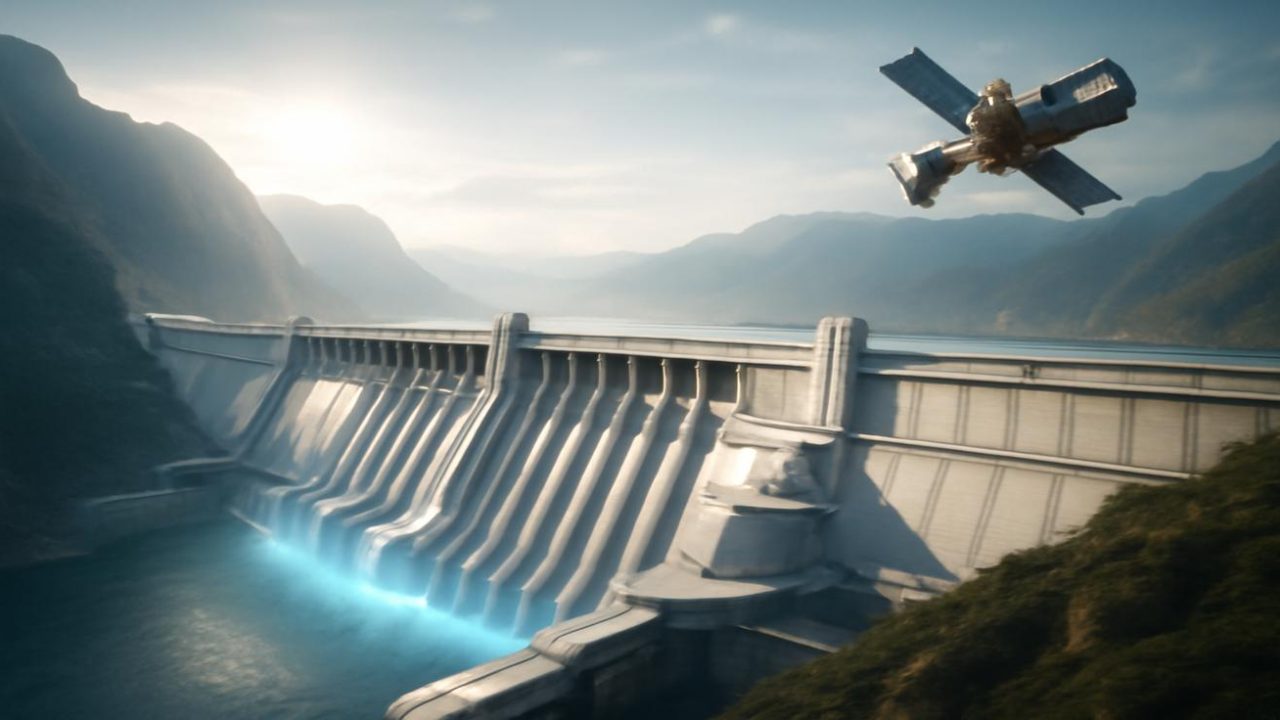
A viral claim spreading across social media suggests that NASA has confirmed China’s construction of a project so massive it will physically slow Earth’s rotation. The rumor has captured millions of viewers with dramatic thumbnails showing a tilted Earth and mysterious megastructures, but the reality behind these sensational headlines tells a different story entirely.
At the equator, our planet spins at over 1,600 kilometers per hour—a constant motion we never feel but that governs everything from our weather patterns to the length of our days. The idea that any human project could meaningfully alter this fundamental force has sparked both fascination and concern across online communities.
The claims range from massive dam projects to networks of artificial islands, each supposedly large enough to create measurable drag on Earth’s rotation. But separating fact from viral fiction requires understanding what’s actually possible—and what isn’t.

What the Viral Claims Actually Suggest
The internet rumors describe various “titanic projects” allegedly underway in China, each supposedly confirmed by NASA to affect Earth’s rotation. Some versions claim it’s a dam system, while others suggest networks of megastructures or chains of artificial islands.
These stories typically feature dramatic language about projects “so large” that space agencies had to issue warnings about planetary consequences. The posts often include computer-generated images of Earth with massive structures and urgent-sounding captions designed to capture attention.
What makes these claims particularly compelling is their blend of real scientific concepts with speculative engineering. Earth’s rotation can indeed be affected by large-scale mass redistribution—but the scale required goes far beyond any current human capability.

The viral nature of these claims reflects our fascination with megaprojects and the unsettling idea that human activity could reach planetary scales. But the gap between what’s theoretically possible and what’s actually happening remains enormous.
The Science Behind Earth’s Rotation
Understanding why these claims spread requires grasping how Earth’s rotation actually works. Our planet’s spin results from angular momentum established during its formation billions of years ago, creating a system with tremendous inertia.
Natural events can affect rotation speed in measurable ways. Major earthquakes can shift mass distribution enough to alter day length by microseconds. The 2004 Indian Ocean earthquake, for example, shortened Earth’s day by 2.68 microseconds by changing how mass was distributed.

Similarly, seasonal changes in water distribution—from snow accumulation to reservoir filling—create tiny variations in rotation speed. These effects, while real, occur at scales barely detectable even with sophisticated instruments.
For any human project to create noticeable effects, it would need to move mass on geological scales. The energy and materials required would dwarf any construction project in human history by orders of magnitude.
Real Megaprojects vs. Viral Fiction
China has indeed undertaken massive infrastructure projects that represent genuine engineering achievements. The Three Gorges Dam, completed in 2006, created a reservoir containing 39.3 billion cubic meters of water—enough to theoretically affect Earth’s rotation by 0.06 microseconds.

This real example illustrates both the possibility and the limitations. Even one of humanity’s largest construction projects created an effect measured in millionths of a second—far from the dramatic planetary consequences suggested by viral claims.
| Project Type | Actual Scale | Rotation Effect |
|---|---|---|
| Three Gorges Dam | 39.3 billion cubic meters | 0.06 microseconds |
| Major Earthquake | Tectonic plate movement | 2-3 microseconds |
| Seasonal Water Cycle | Global precipitation patterns | 1-2 microseconds |
Current Chinese infrastructure projects, while impressive, operate within conventional engineering bounds. High-speed rail networks, urban development, and renewable energy installations represent significant achievements without approaching planetary-scale effects.
The disconnect between real projects and viral claims highlights how genuine engineering accomplishments can be distorted through social media amplification and sensationalized presentation.

Why These Claims Spread So Rapidly
The viral nature of these rotation claims taps into several psychological factors that make misinformation particularly compelling. The combination of authoritative-sounding sources like “NASA confirmed” with dramatic visual imagery creates an appearance of credibility.
Our fascination with megaprojects and planetary-scale thinking makes these stories inherently shareable. The idea that human activity could affect something as fundamental as Earth’s rotation feels both thrilling and unsettling—perfect ingredients for viral content.
The claims also benefit from the complexity of the underlying science. Most people lack the technical background to immediately identify what’s plausible versus what’s impossible, making dramatic assertions harder to dismiss without research.

Social media algorithms reward engagement over accuracy, meaning sensational claims often receive wider distribution than careful corrections. By the time fact-checkers respond, the original claims have already reached millions of viewers.
What Actually Affects Earth’s Rotation
While human megaprojects can’t meaningfully slow Earth’s rotation, several natural and human factors do create measurable effects. Understanding these real influences helps put viral claims in proper perspective.
The most significant natural factor is tidal friction from the Moon’s gravitational pull, which gradually slows Earth’s rotation by about 1.7 milliseconds per century. This process has been ongoing for billions of years, steadily lengthening our days.

Climate change creates rotation effects through ice sheet melting and thermal expansion of oceans. As mass redistributes from polar ice to equatorial oceans, Earth’s rotation slows slightly—similar to a figure skater extending their arms.
Seasonal atmospheric changes also contribute. Wind patterns and pressure systems shift Earth’s mass distribution enough to create regular variations in day length measured in fractions of milliseconds.
Even human activities like reservoir construction and groundwater pumping create tiny cumulative effects. But these remain far smaller than natural variations and nowhere near the dramatic consequences suggested by viral claims.

Separating Engineering Reality from Internet Fiction
The persistence of rotation claims reveals broader challenges in distinguishing legitimate scientific reporting from viral misinformation. Real megaprojects often do have impressive scales and unexpected consequences—just not the planetary-scale effects described in sensational headlines.
Legitimate scientific monitoring of Earth’s rotation continues through organizations like the International Earth Rotation and Reference Systems Service. These groups track actual changes with precision instruments, providing authoritative data about what’s really affecting our planet’s spin.
When evaluating dramatic claims about human projects affecting Earth’s rotation, the scale provides a crucial reality check. Projects that could meaningfully alter planetary rotation would require resources and energy far beyond current human capabilities.
The gap between viral claims and engineering reality doesn’t diminish the genuine achievements of modern megaprojects. But it does highlight the importance of maintaining perspective about what’s actually possible versus what generates clicks and shares.
Frequently Asked Questions
Did NASA actually confirm that China will slow Earth’s rotation?
No verifiable NASA statement confirms any current Chinese project will meaningfully affect Earth’s rotation speed.
Can human construction projects affect Earth’s rotation at all?
Yes, but only by microscopic amounts—the Three Gorges Dam changed day length by 0.06 microseconds, far below noticeable levels.
What would it take to noticeably slow Earth’s rotation?
Any project creating noticeable effects would require moving mass on geological scales, far beyond current human engineering capabilities.
Why do these claims spread so widely on social media?
The combination of authoritative-sounding sources, dramatic imagery, and complex science makes these claims appear credible while being inherently shareable.
What actually does affect Earth’s rotation in measurable ways?
Tidal friction from the Moon, major earthquakes, climate change effects, and seasonal atmospheric changes create real but tiny variations in rotation speed.
How can people verify claims about planetary-scale effects?
Check official sources like NASA, NOAA, or international scientific organizations rather than relying on viral social media posts or sensationalized headlines.










Leave a Comment