A torpedo-shaped robot named Icefin has been drifting beneath Antarctica’s massive ice sheets for eight months, and what it discovered in the perpetual darkness has confirmed scientists’ worst fears about the continent’s rapidly changing environment.
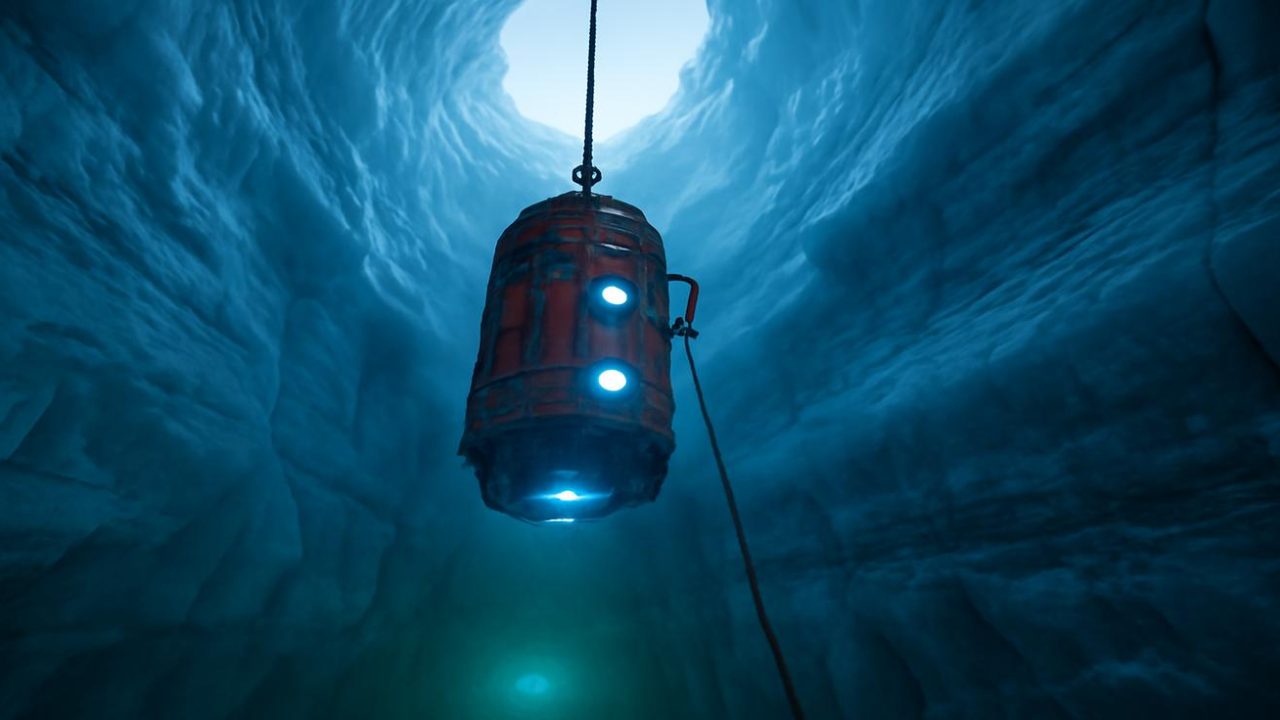
The yellow-cased robot, bristling with sensors and cameras, descended through a hole melted nearly a kilometer deep through ancient ice—equivalent to stacking three Eiffel Towers on top of each other. What it detected in those black waters, squeezed beneath centuries-old glacial ice, represents a critical piece of evidence in understanding Antarctica’s accelerating transformation.
Operating three thousand kilometers from the nearest open ocean, Icefin captured signals that researchers have been dreading to find, providing unprecedented data from one of Earth’s most inaccessible environments.

The Mission Beneath Antarctica’s Ice
The robotic expedition began at a remote field camp clinging to Antarctica’s vast ice sheet, where temperatures plunged well below -20°C and winds created shimmering snow ghosts racing across the frozen landscape. The small outpost consisted of scattered tents, a communications tower, and a generator—the only signs of human presence in an ocean of frozen time.
Scientists used hot water drilling to create the access shaft, sending plumes of steam into the blue-white air. The drilling process took more than a full day to melt a passage wide and deep enough for the robot to reach the hidden waters below.
Once deployed, Icefin began its solitary journey through darkness that has never seen sunlight. The robot’s lights were dimmed to the softest glow as it drifted through the subglacial environment, continuously listening, measuring, and collecting data from this alien world beneath the ice.

What Scientists Discovered in the Depths
The first indication of change wasn’t a dramatic crack or thunderous roar, but rather a low, almost musical hum traveling through the black water. This acoustic signature, detected during the long polar night, represents the kind of evidence researchers have been monitoring with growing concern.
Icefin’s sophisticated sensor array allowed it to capture environmental data that would be impossible to obtain through any other means. The robot’s eight-month deployment provided continuous monitoring of conditions beneath the glacier, offering insights into processes that occur far from human observation.
The subglacial environment where Icefin operated represents one of the most extreme and isolated ecosystems on Earth. These hidden waters, trapped between bedrock and ice that may be thousands of years old, serve as crucial indicators of larger environmental changes affecting the Antarctic continent.

| Mission Parameter | Specification |
|---|---|
| Deployment Duration | 8 months |
| Ice Thickness | Nearly 1 kilometer |
| Surface Temperature | Below -20°C |
| Distance from Open Ocean | 3,000 kilometers |
The Technology Behind the Discovery
Icefin represents a remarkable feat of engineering designed specifically for polar research. The robot’s sleek, torpedo-shaped design allows it to navigate through narrow spaces beneath the ice while its bright yellow casing makes it visible in the harsh Antarctic environment.
The robot arrived in Antarctica through a complex logistics chain—first by cargo plane, then by snowcat across the ice, and finally lowered by winch into the access hole. This delivery method contrasts sharply with the dog sleds and sailing ships used by Antarctic explorers of previous eras.
The robot’s sensor package includes delicate instruments capable of detecting minute changes in water temperature, chemistry, and acoustic properties. These measurements provide scientists with real-time data about processes occurring in one of Earth’s most remote environments.

Why This Antarctic Research Matters
The signals detected by Icefin contribute to a growing body of evidence about rapid changes occurring in Antarctica’s ice sheets. These subglacial environments play a crucial role in understanding how the continent’s massive ice formations respond to changing global conditions.
Antarctica contains approximately 90% of the world’s freshwater ice, making any changes to its stability a matter of global concern. The data collected by robots like Icefin helps scientists understand the complex processes that could affect sea levels worldwide.
The eight-month deployment demonstrates the value of long-term monitoring in these extreme environments. Traditional research methods, limited by harsh surface conditions and brief summer research seasons, cannot provide the continuous data streams necessary to understand these complex systems.

The Future of Antarctic Research
Icefin’s successful mission opens new possibilities for robotic exploration of Antarctica’s hidden environments. The robot’s ability to operate independently for extended periods provides a model for future research missions in similarly extreme locations.
The data collected during this eight-month deployment will require extensive analysis to fully understand its implications. Scientists must now work to interpret the acoustic signatures and environmental measurements captured by the robot’s sophisticated instruments.
This type of robotic exploration represents the cutting edge of polar research, allowing scientists to gather data from locations that would be impossible or extremely dangerous for human researchers to access directly.

Frequently Asked Questions
How deep beneath the ice was the robot operating?
Icefin was deployed through a hole melted nearly one kilometer deep through the ice, equivalent to stacking three Eiffel Towers.
How long did the robot remain beneath the Antarctic ice?
The robot operated continuously for eight months in the subglacial environment.
What kind of signal did the robot detect?
The robot detected a low, almost musical hum traveling through the dark water beneath the glacier.

How far was the research site from open ocean?
The robot operated approximately 3,000 kilometers from the nearest open ocean waters.
What were the surface conditions during the mission?
Surface temperatures fell well below -20°C with strong winds creating snow formations across the ice sheet.
How was the access hole created?
Scientists used hot water drilling techniques, which took more than a day to melt a shaft wide and deep enough for robot deployment.










Leave a Comment