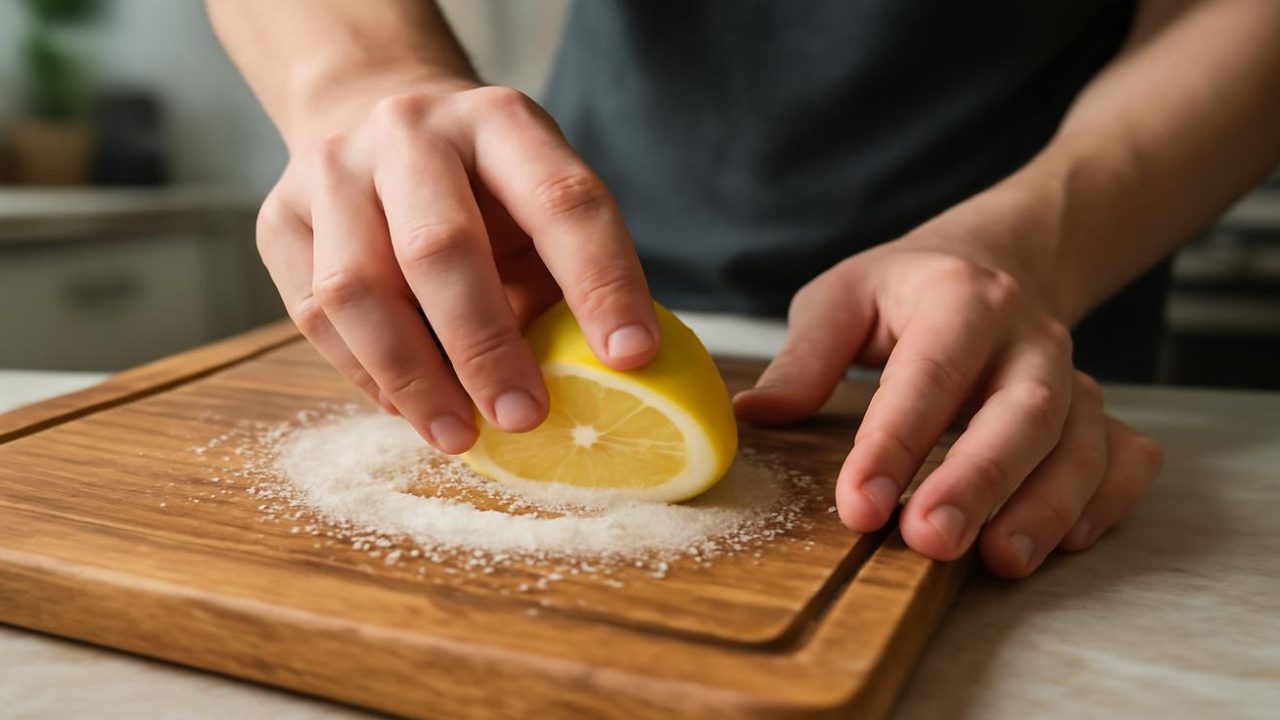
The best way to clean cutting boards isn’t about expensive sanitizers or harsh scrubbing—it’s about understanding the daily rhythm that keeps these kitchen workhorses functional for years without damaging their surface.
Every cutting board tells a story through its scars and stains, but beneath those marks of use lies a more complex reality. Wood fibers swell and shrink, plastic develops deep grooves, and bamboo can splinter at the edges when cleaned improperly.
The difference between a cutting board that lasts a decade and one that warps within months often comes down to simple cleaning habits that most home cooks get wrong.

Why Most People Damage Their Cutting Boards Without Realizing It
Cutting boards face unique challenges that other kitchen tools don’t encounter. The hairline cuts from knives create tiny spaces where moisture, oils, and food particles get trapped.
When these microscopic crevices fill with debris, they become breeding grounds for bacteria. But the instinct to combat this with aggressive cleaning often backfires.
Soaking wooden boards too long causes the wood fibers to swell beyond their normal capacity. When they dry, the wood contracts unevenly, leading to warping and cracking.

Plastic boards face different problems. Deep scrubbing turns shallow knife marks into trenches that become impossible to clean properly, creating permanent harbors for bacteria.
The Right Way to Clean Cutting Boards Daily
The most effective cleaning method focuses on immediate care rather than intensive weekly scrubbing sessions.
Start cleaning while the board is still damp from use. This prevents stains from setting and makes removal easier without harsh chemicals.

For daily cleaning after each use:
- Rinse immediately with warm water to remove surface debris
- Use mild dish soap and a soft sponge or brush
- Clean along the grain of wood boards, not against it
- Rinse thoroughly to remove all soap residue
- Dry immediately with a clean towel
- Allow to air dry completely before storing
The key is preventing moisture from sitting in the knife cuts and grain of the wood for extended periods.
Natural Sanitizing Methods That Won’t Cause Damage
When deeper cleaning is needed, natural methods prove more effective than harsh chemicals while preserving the board’s integrity.
Salt acts as both an abrasive and antimicrobial agent. Coarse salt scrubbed gently across the surface removes stubborn stains and odors without the moisture damage that soaking causes.
White vinegar provides natural sanitization. A light spray of undiluted white vinegar, left for a few minutes before wiping clean, kills most bacteria without penetrating deep into the wood fibers.
Lemon juice works similarly to vinegar but adds natural oils that can help condition wood surfaces. The citric acid breaks down protein-based stains while the oils prevent excessive drying.

| Cleaning Method | Best For | Frequency | Materials Safe |
|---|---|---|---|
| Warm water + mild soap | Daily cleaning | After each use | All materials |
| Coarse salt scrub | Stain removal | Weekly or as needed | Wood, bamboo |
| White vinegar spray | Sanitizing | 2-3 times per week | All materials |
| Lemon juice treatment | Odor removal | As needed | Wood, bamboo |
What Never to Do When Cleaning Cutting Boards
Certain cleaning practices guarantee premature wear and potential health hazards, regardless of how well-intentioned they might be.
Never put wooden or bamboo cutting boards in the dishwasher. The combination of high heat, harsh detergents, and extended moisture exposure causes irreversible warping and cracking.
Avoid bleach solutions on wooden surfaces. While bleach kills bacteria, it also breaks down the lignin that holds wood fibers together, leading to a fuzzy, damaged surface that’s harder to clean.

Don’t use steel wool or abrasive scouring pads on any cutting board material. These create deep scratches that become permanent bacteria harbors.
Resist the urge to soak boards for extended periods. Even plastic boards can develop stress cracks from prolonged exposure to hot, soapy water.
Signs Your Cutting Board Needs Replacement
Even with proper care, cutting boards eventually reach the end of their useful life. Knowing when to replace them prevents food safety issues.

Deep grooves that can’t be cleaned thoroughly indicate it’s time for a new board. If you can feel significant ridges when running your finger across the surface, bacteria have permanent hiding places.
Persistent odors that don’t respond to cleaning suggest that oils and food particles have penetrated too deeply into the material.
Warping or cracking in wooden boards creates uneven surfaces that are difficult to clean and unsafe for food preparation.

Any cutting board that develops a fuzzy texture after cleaning has suffered fiber damage that makes effective sanitization impossible.
Frequently Asked Questions
How often should I deep clean my cutting board?
Weekly deep cleaning with salt or vinegar is sufficient for most home kitchens, with daily soap and water cleaning after each use.
Can I use the same cutting board for meat and vegetables?
It’s safer to use separate boards for raw meat and other foods, or clean thoroughly with soap and sanitize with vinegar between different food types.
Why does my wooden cutting board smell even after cleaning?
Odors indicate that food oils have penetrated deep into the wood grain, which happens when boards aren’t cleaned immediately after use or are over-soaked.
Is it safe to cut directly on plastic cutting boards with deep grooves?
Deep grooves in plastic boards harbor bacteria that standard cleaning can’t reach, making them potentially unsafe for food preparation.
How long should a properly maintained cutting board last?
With proper daily cleaning and weekly maintenance, a quality wooden cutting board can remain functional for a decade or longer.
What’s the best way to remove stubborn stains like beet juice?
A paste made from coarse salt and lemon juice, scrubbed gently along the wood grain, removes most organic stains without damaging the surface.










Leave a Comment