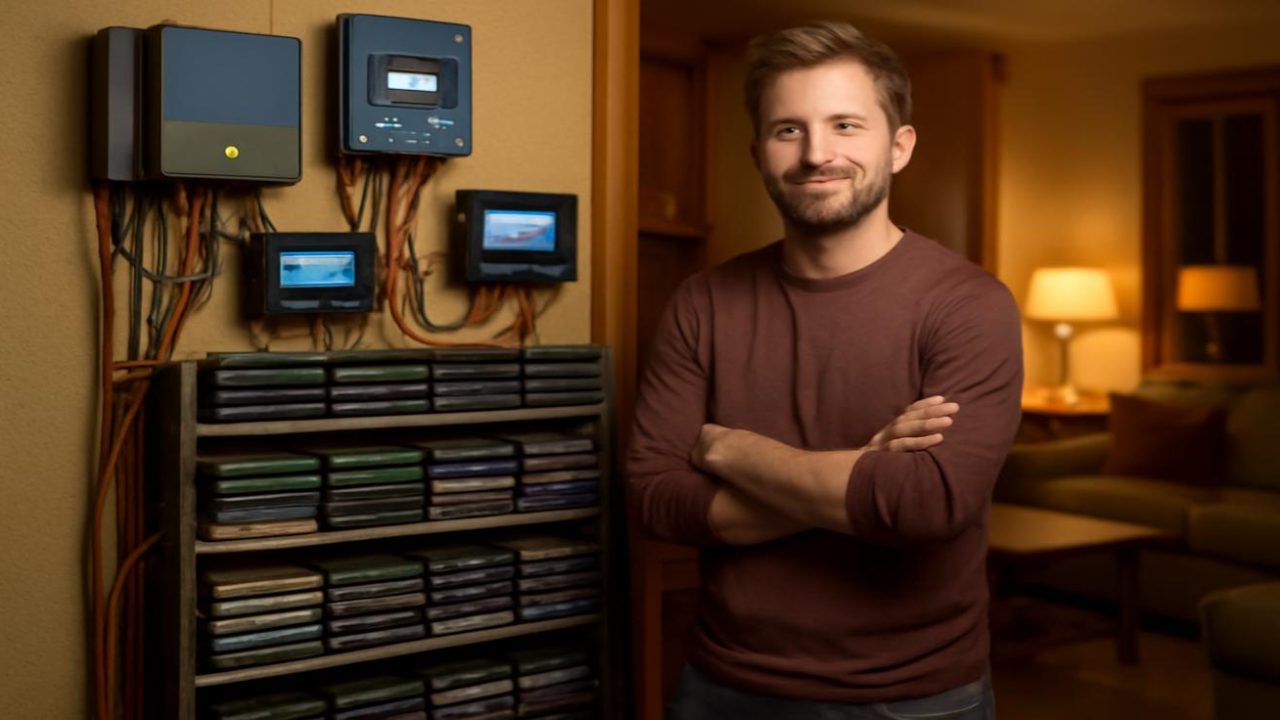
One man has been powering his entire home for a decade using more than 650 discarded laptop batteries that would otherwise have ended up in landfills. What started as curiosity about electronic waste has evolved into a fully functional energy system that keeps the lights on, the refrigerator running, and computers humming long after the electrical grid goes dark.
Daniel’s garage looks like something between a mad scientist’s laboratory and an art installation. Rows of colored cylinders—green, purple, blue, and pink—are stacked in hand-soldered packs, creating what resembles a stained-glass window built by an engineer rather than an artist. Tiny LEDs blink and pulse in the dimness, while a soft, almost musical hum fills the air like a distant beehive.
The setup runs on 18650 cells, those finger-sized rechargeable batteries hidden inside old laptops, power tools, and e-bikes. Combined with solar panels on his roof, this suburban home operates on what most people would consider trash.

How Discarded Laptop Batteries Became a Power Source
Daniel didn’t begin with a grand master plan to revolutionize home energy storage. Like many DIY projects, this one started small and grew organically over time. The key insight was recognizing that laptop batteries often get discarded when only one or two cells fail, leaving the majority of the battery pack perfectly functional.
Most laptops contain multiple 18650 lithium-ion cells wired together. When manufacturers or repair shops declare these battery packs “dead,” it’s usually because one cell has failed, dragging down the performance of the entire pack. The remaining cells often retain 70-80% of their original capacity.
Daniel began collecting these discarded battery packs, carefully dismantling them and testing each individual cell. The good cells were sorted, organized, and eventually assembled into his home energy storage system. What emerged was a power bank capable of running essential household appliances and electronics.

The garage setup includes sophisticated monitoring systems with LEDs that indicate charge levels and cell health. The faint smell of warm plastic, solder, and sawdust hints at the countless hours of hands-on work required to build and maintain the system.
The Scale and Scope of a 650-Cell Battery System
Building a home energy system from individual battery cells requires careful planning and execution. Here’s what Daniel’s decade-long project encompasses:
| Component | Details |
|---|---|
| Total Cells | More than 650 individual 18650 batteries |
| Power Source | Solar panels on roof + battery storage |
| Monitoring | LED indicators for charge levels and cell health |
| Organization | Hand-soldered packs arranged in wall-mounted configuration |
| Coverage | Lights, refrigerator, computers, and essential appliances |
The visual impact of seeing 650+ batteries arranged in organized rows is striking. Each cell represents a piece of electronic waste that avoided the landfill and found new purpose as part of a functional energy storage system.

The system’s capacity allows Daniel’s home to operate independently when the electrical grid experiences outages. While most neighbors lose power during storms or utility maintenance, his lights stay on and critical appliances continue running.
Why Electronic Waste Makes This Project Possible
The foundation of this project rests on a sobering reality about electronic waste. Millions of laptop batteries are discarded every year, often because consumers and businesses replace entire devices rather than repair individual components.
Battery packs that cost hundreds of dollars when new get thrown away when laptop performance declines. The irony is that individual cells within these packs often retain significant capacity and could provide years of additional service in different applications.
Daniel’s approach demonstrates how electronic waste can be transformed from an environmental problem into a resource. Instead of mining new materials for battery storage, he’s extending the useful life of existing batteries that would otherwise contribute to growing e-waste streams.
The project also highlights the durability of lithium-ion technology when properly maintained. Many of the cells in Daniel’s system have been providing reliable power for years beyond their original intended lifespan.
From a cost perspective, building energy storage from salvaged batteries requires primarily time and technical skill rather than significant financial investment. The main expenses are tools, monitoring equipment, and safety gear rather than the batteries themselves.

Technical Challenges and Safety Considerations
Working with hundreds of lithium-ion batteries requires careful attention to safety and technical details. Each cell must be tested to ensure it can hold a charge and won’t pose fire or explosion risks when integrated into the larger system.
Daniel’s garage workshop includes the tools and equipment necessary for testing individual cells, soldering connections, and monitoring the overall system performance. The hand-soldered packs require precision work to ensure reliable electrical connections.
The monitoring system with blinking LEDs serves both practical and safety functions. Visual indicators allow quick assessment of system status, while also providing early warning of potential problems with individual cells or battery packs.

Proper ventilation, fire safety equipment, and electrical safeguards are essential when working with this many lithium-ion batteries. The warm plastic smell in Daniel’s garage indicates the system generates some heat during charging and discharging cycles.
Battery management becomes increasingly complex as the system grows. With more than 650 cells, tracking the health and performance of individual components requires systematic organization and record-keeping.
What This Means for DIY Energy Storage
Daniel’s decade-long project demonstrates that sophisticated home energy storage doesn’t necessarily require expensive commercial battery systems. With sufficient technical knowledge and commitment, discarded electronics can be transformed into functional power infrastructure.

The project also raises questions about how society handles electronic waste. If individual enthusiasts can build home energy systems from discarded batteries, there may be opportunities for larger-scale recycling and repurposing programs.
However, this approach isn’t suitable for everyone. Building and maintaining a 650-cell battery system requires electrical knowledge, safety awareness, and significant time investment. Most homeowners would be better served by commercial energy storage solutions with professional installation and warranties.
The environmental benefits extend beyond waste reduction. By generating solar power and storing it in repurposed batteries, Daniel’s home operates with a dramatically reduced carbon footprint compared to grid-dependent households.

Frequently Asked Questions
How long did it take Daniel to collect 650+ laptop batteries?
The source indicates he’s been collecting them for years as part of his ten-year project, but doesn’t specify the exact timeline for reaching 650+ cells.
Is it safe to use old laptop batteries for home power storage?
Daniel’s system includes monitoring equipment and safety measures, but working with lithium-ion batteries requires proper testing, ventilation, and fire safety precautions.
How much money did this project save compared to commercial battery systems?
The source doesn’t provide specific cost comparisons, though it notes the main expenses are tools and equipment rather than the batteries themselves.
What appliances can run on this battery system?
According to the source, the system powers lights, refrigerator, computers, and other household electronics, with enough capacity to operate when the grid goes down.
Where does Daniel get all these discarded laptop batteries?
The source mentions these batteries “was going to be thrown away” but doesn’t specify Daniel’s sources for collecting discarded laptop battery packs.
How does Daniel test whether old battery cells are still good?
While the source mentions he tests individual cells after dismantling battery packs, it doesn’t detail the specific testing procedures or equipment used.









Leave a Comment