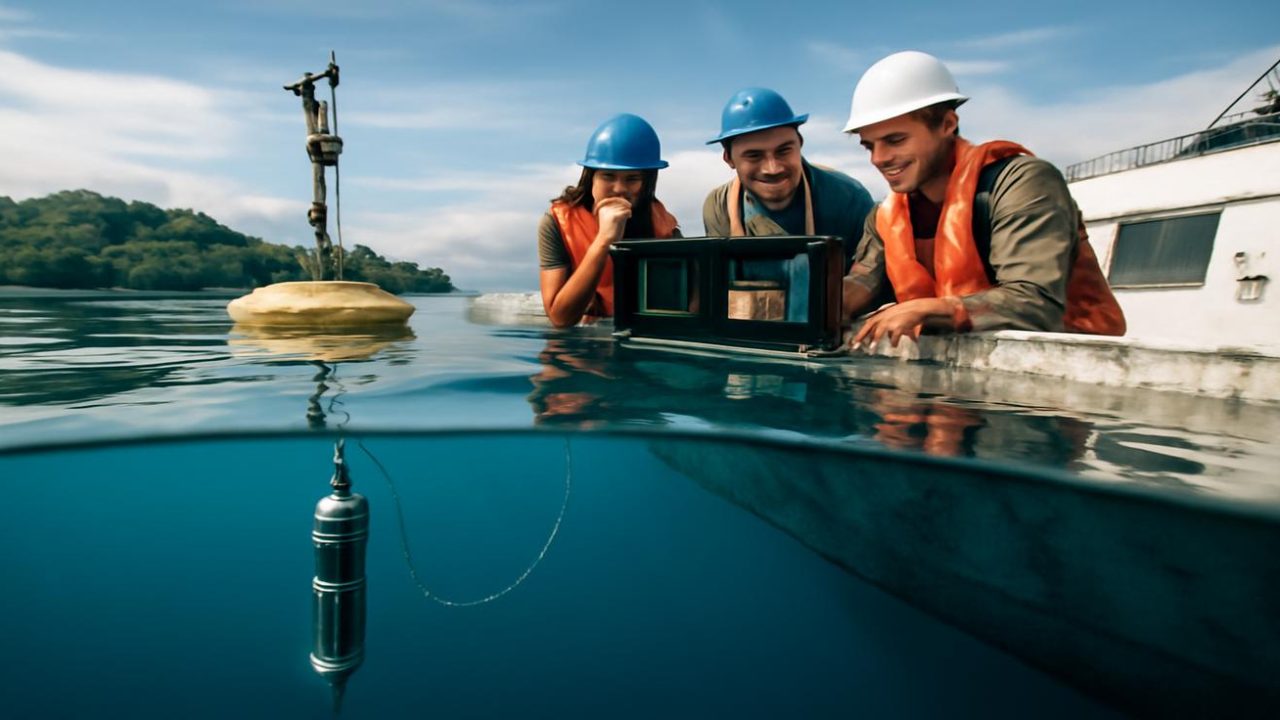
For the first time in four decades, Panama’s Pacific waters have experienced a complete failure of upwelling — the critical process that brings nutrient-rich deep waters to the surface. This unprecedented disruption has left fishermen staring at empty nets and scientists grappling with questions about what happens when the ocean forgets its most fundamental rhythm.
The phenomenon didn’t announce itself with dramatic headlines or satellite alerts. Instead, it crept in through the quiet observations of those who know these waters best — fishermen who could sense the invisible motion of cold currents through their fingertips on fishing lines, who understood the ocean’s pulse through the way their hulls responded to underwater currents.
But this year, something was different. The ocean felt strangely flat — not calm from weather, but empty of the life-giving circulation that has sustained coastal communities for generations.

What Upwelling Means for Panama’s Ocean Ecosystem
Upwelling serves as the invisible engine that drives Panama’s Pacific marine ecosystem. When deep, cold waters rise to the surface, they carry essential nutrients that fuel plankton blooms, which in turn support fish populations and the entire coastal food web.
Along Panama’s Pacific coast, communities have lived in rhythm with this natural cycle for generations. Local fishermen know when waters will turn cooler, when schools of anchovies and sardines will appear in silver flashes beneath the surface, and when larger predators will begin shadowing the coastline.
This predictable pattern has been as reliable as seasonal changes or lunar cycles. The nutrient-rich waters rising from the depths support not just marine life, but entire livelihoods built around the assumption that the ocean’s bounty will continue as it always has.

When upwelling fails, the cascade effects ripple through every level of the marine ecosystem. Plankton populations crash without the nutrients they depend on. Fish populations that rely on plankton struggle to find food. Seabirds circle with mounting confusion, searching for prey that simply isn’t there.
The Signs of a System in Crisis
The failure of Panama’s upwelling system revealed itself through a series of subtle but telling signs that painted a picture of an ecosystem under stress:
- Fishing nets coming up empty despite being deployed in traditionally productive waters
- Seabirds exhibiting confused circling behavior as they search for absent fish populations
- Clear but strangely barren water where nutrient-rich, life-supporting currents should have been flowing
- Long, puzzled pauses at fishing docks as experienced fishermen tried to make sense of the empty waters
- The absence of the familiar cold current sensations that fishermen had learned to detect through decades of experience
These observations represent more than isolated incidents — they signal the breakdown of a natural system that has operated with clockwork precision for at least 40 years of recorded observation.

| Normal Upwelling Conditions | 2024 Failure Conditions |
|---|---|
| Cold, nutrient-rich waters rising to surface | Waters remaining strangely flat and barren |
| Abundant plankton blooms | Absent plankton populations |
| Schools of anchovies and sardines | Empty fishing nets |
| Active predator fish populations | Confused seabird behavior |
| Detectable cold currents | Ocean feeling “flat” to experienced fishermen |
The Human Cost of Ocean System Failure
The collapse of Panama’s upwelling system strikes hardest at the communities that depend most directly on the ocean’s productivity. Fishing families who have worked these waters for generations suddenly find themselves facing empty nets where abundance once seemed guaranteed.
The economic implications extend far beyond individual fishing boats. Coastal communities built around processing, selling, and distributing marine catches face uncertainty when the fundamental source of their economic activity simply vanishes.
For fishermen who learned to read the ocean through decades of experience — sensing cold currents through their equipment, timing their expeditions to natural rhythms — the failure represents more than economic hardship. It challenges their understanding of a natural world they thought they knew intimately.

The psychological impact runs deep in communities where fishing knowledge passes from generation to generation. When the ocean stops behaving according to patterns that seemed as reliable as sunrise, it forces a reckoning with the possibility that fundamental natural systems can simply stop working.
What This Unprecedented Event Reveals
The failure of Panama’s upwelling system after four decades of consistent operation raises profound questions about ocean system stability and climate resilience. This isn’t a gradual decline or seasonal variation — it’s a complete system failure that scientists are still working to understand.
The event demonstrates how quickly marine ecosystems can shift from abundance to scarcity. In a matter of months, waters that supported thriving fish populations and bustling fishing communities became barren expanses that confound even the most experienced local fishermen.

Perhaps most concerning is how quietly such a dramatic ecological shift can occur. Without the dramatic imagery of melting glaciers or burning forests, the collapse of an upwelling system can devastate marine ecosystems and human communities while receiving little attention from the broader public.
The Panama upwelling failure also highlights the vulnerability of communities that depend on natural systems they cannot control. Even the most skilled fishermen, with generations of accumulated knowledge, become powerless when fundamental ocean processes simply stop functioning.
Looking Ahead: Questions Without Easy Answers
The unprecedented nature of Panama’s upwelling failure leaves scientists and coastal communities grappling with uncertainty about what comes next. After 40 years of reliable patterns, there’s no historical precedent for how such a system might recover — or whether recovery is even possible.

The event forces difficult questions about the stability of other ocean systems worldwide. If a upwelling pattern can fail completely after decades of consistency, what other marine processes might be more fragile than previously understood?
For Panama’s coastal communities, the immediate challenge involves adapting to a reality where the ocean’s productivity can no longer be taken for granted. Fishing strategies, economic planning, and community sustainability all require fundamental reassessment when the natural foundation of local life proves unreliable.
The broader implications extend to global understanding of ocean system resilience and the cascading effects when marine ecosystems experience sudden, complete failures rather than gradual changes.

Frequently Asked Questions
What exactly is upwelling and why does it matter?
Upwelling occurs when deep, nutrient-rich waters rise to the surface, providing the foundation for marine ecosystems by feeding plankton that support entire food webs.
How long has Panama’s upwelling system been operating normally?
The system had been functioning consistently for at least 40 years before this unprecedented failure occurred.
What are the main signs that upwelling has failed?
Empty fishing nets, confused seabird behavior, clear but barren waters, and the absence of cold currents that fishermen could previously detect.

Who is most affected by this upwelling failure?
Coastal fishing communities that depend on marine resources for their livelihoods are experiencing the most direct impact from the system collapse.
Could the upwelling system recover naturally?
This has not yet been determined, as there’s no historical precedent for recovery from such a complete system failure after decades of normal operation.
Are other ocean upwelling systems at risk of similar failures?
The implications for other marine systems remain unclear, though this event raises questions about the stability of ocean processes previously considered reliable.











Leave a Comment