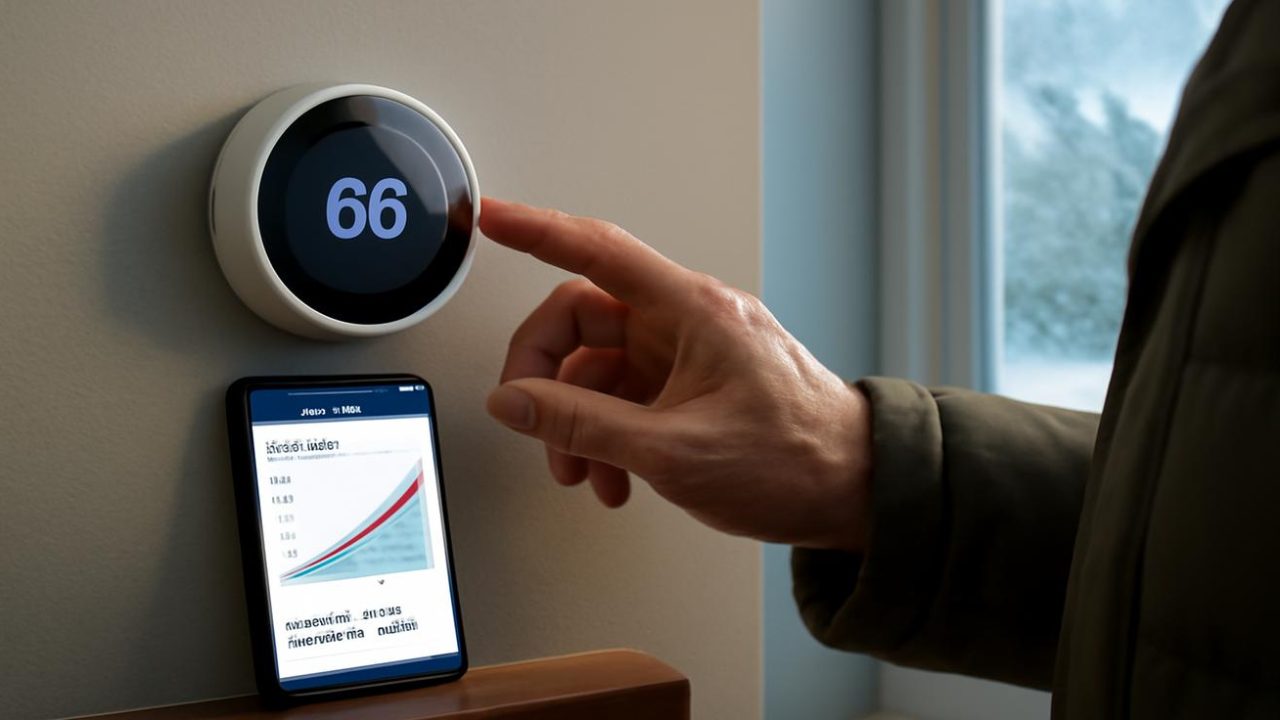
That daily ritual of turning down your thermostat before leaving home might feel like a smart money-saving habit, but heating experts are warning that this seemingly sensible practice could actually be driving up your energy bills. The counterintuitive reality is that forcing your heating system to work harder when you return home often costs more than maintaining a steady temperature throughout the day.
The misconception stems from our natural instinct to avoid “wasting” energy on an empty house. It feels virtuous, almost automatic—grab your keys, lower the thermostat, step out with the satisfaction of being energy-conscious. But this well-intentioned habit overlooks how modern heating systems actually operate.
When you return to a significantly cooler home and crank up the heat to quickly restore comfort, your boiler and heating system must work at maximum capacity. This intensive energy burst often consumes more fuel than the steady, efficient operation required to maintain a consistent temperature.

Why Your Heating System Struggles With Temperature Swings
Modern heating systems are designed for efficiency, not rapid temperature changes. When you dramatically lower the thermostat before leaving, your home loses heat through walls, windows, and other surfaces. The longer you’re away, the more thermal energy escapes.
Upon your return, your heating system faces the challenge of not just warming the air, but reheating all the surfaces, furniture, and structural elements that have cooled down. This process requires significantly more energy than simply maintaining the existing temperature would have demanded.
The “cozy illusion of control” that comes with adjusting your thermostat masks this reality. We imagine our homes as simple machines where lower settings automatically equal lower costs, but thermal dynamics work differently than our intuition suggests.

Gas meters spin faster during these recovery periods, and the familiar sounds of a heating system working hard—rumbling boilers, clanking pipes, shuddering radiators—are audible evidence of increased energy consumption.
The Real Cost of Temperature Cycling
The financial impact becomes clearer when you consider how heating systems operate most efficiently. Steady operation allows your boiler to run at optimal efficiency levels, while dramatic temperature swings force it into less efficient, high-demand modes.
During recovery periods, you’re likely to set the thermostat higher than normal to “take the edge off” the chill more quickly. This temporary boost compounds the energy waste, as you’re not just restoring the original temperature but exceeding it.

The practice becomes particularly costly during colder months when the temperature differential between your lowered setting and outdoor conditions creates greater heat loss. The more dramatic the temperature drop, the more energy required for recovery.
| Scenario | Energy Pattern | Efficiency Impact |
|---|---|---|
| Constant temperature | Steady, moderate operation | Optimal efficiency |
| Daily temperature cycling | Low demand, then high-intensity recovery | Reduced overall efficiency |
| Frequent adjustments | Constant system activation | Lowest efficiency |
Breaking the Thermostat Adjustment Habit
Years of public messaging have reinforced the “don’t heat what you’re not using” mentality, making this habit feel both responsible and obvious. Energy-saving campaigns have traditionally focused on simple behavioral changes, but they haven’t always accounted for how modern heating systems achieve peak efficiency.
The psychological satisfaction of “actively wrestling those bills into submission” by adjusting the thermostat creates a false sense of control over energy costs. In reality, the most effective approach often requires resisting the urge to constantly tinker with temperature settings.

Professional heating engineers increasingly recommend finding a comfortable temperature and maintaining it consistently, rather than implementing daily fluctuations. This approach reduces wear on heating system components while optimizing energy consumption patterns.
For households concerned about energy waste during extended absences, programmable thermostats can be set to make modest adjustments—typically no more than a few degrees—rather than dramatic temperature swings.
Smart Alternatives to Temperature Cycling
Rather than dramatic thermostat adjustments, more effective energy-saving strategies focus on improving your home’s thermal efficiency. Simple measures like ensuring proper insulation, sealing air leaks, and maintaining heating system components deliver consistent savings without the efficiency penalties of temperature cycling.

Modern smart thermostats can learn your schedule and make gradual adjustments that avoid forcing your heating system into high-demand recovery modes. These devices optimize temperature changes based on how long you’ll be away and how quickly your specific home loses and regains heat.
The key insight is working with your heating system’s natural efficiency patterns rather than against them. Steady operation allows components to function as designed, while dramatic temperature swings create conditions where even well-maintained systems operate inefficiently.
For extended absences of several days or more, modest temperature reductions still make sense. But for typical daily routines, maintaining consistent temperatures often proves more economical than the intuitive approach of constant adjustments.

Frequently Asked Questions
Should I never adjust my thermostat when leaving home?
Small adjustments of 1-3 degrees can be beneficial for longer absences, but dramatic temperature drops followed by rapid reheating typically cost more than steady operation.
How long do I need to be away before lowering the temperature makes sense?
Most heating experts suggest absences of 8+ hours might justify modest temperature reductions, while shorter trips are better served by consistent settings.
Why does my heating bill stay high even when I constantly adjust the thermostat?
Frequent temperature cycling forces your system to work harder during recovery periods, often consuming more energy than steady operation would require.

Do all heating systems work this way?
Most modern gas, oil, and electric heating systems achieve peak efficiency through steady operation rather than frequent temperature cycling.
What’s the most effective way to reduce heating costs?
Focus on improving insulation, sealing air leaks, and maintaining consistent temperatures rather than frequent thermostat adjustments.
Can smart thermostats help with this problem?
Yes, quality programmable thermostats can make gradual adjustments that avoid the efficiency penalties of dramatic temperature swings while still providing some energy savings.











Leave a Comment